By Mike McGraw, Extension Master Naturalist serving Fulton, Mason, Peoria and Tazewell counties
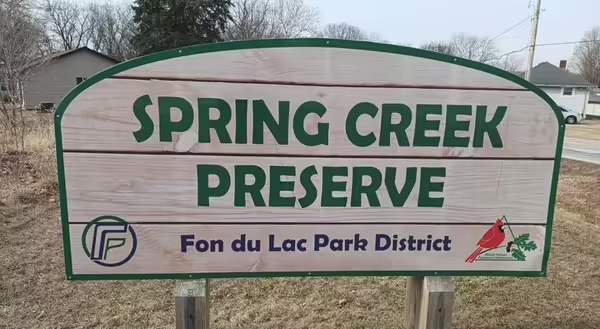
Spring Creek Preserve, located in Tazewell County, is a park of the East Peoria Fondulac Park District. Of its 344 acres, 236 have been designated as an Illinois Land and Water Preserve.
Spring Creek is rich in both plant and animal life. Surveys done there between 2005 and 2017 identified over 60 species of birds, nine of which are listed as Species in Greatest Need of Conservation in Illinois.
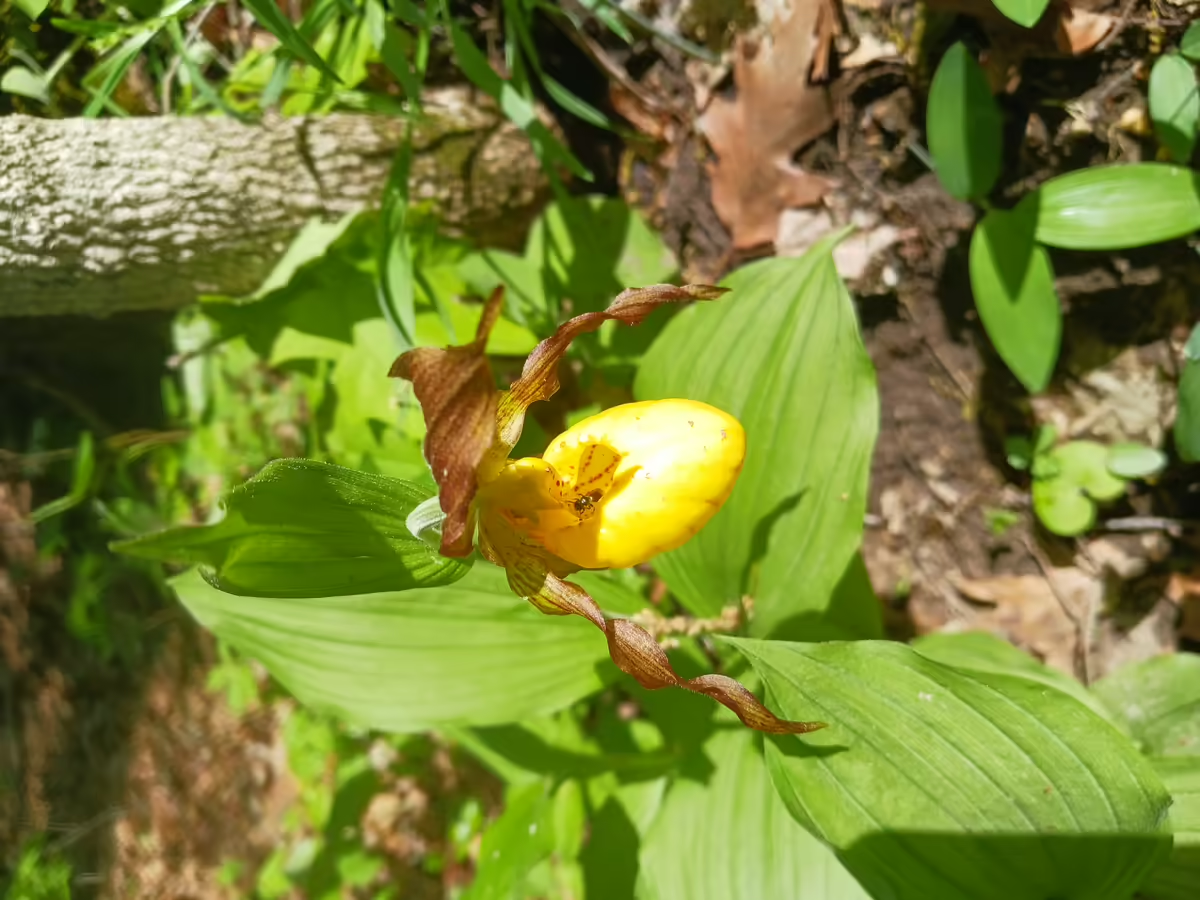
Over 200 species of trees and herbaceous plants can also be found at Spring Creek. These include twelve species of ferns, as well several uncommon native orchids. Leatherwood, Dirca palustris, one of the more infrequently found native shrubs in Illinois, grows there in great numbers.
The invasive plant problem
Unfortunately, invasive plants are a problem in Spring Creek, as they are in many other Central Illinois woodlands. The most common are bush honeysuckle, autumn olive, multiflora rose, and garlic mustard. Others include burning bush, round-leaf bittersweet, barberry, privet, tree of heaven, and Callery pear. These lack natural predators or diseases that control their populations in their native range, allowing them to outcompete the native species for resources.
Work to control invasives
I became involved in invasive control work at Spring Creek shortly after I competed my Master Naturalist training in 2022. I am currently involved in three different types of projects there.
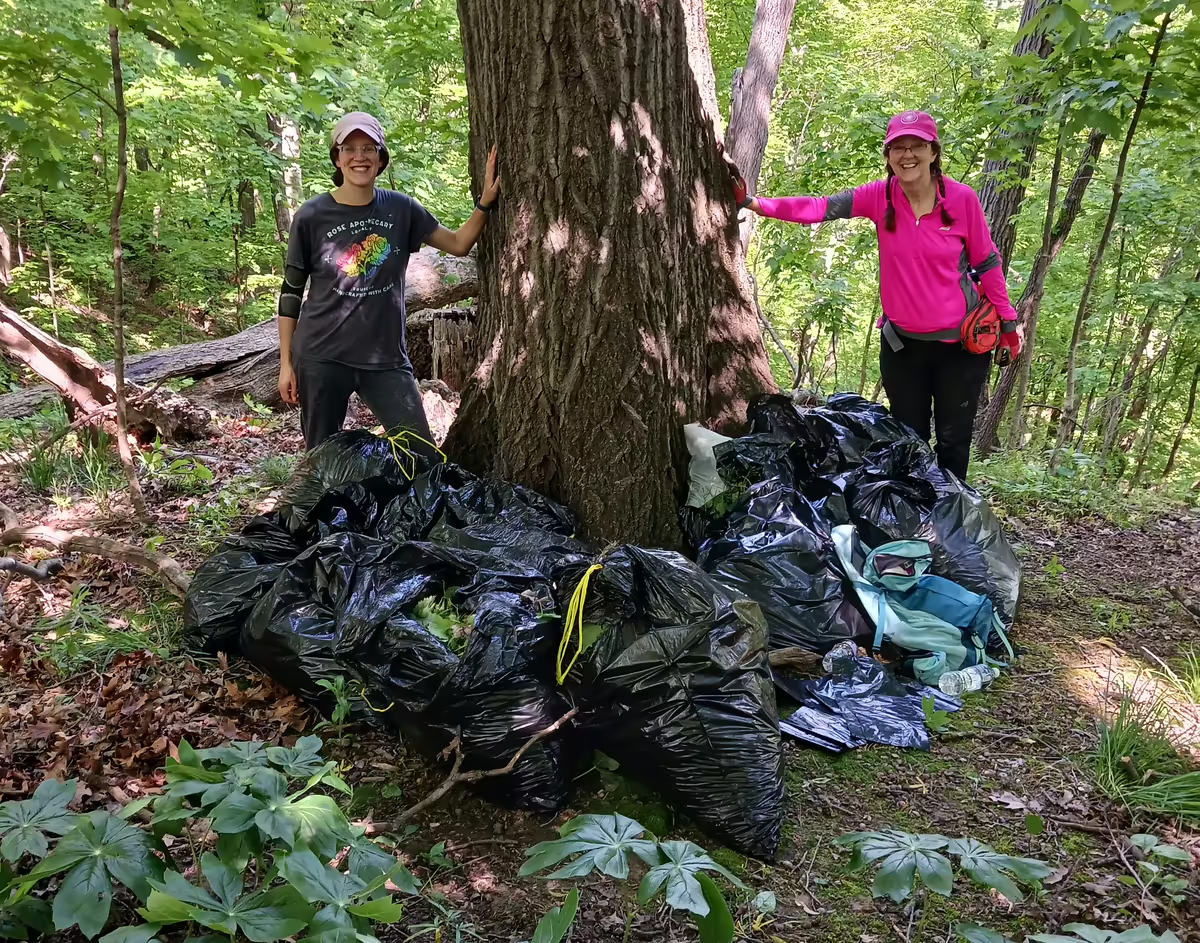
- Master Volunteer workdays. The second Wednesday of every month, I lead Master Volunteer workdays at Spring Creek Preserve. For the few weeks during the Spring and Summer when it is in bloom, we cut and bag garlic mustard. The rest of the time we cut and stump treat, with herbicide, woody invasives such as bush honeysuckle, autumn olive, and multiflora rose.
- Professional invasive removal. While most larger invasives, especially autumn olive and bush honeysuckle, have been eliminated from the Preserve, there are still a few places where those are still a problem. Last year a professional invasive control company was hired for two days to target these areas. We plan on bringing them back for several more days of work this year. My involvement in this, as a volunteer, includes communication, site selection, and monitoring.
- Ad hoc workdays. Lastly are the days that I go to Spring Creek on my own, with a pruning saw, and a pair of loppers. (Luckily, I live close by). I find this to be a great way to be out in the woods, do something useful, and get those much-needed volunteer hours.
Why I do this work, and why I do it at Spring Creek Preserve
I grew up in Alton, Illinois, in a house near the edge of town. It was only a short walk from my front door, and into the woods. I would go there often, just to wander, and to be surrounded by trees and wildflowers.
What I remember most vividly from this time was the incredible display of spring ephemerals. In my memory, for a few weeks every Spring, they were everywhere, and in great numbers. Plants like dutchman’s breeches, spring beauty, rue anemone, dog tooth violet, trillium, Jacob’s ladder, Virginia bluebells, and wild geranium. I believe it was this experience, in large part, that instilled in me a lifelong love of nature, of plants (especially native ones), of gardening, of trees and forests, and which eventually led me to the Master Naturalist program.
Sadly, I believe that the amazing display of Spring ephemerals that I remember from my time in Alton may one day be impossible to find, at least here in Central Illinois. So many of our woodlands are being taken over by invasives. These create conditions in which spring ephemerals, and other native plants, simply cannot grow.
Spring Creek Preserve, though, is still a place where you can still see an amazing display of spring wildflowers, ferns, and other native plants. And that is only because of the dedication of a few volunteers who, over many years, have worked hard to keep Spring Creek largely free of invasives. I want to continue that work so that for at least a few more years, I will be able to enjoy, practically in my own backyard, that which made me a nature lover in the first place. I hope others will continue to enjoy them too.