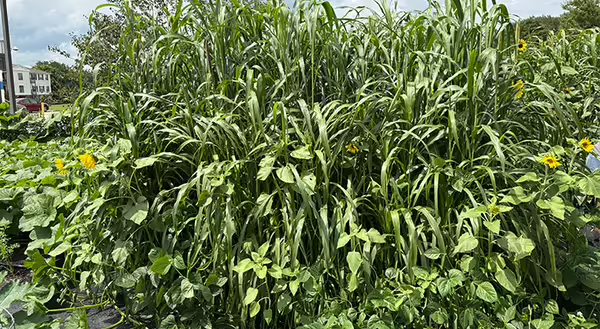
Over the last 5 years, efforts have been made at the Unity Community Center’s Research and Demonstration Area Garden in Normal, IL to rejuvenate garden soils used for food-insecure community food production through extensive cover crop utilization.
This approach was taken due to the condition of the target food production soil being extremely poor in early 2021 – with many annual and perennial weed populations and soil compaction evidenced by ponding – to the point that intentional remediation was necessary. Annually since that time, half of the entire garden has been continuously cover cropped for 15-16 months at a time before sides of the garden are flipped for the following year, and the cover-cropped side is rotated into vegetable production.
This annual rejuvenation strategy is achieved as follows:
- Cool-season, grass and legume cover crop (such as oats and field pea) planted in early March which grows to ideal termination stage (flowering/grain-fill), followed by termination via mowing extremely low and silage tarping; then
- Summer cover crop (such as cowpea, pearl millet, sunflower, and sorghum-Sudangrass pictured above) broadcast and lightly buried with compost, grown, and terminated with roller-crimping, followed by silage tarping, then
- If time in season allows, a blend of winter-hardy cover crop mix (such as Austrian winter pea, cereal rye, and/or winter wheat), and then either:
- Fall-planted cover crop is allowed to regrow the following early spring before termination via flail mowing and tarping ahead of vegetables
- OR a winter-vulnerable mix that frost-kills (such as tillage radish, oats, purple top turnip, winter kale, and field pea) is planted after summer covers, which leaves the area ready for vegetable planting without spring termination concerns
Last year, unfortunately, we had to relocate the garden 50 feet East due to a lease issue. That meant starting over the above process completely from scratch in a new area. In the above elucidated rotation, the use of sorghum-Sudangrass is especially helpful when perennial weeds are present. The combination of sorghum-Sudangrass with pearl millet, cowpea and sunflower can grow many tons of biomass per acre, shade out weeds, and compete with them for nutrients.
Generally, the only method we have found to be effective in permanent reduction of perennial weeds such as bindweed (Convolvulus arvensis), quackgrass (Elymus repens), and tall morningglory (Ipomea purpurea) has been a diverse mix of summer cover crops, seeded at or above the recommended drilled rate, into previously silage-tarped, weed-infested areas. Prolonged application of silage tarp from fall the year before summer cover crop seeding until warm weather arrives the next year (approximately 7 months) is critical in this process to starve perennial weeds.
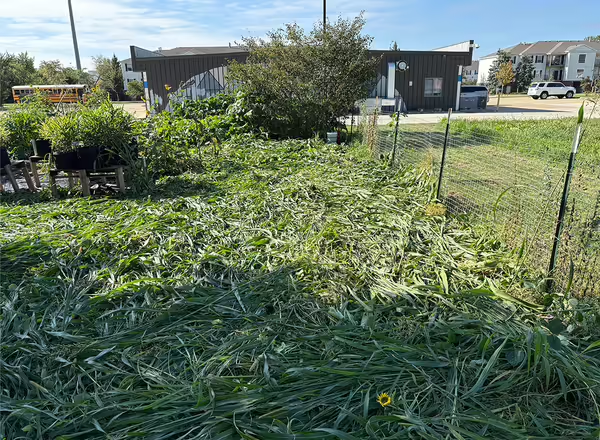
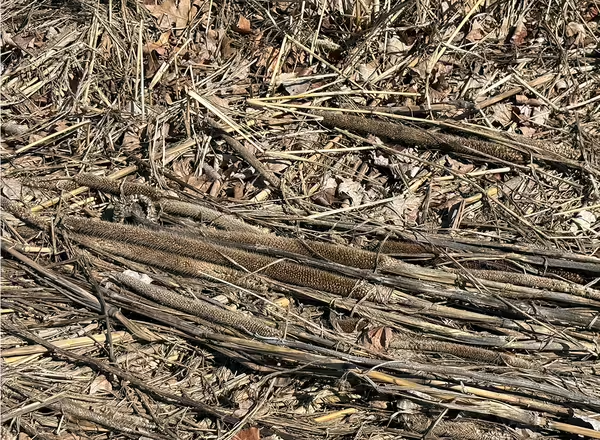
The mature stand of cover crop pictured above is the result of an extended silage tarp application in fall of 2024 until May 2025, followed by seeding sorghum-Sudangrass, pearl millet, sunflower, and cowpea at their Midwest Cover Crop Council-recommended single-species drilled rate. That same stand after being terminated via crimping, at maturity, is shown below and then the residue that is now left after tarping for several months. Recognizing that the seed cost for this stand was not inexpensive, happily we can report that after removing the tarp two weeks ago, none of the mentioned perennial weeds have re-emerged so far.
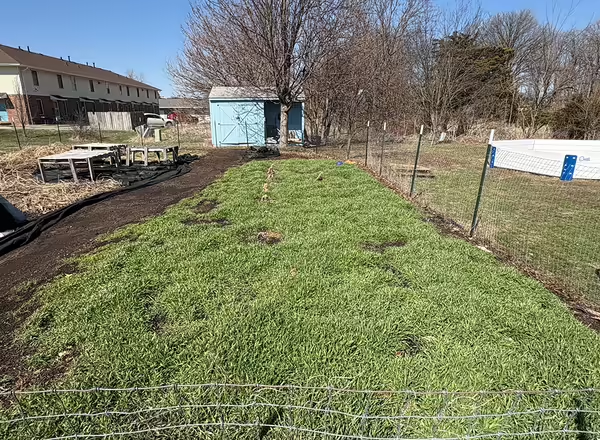
Also pictured is a stand of cereal rye, winter wheat, and hairy vetch that was broadcast into standing pepper and tomato plant areas in October 2025, after landscape fabric strips used for walking paths between rows were removed. After seed was broadcast, it was lightly covered by broadcasted compost at a rate of half an inch. Final harvests of pepper and tomato were conducted prior to seeding on October 25. This mix will be allowed to grow until April 21, will be mowed as low as possible, and will be silage-tarped until summer vegetables are transplanted into the residue around May 15.
We are finding that the no-till methods used here (terminating with mowing and silage tarp instead of tillage) are leading to an incredible increase in organic matter at the soil surface. This is contributing to a marked decrease in observed weed pressure from just two years ago, when our current site was a weed-infested mess. Biomass on the soil surface as of late March 2026 is 4+ inches in most places where our summer cover crop was planted. We are having fun and learning all we can in this process!