Not all insects or pathogens that arrive from elsewhere are harmful. Many settle quietly into their new surroundings without causing noticeable change. But invasive species are different, and understanding what sets them apart is key to protecting our forests.
A pest is considered invasive when it arrives outside its natural range, spreads rapidly, and causes economic, environmental, or public harm. Invasive pests often succeed because they leave behind the natural predators, diseases, or competitors that kept them in check in their native habitats. Without those natural controls, populations can explode.
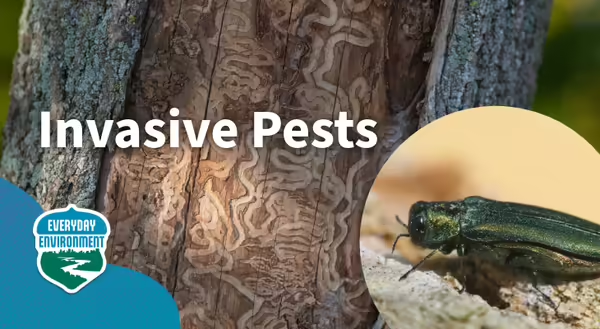
Familiar examples illustrate the pattern: the emerald ash borer devastating ash trees across North America, the spotted lanternfly threatening vineyards and orchards, and the Asian longhorned beetle targeting maples and other hardwoods. These invaders demonstrate how quickly a seemingly harmless organism can turn into a major ecological disruption.
This blog was written by Tricia Bethke, Forest Pest Outreach Coordinator for the Morton Arboretum.
Why New and Emerging Pests Keep Appearing
The increasing number of emerging pests is no coincidence. Several major factors continue to create pathways for new invaders:
- Global trade and travel: Packing materials, plants, produce, and cargo can transport insects and diseases across continents.
- Climate change: Warmer temperatures allow some pests to survive winters or move into regions that were once too cold.
- Urbanization and disturbed habitats: Stressed or weakened trees in developed areas are more vulnerable to attack.
This combination means new potential pests will continue to arrive — and some may not yet be on our radar.
Why Early Detection Matters So Much
By the time we see large infestations or widespread tree decline, an invasive pest may already be beyond easy control. Early detection allows experts to investigate, map populations, and take action before the problem spreads. In some cases, early reporting has even enabled eradication efforts.
But professionals can’t be everywhere — and that’s where the public becomes an essential part of the solution. Everyday observers often provide the first clues that something unusual is happening in a forest, neighborhood, or local park.
Signs to Watch For
You don’t need to be an expert to notice early warning signs. Keep an eye out for:
- Unusual leaf damage or rapid defoliation
- Wilting, canopy dieback, or unexpected tree mortality
- Odd exit holes or sawdust-like frass on bark
- New insects are gathering in unusually large numbers
- Visible egg masses, oozing sap, or fungal growth
- Changes in bark texture, cracking, or peeling
If something seems out of place, it’s worth paying attention.
What You Can Do to Help
Protecting forests from invasive pests doesn’t require specialized training — just awareness and a willingness to act. Here are simple, impactful steps anyone can take:
- Don’t move firewood. Many pests accidentally hitch a ride inside logs, reaching new areas through campfires and backyard woodpiles.
- Buy local plants. Purchasing plants grown within your region lowers the risk of introducing new pests.
- Report suspicious findings. Local forestry agencies, Extension offices, and online reporting tools welcome sightings of unusual insects or tree symptoms.
- Stay informed. Learning about emerging pests in your area helps you notice changes more quickly.
- Spread the word. Encouraging neighbors, gardeners, and community groups to stay alert multiplies the impact.
Everyone Has a Role to Play
Emerging forest pests may be small, but their effects can be enormous. Healthy forests clean our air, protect water quality, provide wildlife habitat, cool our neighborhoods, and enrich our daily lives. When invasive pests threaten these benefits, our awareness and early action become powerful tools.
A pest isn’t always a problem — but ignoring the warning signs can turn a small issue into a statewide challenge. By staying curious, observant, and proactive, we can all help protect the trees and forests that support us.
About Everyday Environment
Everyday Environment is a series of blogs, podcasts, webinars, and videos exploring the intricate web of connections that tie us to the natural world.
Was there something about this blog's topic we didn’t cover? See something cool in nature? Let us know! Hit "Connect with Us" below to send us your question or share your everyday nature observation with and we may share it in a future blog or podcast.