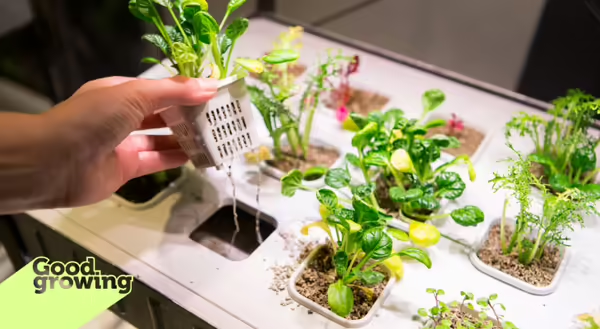
When you think of growing fruits and vegetables, you probably think about putting plants in the ground or into pots. However, you don’t always need ‘dirt’ to grow plants. In a hydroponic system, soil is replaced with a nutrient-rich water solution that provides the necessary nutrients for plant growth.
Why Try Hydroponics?
Hydroponic systems are more efficient than growing plants in the ground. Plants grown hydroponically often mature faster and produce more compared to plants grown in soil. It may seem counterintuitive, but hydroponics also uses less water (up to 90%).
Growing hydroponically also allows for more flexibility. Gardeners can grow year-round indoors and in areas where growing in the ground or in pots isn’t an option. Additionally, because plants are not grown in soil, soil-borne pests and diseases are less of a concern.
There are some drawbacks to growing plants hydroponically, though. Hydroponic systems are more expensive to set up when compared to growing in pots or in the ground. These systems may also require more management, such as monitoring water levels, nutrient concentrations, and pH.
Depending on the system being used, electricity may be required, so an extended period without power can lead to plant death. Since these systems are typically set up indoors, supplemental lighting is often necessary.
Hydroponic Systems
Hydroponic systems can be categorized in a few different ways. Systems can be active, where the nutrient solution is moved around the system (typically using a pump), or passive, where it is moved via capillary action (no pump required). Systems may also reuse the nutrient solution (recovery or recirculating systems), or the solution may not be reused (non-recovery systems).
There are a variety of different hydroponic systems that can be set up. Like many things, they can be rather simple or extremely complex. Here are a few options homeowners often start with:
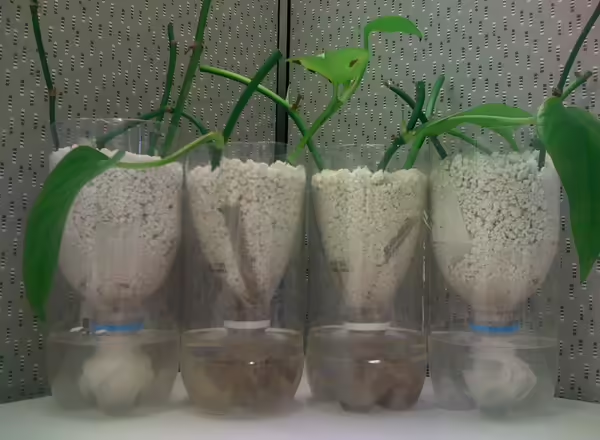
- Wick system: A wick draws the nutrient solution from a reservoir into the growing medium (often perlite, vermiculite, or coco coir). This system is passive, so no electricity is required.
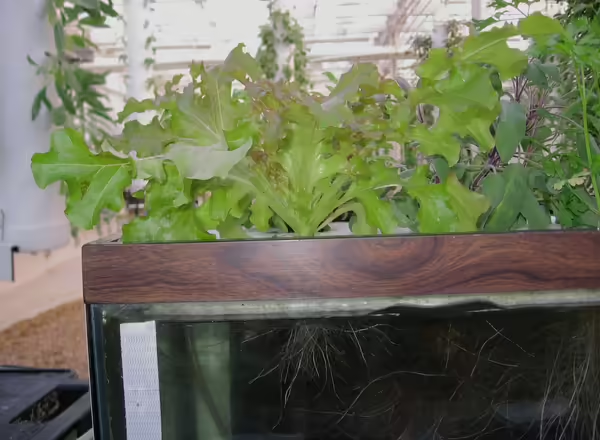
- Deep water culture or floating raft: Plants are held in net pots and placed in rafts (foam/polystyrene) that float on the nutrient solution. The roots are submerged in the nutrient solution. Even though these are passive systems, they need an air pump and an air stone to keep the roots oxygenated.
- Ebb and flow: Plants are grown in trays that are periodically flooded with nutrient solution. Once the growing media is sufficiently moist, the solution then drains back into a reservoir. This is an active recovery system, so it is a little more complex, requiring a pump and timer.
- Nutrient film technique (NFT): Is another active recovery system where plants are grown in a channel (such as a gutter) and nutrient solution is continuously flowing over the suspended roots of the plants. The channels are set up at a slight downward angle, allowing the nutrient to continuously move and eventually drain into a reservoir.
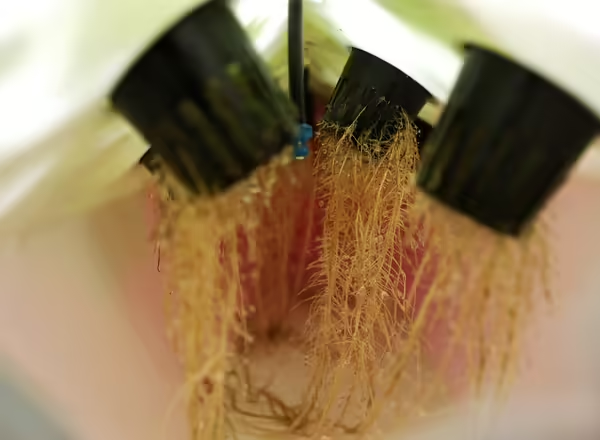
- Aeroponics: The roots of the plants are suspended in the air in an enclosed chamber, and the nutrient solution is sprayed onto them. The mist can be continuous or set up on a timer; this is also an active recovery system.

Getting Started at Home
Like any new endeavor, it’s best to start small. You can build your own system or purchase one. Many commercially available systems geared toward homeowners come with grow lights integrated into the systems.
If growing indoors, leafy greens (lettuce, kale, spinach, etc.) and herbs are good plants to start with. They grow quickly and take up minimal space. While you can grow larger fruiting plants like tomatoes hydroponically, they will take much longer to produce and require more space than many people can provide indoors. Food crops aren't the only things you can grow, though; flowers like calendula, pansies, and petunias can also easily be grown hydroponically.
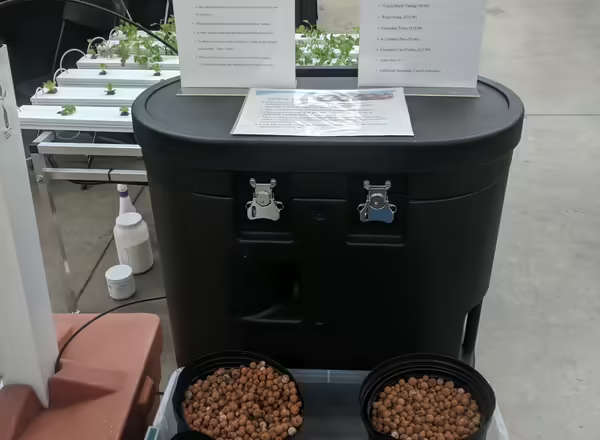
In addition to providing nutrients, soil also provides support for plants' roots. Since we aren’t using soil, you’ll need to provide some other substrate for the plants to grow in. Like hydroponic systems, there are numerous options available. Common substrates include coconut coir, perlite, vermiculite, rockwool, and expanded clay pellets. Depending on the substrate or system being used, containers such as net pots may be necessary.
Finally, you’ll need to select a nutrient solution to use. You’re probably familiar with nitrogen, phosphorus, and potassium. These are the nutrients we typically focus on when fertilizing plants or testing soil. However, there are 11 other nutrients (secondary and micronutrients) that plants require that need to be supplied. While you can formulate your own hydroponic solution, there are pre-made solutions available, many of which are even formulated for specific crops.
Once your system is set up, check water levels, keep the solution fresh, and monitor pH (most plants prefer 5.5–6.5). When you're done harvesting your crop, make sure to clean your system before replanting to prevent algae and salt buildup.
Good Growing Fact of the Week: The word hydroponics comes from two Greek words - ‘hydro’ meaning water and ‘ponos’ meaning labor. This term was first used in 1929 by Dr. William Gericke, who is considered the father of modern hydroponics.
References and for More Information
Home hydroponics, University of Illinois Extension
Hydroponics Systems and Principles Of Plant Nutrition: Essential Nutrients, Function, Deficiency, and Excess, PennState Extension
Rajaseger, G., Chan, K. L., Yee Tan, K., Ramasamy, S., Khin, M. C., Amaladoss, A., & Kadamb Haribhai, P. (2023). Hydroponics: current trends in sustainable crop production. Bioinformation, 19(9), 925–938. https://doi.org/10.6026/97320630019925.
Photos
Wick hydroponic setup- "Passive Hydroponics - Complete" by Qfamily is licensed under CC BY 2.0.
Aeroponic setup - neznamov1984, Adobe Stock
Floating raft, ebb and flow, nutrient film technique - Ken Johnson, University of Illinois Extension
Want to get notified when new Good Growing posts are available? SIGN ME UP!
Give us feedback! How helpful was this information (click one): Very helpful | Somewhat helpful | Not very helpful
MEET THE AUTHOR
Ken Johnson is a Horticulture Educator with University of Illinois Extension, serving Calhoun, Cass, Greene, Morgan, and Scott counties since 2013. Ken provides horticulture programming with an emphasis on fruit and vegetable production, pest management, and beneficial insects. Through his programming, he aims to increase backyard food production and foster a greater appreciation of insects.