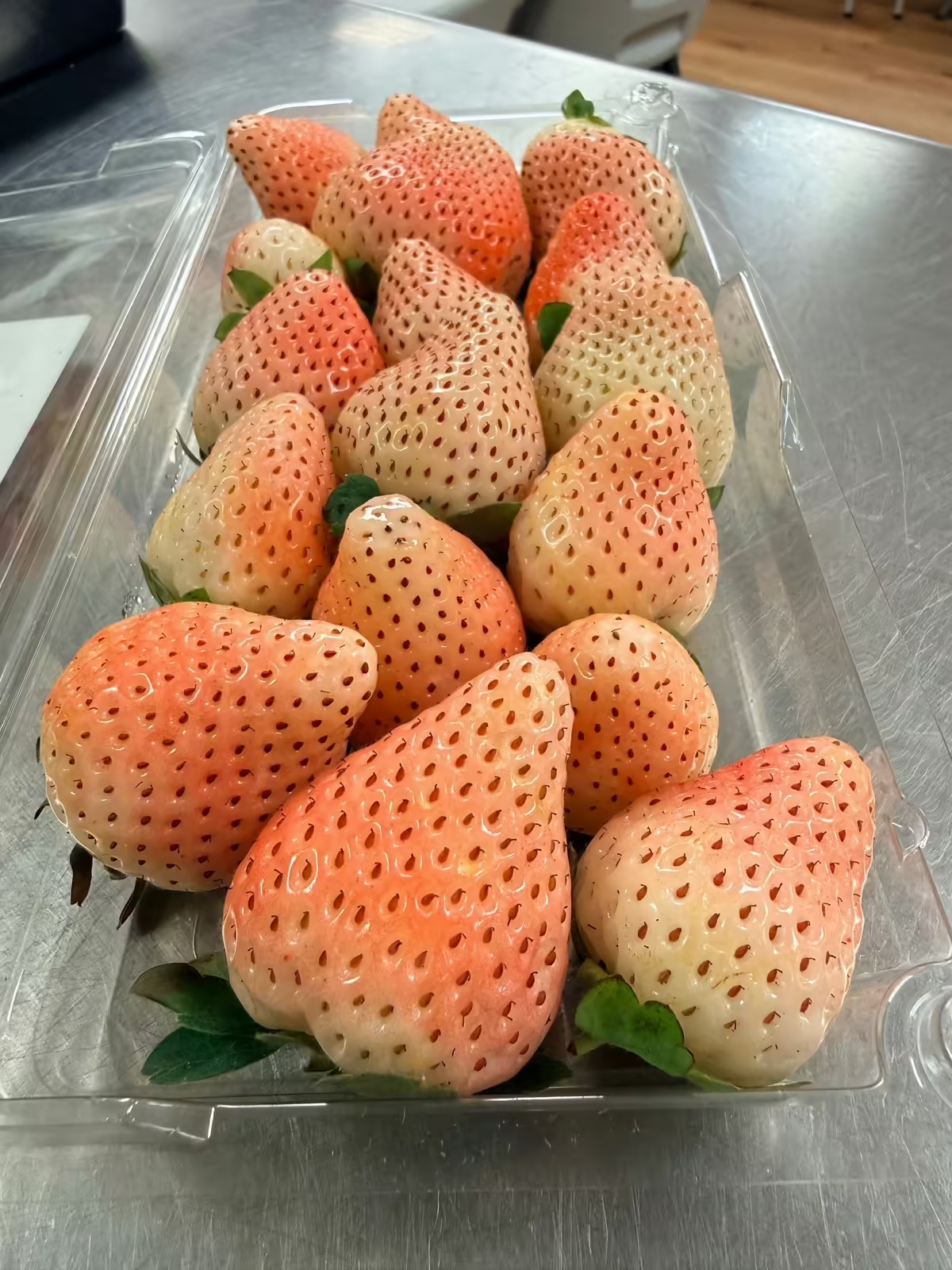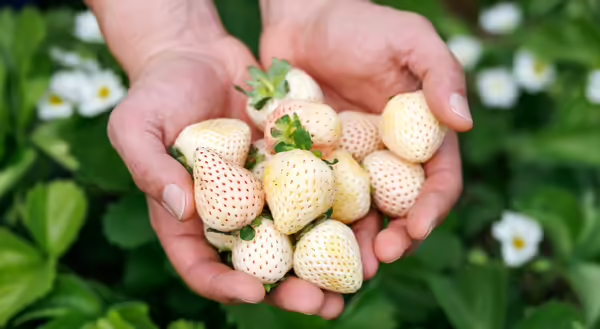
Pineberries are a unique, niche berry that, until recently, were only available at farmers’ markets or regionally. Commercial production has increased in recent years, thereby increasing the availability of pineberries in grocery stores. The exotic yet familiar appearance is sure to turn heads and inspire questions, so let’s consider the origin of this unique strawberry and growing conditions for adventurous gardeners interested in adding a white strawberry to their garden.
No Ordinary Strawberry
Although a true strawberry (Fragaria sp.), unlike standard strawberries, pineberry (Fragaria x ananassa) is white to blush in color when ripe with red seeds. The fruit is generally smaller in size and exhibits a softer texture. In addition to being known for their unique color, pineberries are marketed as having a pineapple-like flavor and/or aroma.
A Hybrid of Luck
Pineberry (Fragaria x ananassa) is a hybrid strawberry, the result of a natural cross between Fragaria chiloensis (Chilean strawberry) and Fragaria virginiana (Virginia strawberry). But this is the most simplified version of how the pineberry came into existence.
The native range of F. chiloensis is the western coast of North and South America, and F. virginaiana is found in all 50 states. However, it is believed that the natural hybridization that produced F. x ananassa occurred in Europe in the 18th century, after each species was individually introduced to the continent. Although originally a natural hybrid, breeders have been selecting parent plants for specific traits, resulting in a variety of desirable characteristics bred into cultivars, including cold hardiness, flavor, pale-flesh coloration, and berry size.
Growing Pineberry
Grow pineberries in the same way garden strawberries are grown. Plant in well-drained, sandy loam soil that is rich in organic matter in full sun. Straw mulch helps suppress weeds while retaining soil moisture and moderating soil temperature fluctuations during winter months.
Begin with transplants in the spring, obtained from a reputable source. Starting from seeds is not recommended due to open pollination; seeds will not produce true to type. Cultivars vary in hardiness from USDA zone 3 to 9, drought tolerance, production reliability, fruit size, and growth habit.
Strawberries, including pineberry, are self-sterile, meaning they require a second cultivar for successful pollination. For many pineberry cultivars, planting a compatible red fruit garden cultivar improves pollination and fruit set. Planting at a ratio of three pineberries to one standard strawberry is recommended. Insects, especially bees, play a major role in strawberry pollination. Creating a bee-friendly habitat near strawberry beds can improve berry pollination.
Fruit turns from green to blush, or white when ripe, and seeds become bright red. The texture of ripe berries is softer than that of traditional red-fruit strawberries, although some sources note that this is not a reliable indication of ripeness. A more reliable indicator of ripeness is the color of the achenes, turning from green to red. Harvest with a gentle twist or pinch and store in the refrigerator until use.
Bird predation is often a challenge with strawberries. Due to the unusual color, it has been observed that birds may not perceive the fruit as ripe and therefore don’t feed on the fruit as often.
As a true strawberry, pineberry is susceptible to many of the pests and diseases that garden strawberries are, including leaf spot, leaf scorch, black root rot, red stele, anthracnose, gray mold, viruses, spider mites, aphids, leafrollers, slugs, nematodes, and strawberry weevils.
An Informal Office Taste Test
I had never tasted a pineberry and suspected many of my colleagues hadn’t either. I took this opportunity to conduct an informal poll of my office mates, asking those willing to participate to taste a pineberry and describe their experience.
Of the seven colleagues who were available and willing to participate, four agreed that the pineberry tasted like pineapple, two did not describe the flavor as pineapple, and one said it “kind of” tasted like pineapple.
One participant said with enthusiasm, “It absolutely tastes like pineapple! Smells like a mix of strawberry and pineapple with the texture of a strawberry. It‘s delicious.” Another noted that “I don’t taste pineapple while chewing it…it is in the aftertaste.” While we didn’t agree with the flavor profile being akin to pineapple, everyone agreed that it was sweet and delicious.
If you find pineberries in your local grocery store and are willing to try the unique fruit, feel free to write to me and let me know what you think. Did you taste hints of pineapple?
Good Growing Fact of the Week: Don’t confuse pineberry with the albino fruit of the standard strawberry. Red garden strawberries can exhibit albinism as a result of excessive nitrogen applications or unfavorable weather conditions, such as warm weather followed by cloudy or foggy weather. Albino fruit also has poor flavor.
Thank You for Reading!
Sign up for our emails! Want to get notified when new Good Growing posts are available? SIGN ME UP
Give us feedback! How helpful was this information (click one): Very helpful | Somewhat helpful | Not very helpful
MEET THE AUTHOR
Emily Swihart is a horticulture educator with University of Illinois Extension, serving Henry, Mercer, Rock Island, and Stark counties since 2021. Emily provides horticulture programming with an emphasis on the home gardener, the urban forest, native plant ecosystems, and landscape design. Additional responsibilities include supporting local county Master Gardener and Master Naturalist volunteers - providing training, continuing education, advanced training, and their involvement in seasonal events and community outreach programs.