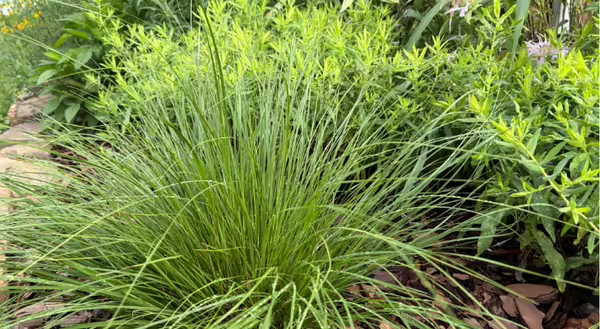
Grasses can help provide groundcover, increase root competition to keep other native plants shorter, improve soil health, and increase water capture. While there are many popular non-native grass options for sale, consider adding some native grasses to your garden.
Non-native grasses like miscanthus and fountain grasses can escape from our home gardens and cause issues in natural areas.
If you are looking for introductory native grasses that are tried and true, more widely available, and easy to maintain, look no further than these four picks below:
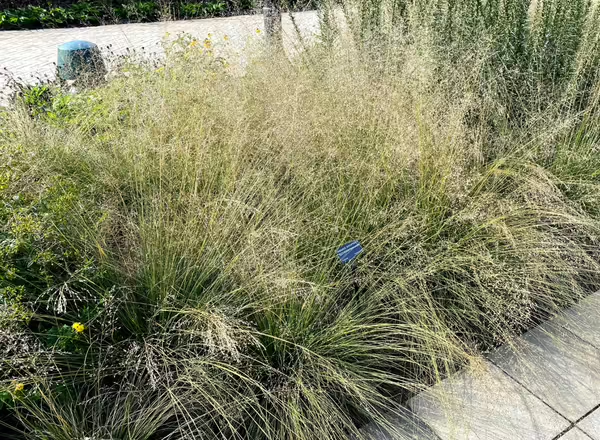
Prairie Dropseed
Where it thrives in my garden, Prairie Dropseed is one of my favorite plants of all time. It has great form and continues to grow and get better year after year. I simply chop back last year’s growth in early spring to maintain this grass. This year I already had new growth within 4 days of chopping back last year's plant material!
I have experienced some failure with this species, so I would pay attention to where you plant it. In my gardens, some of my native plants grow so tall and flop over, covering the prairie dropseed. A couple of years of this pattern killed off those dropseeds. If you do decide to add dropseeds into a more mature garden, I’d consider Chelsea chopping those native plants (if they are suited to that management) to make sure the dropseed get enough sun.
I also tried growing prairie dropseed in a garden spot that gets full sun and nearly zero water, and it did not survive. Years and years of trying to find plants to survive in this location had proved mostly fruitless - so I thought, maybe a native grass would work? I was hopeful, and it was not successful in this case, even with supplemental watering.
That being said, in full sun locations with some moisture, Prairie Dropseed thrives!
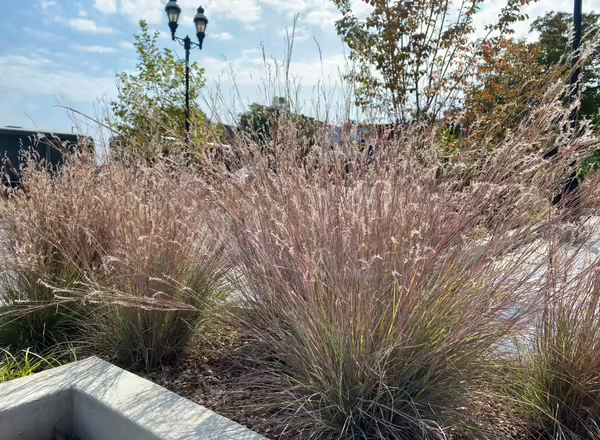
Little Bluestem
Little Bluestem is a great four-season interest grass. Depending on the local ecotype you get, the foliage can range from a silvery blue to an orangey-red. It has delicate fluffy seeds that form in late summer and last through the fall.
This grass is reliable for me – every plug I’ve planted over the past 8 years has grown – even with some shading from taller plants. This year I found a handful of little bluestem sprouts that had started from seed around my garden beds – to me this meant free plants! It was very easy to dig them up and transplant them to new spots around the garden.
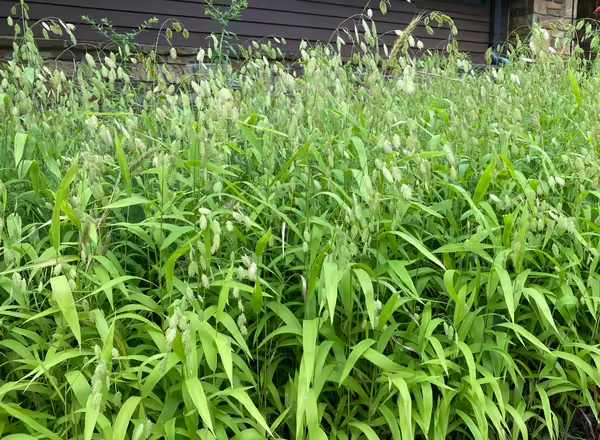
River Oats
If you are looking for a container plant, River Oats is a great option. An aggressive spreader, containers limit the potential spread of this plant.
River oats can be planted in sun to shade, making it very adaptable. The color of the foliage will be darker green in shadier conditions, and almost a lime green in full sun. It has an upright form with broad leaves, and its seed heads are showy, turning a golden color in fall. I love adding River Oats to sensory gardens.
It will spread through rhizomes underground and through seed, so pay attention if you do decide to plant this grass so it doesn't get out of control.
Side Oats Grama
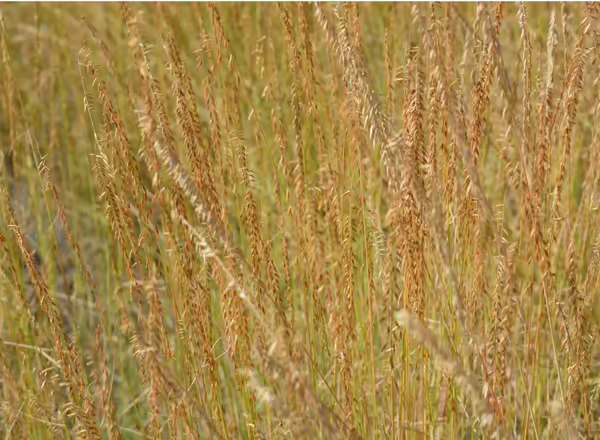
I feel like Side Oats Grama is underplanted and should be used more! Planted in mass, this delicate grass can be a showstopper. It can also serve as a groundcover in sunny, dry areas, since the majority of the foliage stays under a foot tall.
It will put up flowering stalks that can be 2-3 feet tall, but they are airy and delicate. It blooms in late summer into early fall. The leaves can have some reddish color to them, and the spikelets are often reddish, turning to a straw color in late fall.
Will you consider adding any of these grasses into your landscape?
Thank you for reading! Need a refresher on grass identification terms, like ligule and spikelet? Check out this blog post!
About Grasses at a Glance
Never miss a new post! Subscribe to our email list to get updates each time a new post is available.
Give us feedback! How helpful was this information (click one): Very helpful | Somewhat helpful | Not very helpful
ABOUT THE AUTHOR: Erin Garrett is a Natural Resources, Environment, and Energy Educator for University of Illinois Extension serving Alexander, Johnson, Massac, Pulaski, and Union counties. Erin develops and delivers high impact programming to adults and youth to help them develop an appreciation for natural resources and to empower them to make small changes to positively impact the environment. Erin’s programming focuses on why homeowners should consider choosing native plants, how to support native pollinators, how to identify grasses, how to identify and manage invasive species, and developing an appreciation for prairie ecosystems.