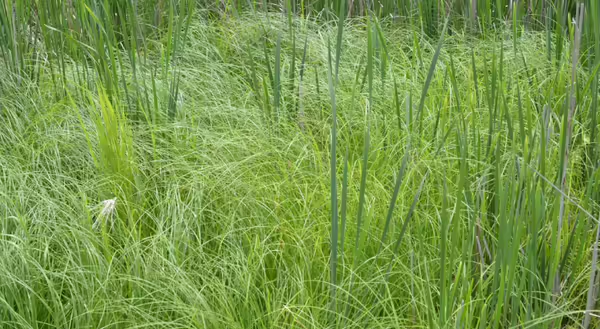
While visiting a nature center in Missouri, I was excited to find that they included several native grasses in their landscaping, including Little Bluestem, Prairie Dropseed, and Big Bluestem. But one of the most abundant grasses they used throughout their parking area was Prairie Cordgrass.
This grass is a tallgrass species, but it is less abundant than the three we usually talk about — Big Bluestem, Indian Grass, and Switchgrass. It often forms colonies, and when planted in a large row to separate rows of parking, it added a great textural interest, as well as some fall color.
Identification characteristics
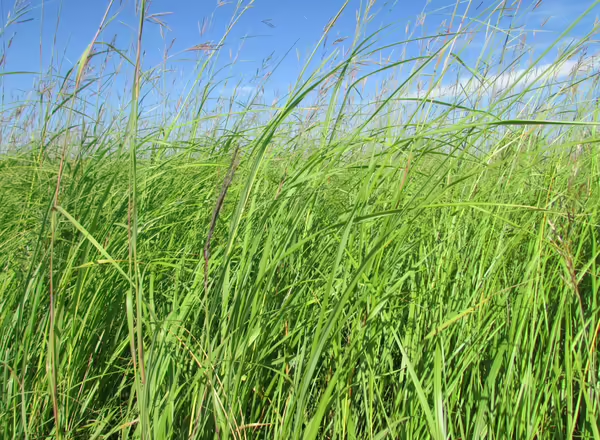
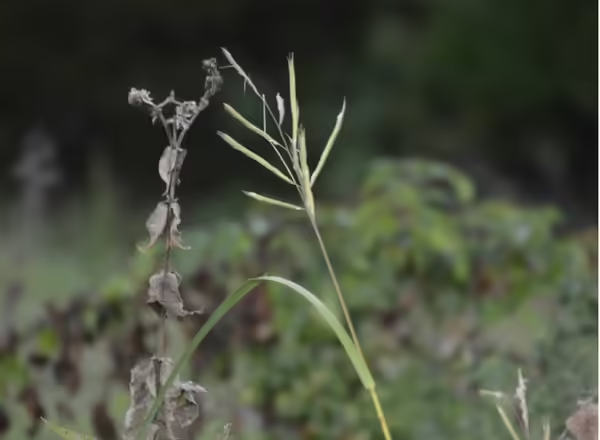
Prairie cordgrass (Spartina pectinata) grows between 3 and 7 feet tall, with most of the foliage staying under 4 feet tall, and the flowering stalk making up the rest of the height. Cordgrass has a distinctive growth habit with its long leaves, often over 2 feet in length, arching towards the ground and tapering to a fine point.
The leaves are very sharp, so take care when working around this grass. The ligule is a fringe of white hairs, located at the base of the leaf blades where they start to wrap around the stem.
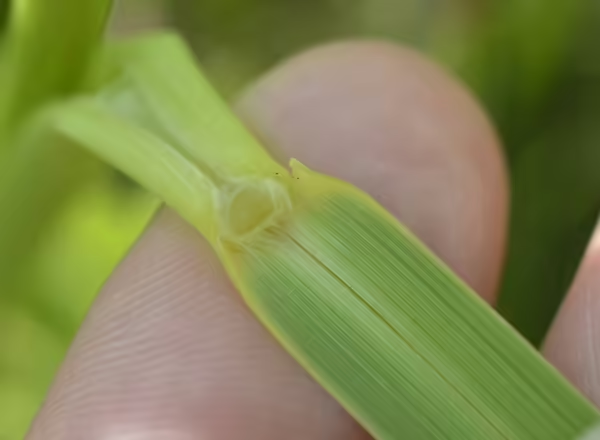
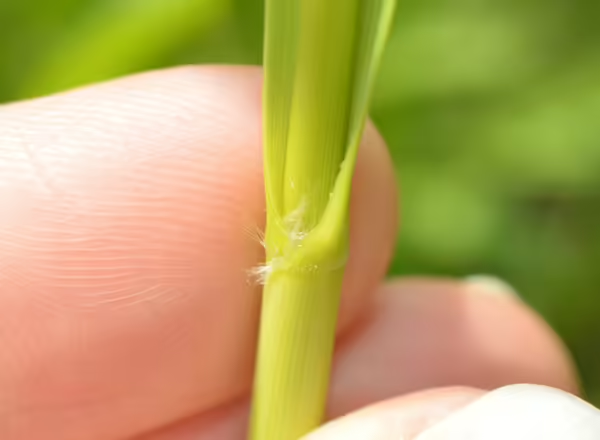
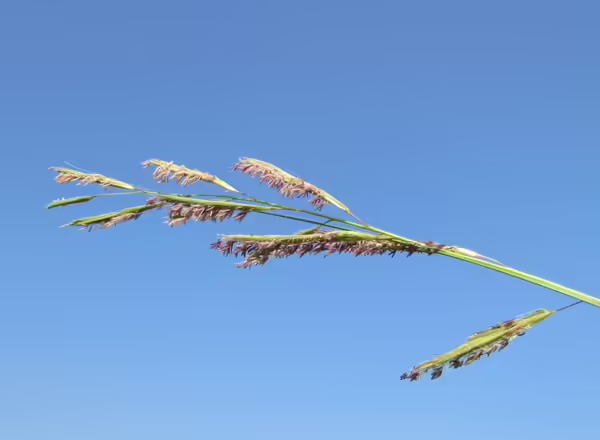
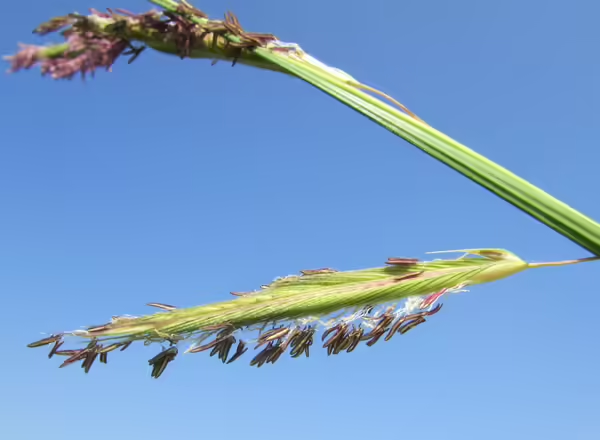
Prairie cordgrass flowers from summer to fall. Its inflorescences are racemes, with finger-like collections of spikelets along a central stem. The whole inflorescence is about a foot tall, and the collections of spikelets are a few inches long. The individual spikelets are awned.
This grass spreads through rhizomes and often occurs in colonies. It prefers to grow in wetter areas, occurring in moist prairies, along bottomland forest edges, in ditches, and other similar moist areas.
Thank you for reading! Need a refresher on grass identification terms, like ligule and spikelet? Check out this blog post!
About Grasses at a Glance
Never miss a new post! Subscribe to our email list to get updates each time a new post is available.
Give us feedback! How helpful was this information (click one): Very helpful | Somewhat helpful | Not very helpful
ABOUT THE AUTHOR: Erin Garrett is a Natural Resources, Environment, and Energy Educator for University of Illinois Extension serving Alexander, Johnson, Massac, Pulaski, and Union counties. Erin develops and delivers high impact programming to adults and youth to help them develop an appreciation for natural resources and to empower them to make small changes to positively impact the environment. Erin’s programming focuses on why homeowners should consider choosing native plants, how to support native pollinators, how to identify grasses, how to identify and manage invasive species, and developing an appreciation for prairie ecosystems.