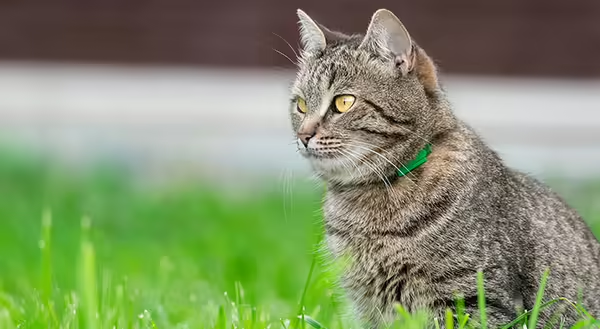
I’m startled by the chain-link fence rattling outside the window of my home office and glance up. A lithe, furry predator slinks along the top rail. It’s on the prowl, looking for prey among the weeds at the edge of the yard. It’s midday, an odd time for a mammalian predator to be out and about. In the milliseconds it takes my brain to process, I run through the native predators that could be in my backyard. In urban Illinois, I might reasonably expect to see a red fox or even a coyote. Two hundred years ago, back when my yard was a tallgrass prairie bordering mature hardwood forest, it would have been stalked by creatures as grandiose as gray wolves and cougars. That type of habitat is long gone, however, and this animal is much too small, too cute, too striped. Oh, and it’s wearing a collar. Indeed, it is a domestic cat, one who is owned and probably cared for by a nearby neighbor.
Why is this carnivore creeping through my yard?
Born Killers
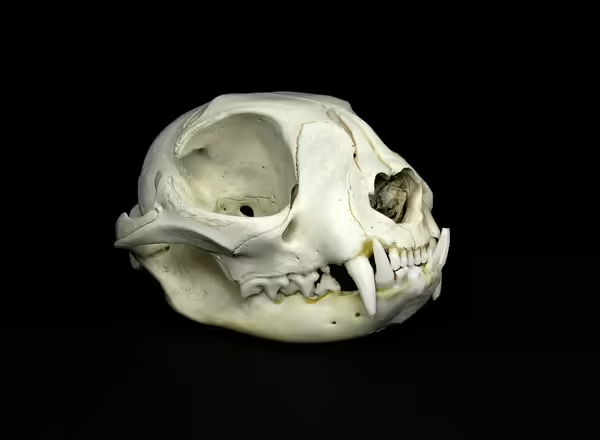
Domestic cats are true carnivores, even more so than dogs. Have you ever looked inside a cat’s mouth? You’ll see tiny incisors, large pointy canines, sharp “carnassials” (bladelike teeth for shearing meat) and just a few grinding molars. Their unusually sharp and low number of teeth is the best indicator that cats are equipped for killing other animals, though their muscular legs, claws for traction and attack, and long tail for balance are also key features of a well-built carnivore. Because cats are born killers, people sometimes assume that cats need access to the outdoors.
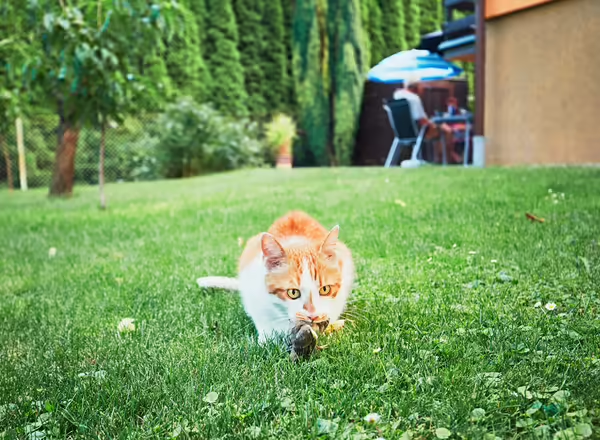
Allowing cats to roam freely is usually done with the best intentions. Sometimes it’s assumed that “cats are at work” and can control or deter rat and mouse populations through their presence. While it’s true that predators create a “landscape of fear” and may diminish activity of mammalian pests, this doesn’t mean they’ll deter rodents entirely, nor does it mean they can deplete rodent populations. Cats are opportunistic predators, taking easy prey, and hence are just as likely to consume native wildlife.
Researchers estimate that outdoor cats in the U.S. kill billions of birds and mammals annually. Unowned outdoor cats eat more wildlife, probably because this is their primary source of food. However, any outdoor cat poses a threat to our songbirds and small mammals. Domestic cats are active when native predators are not, and they’re unfamiliar to the animals they kill. Our native predators typically attack from the air, often near dusk or at night (hawks and owls) or raid nests (snakes, raccoons), but cats may attack at any time during the day. Because our native fauna are naïve to small cats as predators, they are less likely to escape them.
The "great outdoors" is not a great place for domestic cats
Being outdoors is also dangerous for the cats themselves! Outdoor cats risk exposure to diseases and parasites transmitted by other cats and wildlife. They’re likely to run across the paths of cars, and, even in cities, may tangle with dangerous carnivores like coyotes and raccoons. Or they may wander too far, become lost, and never find their way home.
The diseases that may be passed onto outdoor cats also pose dangers to people, native wildlife, and livestock. For example, unvaccinated feral cats can pick up the deadly rabies virus from wild animals like bats and transmit it to other wildlife, or even people. When unvaccinated feral cats concentrate around outdoor feeding stations, the risk of rabies transmission to other cats or medium-sized carnivores like raccoons is greatly increased. Outdoor cats contaminate the soil with feces and urine, which can lead to infections in people, wildlife, or livestock with microscopic pathogens such as Toxoplasma gondii. This parasite causes prenatal or neonatal deaths or abnormalities in humans and livestock, including sheep and goats.
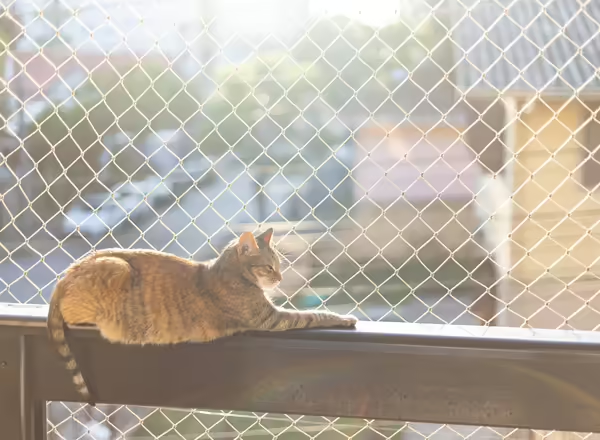
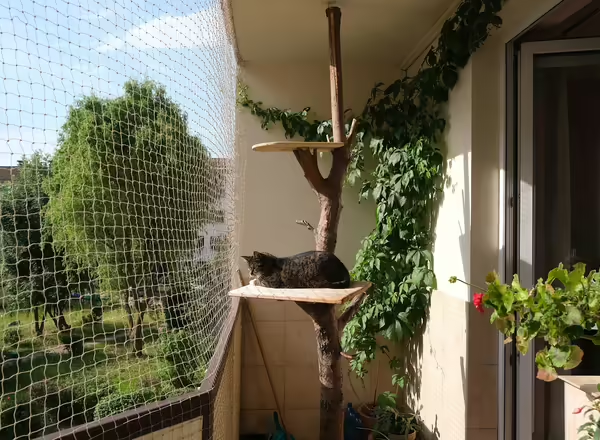
If you enjoy watching cats showing off their carnivorous capabilities, give them toy birds and mice. Waving a tethered fake mouse on a wand or zipping a red laser beam around on the floor or wall almost always grabs their attention and gets them moving. Then your furry friend can rest by the window after its indoor killing spree and watch the birds fly past safely in the yard.
References
- Blanton, J.D., Palmer, D., Dyer, J., & Rupprecht, C.E. (2011). Rabies surveillance in the United States during 2010. Journal of the American Veterinary Medical Association, 239(6), 773–783.
- Cats Safe at Home Website.
- Loss, S.R., Will, T., & Marra, P.P. (2013). The impact of free-ranging domestic cats on wildlife of the United States. Nature Communications, 4(1), 1-8.
- Ribeiro, J., Staudacher, C., Martins, C.M., Ullmann, L.S., Ferreira, F., Araujo, J.P. & Biondo, A.W. (2018). Bat rabies surveillance and risk factors for rabies spillover in an urban area of Southern Brazil. BMC Veterinary Research, 14, 1-8.
- Weigel, R.M., Dubey, J.P., Dyer, D., & Siegel, A.M. (1999). Risk factors for infection with Toxoplasma gondii for residents and workers on swine farms in Illinois. The American Journal of Tropical Medicine and Hygiene, 60(5), 793-798.