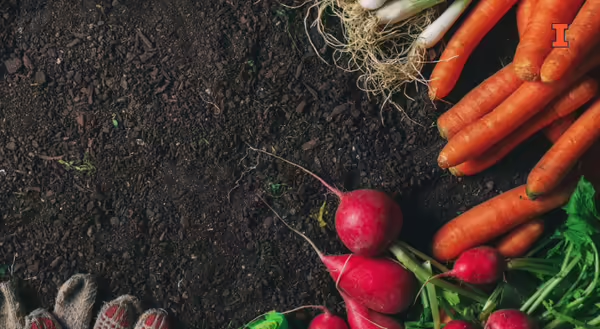
Spring has officially sprung in northern Illinois, and with it comes the excitement and opportunity of a new gardening season. Before seeds and transplants make their way into the ground, taking time to properly prepare your garden bed can set the stage for healthier plants, higher yields, and fewer headaches later in the season. Think of garden bed preparation as spring training for your vegetables.
Preparing the Soil Bed
Healthy gardens begin with healthy soil. Soil is a complex mixture of mineral particles such as sand, silt, clay, organic matter, and beneficial organisms working together beneath the surface (Finneran 2016). Before digging or tilling, it’s important to make informed fertility decisions that will support plant growth throughout the season.
The best place to start is a soil test. Testing your soil helps determine nutrient levels and pH, ensuring you apply the right amendments and avoid unnecessary ones. A soil test saves time, money, and prevents nutrient runoff that can harm the environment. The University of Illinois Extension provides step-by-step guidance on when and how to collect and submit soil samples.
Once you have interpreted your soil test results, it’s time to choose fertilizer. Garden fertilizers come in many forms, including bone meal, blood meal, plant-based products, and synthetic options. Most garden fertilizers have nutrient ratios such as 5-10-5, 10-10-10, or 12-12-12. Organic (OMRI-approved) options typically have lower nutrient concentrations, such as 5-3-3 or 3-4-4. Always follow label instructions and soil test recommendations when applying fertilizer to avoid overfeeding your plants.
Tillage usually occurs right before planting vegetables. Home gardeners may use a walk-behind rototiller or a broad fork to loosen the top layer of soil, improving aeration and allowing roots to grow more freely. If you’re interested in a gentler approach, no-till gardening is another option. Over time, no-till methods can improve soil structure and increase organic matter while reducing compaction (Finneran, 2016).
Weed barriers and soil amendments
Amending your garden bed improves soil health and helps manage weeds throughout the season. Several easy-to-use materials can serve both purposes:
- Compost: Mushroom, manure-based, plant, or worm compost all work well. Applying a one- to two-inch layer annually can boost fertility and may provide the nutrients plants need for the season (Finneran, 2016).
- Leaf mold: Remove old leaves from beds to ensure good drainage and root development. Once plants are established, leaf mold can be used on the soil surface near plant stems as a weed barrier.
- Straw mulch: A thick layer of straw suppresses weeds and retains moisture. Straw can be applied before or after planting vegetables for effective coverage.
- Newspaper: When starting a new garden bed, layering newspaper over grass can help smother existing vegetation and jump-start your growing space.
Once amendments, tillage, and weed barriers are in place, your garden is ready for planting. Will you experiment with a new method this year? Either way, thoughtful preparation now will pay off all season long. For more information, check out the University of Illinois Extension’s Local Food and Small Farms YouTube Channel for growing tips and other horticultural advice.
About the author: Alexis R. Barnes is the University of Illinois Extension Local Food Systems Small Farms Educator serving DuPage, Kane and Kendall Counties. Barnes’s areas of expertise include fruit & vegetable production and reduced tillage practices.
References:
Enroth, C., and Grant, Z. Interpreting Test Results. Soils. University of Illinois Extension. /soil/interpreting-test-results [Accessed 8 April 2026].
Finneran, R. 2016. Preparing the Smart Vegetable Garden. Gardening in Michigan. Michigan State University Extension. https://www.canr.msu.edu/resources/preparing_the_smart_vegetable_garden [Accessed 8 April 2026].
Vogel, S. 2021. When and How to Take a Soil Test. Soil Testing Info sheet. University of Illinois Extension. /sites/default/files/soil_testing_infosheet.pdf [Accessed 8 April 2026].