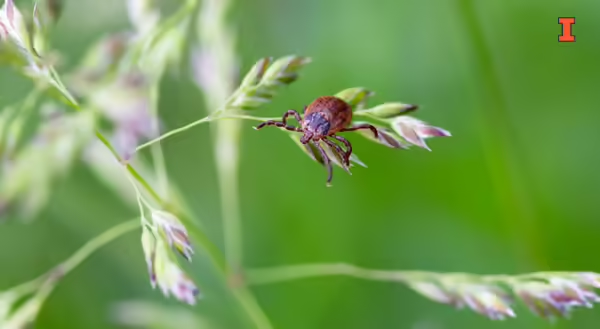
May is Lyme Disease Awareness month, so now is a great time to learn more about its host and how to protect your family from tick bites.
What are ticks?
Ticks have eight legs and belong to the arachnid family, related to spiders. Because their primary source of food is blood from animals, they have needle-like mouthparts. In Illinois, six species of ticks can cause disease in humans: Blacklegged Deer tick, American Dog tick, Brown Dog tick, Lone Star tick, Gulf Coast tick, and Soft ticks. They all go through larval, nymph, and adult life stages, and can vary in size from microscopic to pea-sized, depending on species and life stage. They can live in many different habitats, such as woodlands and meadows, but generally prefer taller vegetation like grasses. They are also found in both urban and suburban areas, and can be found on trails, beaches, and even your own backyard.
What should you watch for?
Ticks can be carriers of many diseases, such as Lyme, Anaplasma, Babesia, and Ehrlichia. These diseases generally cause infected people to experience flu-like symptoms such as fever, joint pain, and/or a bull's-eye rash. Additionally, the Lone Star tick is known to occasionally cause alpha-gal syndrome, which causes a meat allergy in those afflicted. Care should be taken after spending time outdoors to check for ticks. Additionally, pets that spend time outdoors should be given regular flea and tick treatments (ask your veterinarian for more information).
What can you do?
Prevention is the best way to protect yourself from ticks. If you spend time outdoors, make sure to walk in the center of trails, wear light-colored clothing, tuck pant legs into your socks to minimize exposed skin, and treat outdoor gear and clothing with 0.5 percent permethrin. You can also apply insect repellent containing at least 20 percent DEET to all exposed skin. Additionally, check yourself for ticks using a mirror after doing yard work or hiking and shower within 2 hours to help find any that may have hitchhiked. Pay close attention to areas like the scalp, underarms, and groin. If you do have one attached, remove it with fine-tipped tweezers by grabbing the head and gently pulling upwards until the tick releases. Avoid those old home remedies, such as applying a match head, petroleum jelly, or nail polish remover, as these can cause the tick to expel stomach contents, increasing the chances of disease transmission. Clean the exposed area with alcohol and wash your hands with soap and water afterwards. Save the tick in a plastic zip-top bag with a moist cotton ball for potential identification or testing.
While saving the tick can help doctors if you later have an issue, they are also useful for helping researchers! Ticks can be submitted to the University of Illinois for free testing. See page 2 of this handout for more information. Submission of ticks helps the University study the distribution of ticks and potential disease spread in Illinois. Tick submissions will receive an emailed response identifying the species of tick and providing you with more information about that species.
For more information on tree care, check out the University of Illinois Extension’s fact sheet on Asian Longhorned Ticks, this video on ticks, and the Illinois Lyme Association’s site on Tick Basics. Also, check out the University of Illinois Extension Horticulture YouTube Channel for videos on tree care and other horticulture topics.
About the author: Jamie Viebach is the University of Illinois Extension Horticulture Educator serving DuPage, Kane, and Kendall counties. Viebach’s primary areas of expertise are native plants, landscaping, pollinators, and rain gardens.