Volunteer Handbook

Title
About this Handbook
This handbook has been designed to introduce you to Illinois Extension and to provide an overview of policies and procedures which provide all volunteers with guidance.
Each program area in Extension may have additional policies and documents that are applicable to their volunteer program area.
Single Page View
Welcome
Congratulations on becoming a volunteer with University of Illinois Extension! You have joined an amazing group of individuals dedicated to providing service to their communities and to youth and families across Illinois. Being an Illinois Extension volunteer brings rewards like no other opportunity, including helping youth and adults develop in positive and productive ways, broadening horticultural and environmental knowledge in enriching, relevant, and accessible ways, preserving natural resources, producing fresh produce for others, connecting with a social group, finding a sense of purpose, and so much more.
As a representative of University of Illinois, compliance with the Illinois Extension Code of Conduct as you complete your volunteer activities is vital to ensuring the integrity, respect, and dignity of our programs. Treating all with fairness and equity by opening access to Illinois Extension through inclusion and belonging is critical to your success as an Illinois Extension Volunteer. The Illinois Extension Volunteer Handbook is your resource as you engage with our audiences. Be sure to frequently connect and communicate with your Extension educator, program coordinator, county director, or volunteer liaison to optimize your experience as an Illinois Extension Volunteer.
Thank you for making the commitment to give freely of your talents, skills, knowledge, energy, and interests to offer others the ability to explore their curiosities, develop skills, and advance their understanding and passions. We look forward to your many years of volunteer service with University of Illinois Extension.
Single Page View
Role of Extension Volunteers
Volunteers are an integral part of programs and services that Illinois Extension delivers.
As valued members of Illinois Extension programs, volunteers contribute skills, talents, and experiences to strengthen all aspects of an Extension program and support its mission. A volunteer is any person who gives time and expertise without expecting monetary compensation from University of Illinois.
Our work is always part of a larger picture. We must follow the policies and guidelines of our organization and respect those of our program partners and funders.
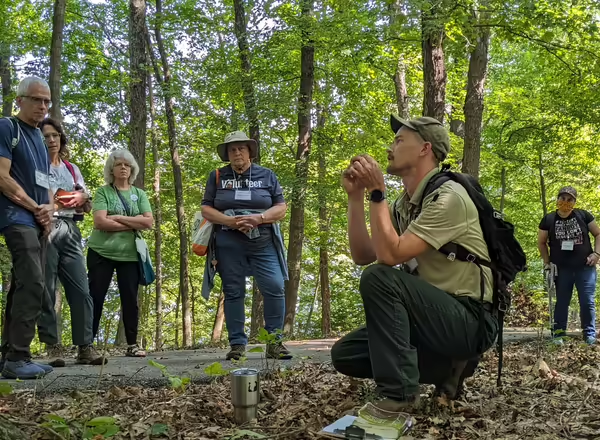
Being a Volunteer Means
- Being officially enrolled in a program to be considered an Extension volunteer.
- Continuing education per program requirements annually.
- Aligning with the vision, mission, and values of Illinois Extension and promoting these in all aspects of volunteering for Extension
Benefits of Volunteering
- Develop leadership skills.
- Gain free educational opportunities.
- Build skills and experiences for future careers.
- Make new connections and explore unique networking opportunities.
Single Page View
Volunteer Process
Volunteers are valued members of University of Illinois’ Extension programs. Volunteers contribute their skills, talents, and experiences to strengthen all aspects of Extension programs and support our mission. The quality of Extension programs and safety of our participants and the people we work with require that the selection of volunteers be taken seriously, and that the organization works to recruit the best possible volunteers.
Regular Background Checks
Illinois Extension is dedicated to regularly screening current volunteers to ensure the safety and security of those we serve.
Steps to Become a Volunteer
- Application submission through the Gateway Volunteer System.
- Reference checks.
- Interview with Illinois Extension staff.
- Criminal History Check and Registered Sex Offender check through Sterling Volunteers
- Illinois Department of Children and Family Services – Child Abuse and Neglect System (CANTS) check.
- Illinois Extension Child Protection Training.
- Volunteer orientation/training.
- Additional steps or forms may be required by individual programs.
Background Screening and Form Requirements
| Process or check | New Volunteers | Annually | Every 3 Years |
|---|---|---|---|
| Extension volunteer application through the Gateway Volunteer System | Yes | No | No |
| Three reference checks | Yes | No | No |
| Interview | Yes | No | No |
| Registered sex offender check | Yes | Yes | Yes |
| Extension Volunteer Code of Conduct (signature required) | Yes | Yes | Yes |
| Program Volunteer Agreement (signature required) | Yes | Yes | Yes |
| Extension Risk Waiver (signature required) | Yes | No | No |
| Talent Release Form (signature required) | Yes | Yes | Yes |
| Extension Child Protection Training Certificate | Yes | No | No |
| Background screening through Sterling Volunteers | Yes | No | Yes |
| Child Abuse and Neglect Tracking System (CANTS) check through DCFS | Yes | No | Yes |
| Driver authorization for those who will be driving as part of their volunteer role* May not apply to all programs* | Yes | Yes | Yes |
| Volunteer continuing education | No | Yes | Yes |
| Reporting Volunteer hours: See specific requirement for Master Gardeners, Master Naturalists and 4-H | No | Yes | Yes |
| Emergency Medical Form | As needed | As needed | As needed |
Single Page View
Volunteer Roles and Background Check Requirements
Background checks are a fundamental part of the volunteer screening process and ensure the safety and security of our volunteers, program participants, and the organization. As a general guideline, background checks are required for any individual who handles money or sensitive information or who directly interacts with vulnerable populations. Background checks are tracked through Extension’s volunteer management platform, Gateway.
Background Checks
The three main background checks are criminal record, child abuse and neglect, and registered sex offender.
Criminal Record
Frequency: Every 3 years
This volunteer-authorized background check includes a social security number trace, a Government Watchlist Search (OFAC), and a validated nationwide criminal search. Searches are performed by Sterling Volunteers. Sterling Volunteers offers volunteer screening services to nonprofits and volunteer programs and provides a secure online platform that allows volunteers to enter and control their information when ordering a background check.
Child Abuse and Neglect
Frequency: Every 3 years
This volunteer-authorized background check includes a search of the Child Abuse and Neglect Tracking System (CANTS). Searches are performed by the Illinois Department of Children and Family Services (DCFS) through their secure online platform.
Registered Sex Offender
Frequency: Every year
This background check includes a search of the U.S. Department of Justice National Sex Offender Registry (Dru Sjodin/NSOPW). Initial searches are performed by Sterling Volunteers; annual searches thereafter are performed by the Gateway system and verified by local Extension staff.
Direct Volunteer Roles
Direct Volunteer
A direct volunteer is an adult who meets the following criteria:
- Is an approved and active Illinois Extension volunteer within the Gateway system
- Provides unpaid support through direct (in-person or digital) contact with Extension clientele
- Provides a learning experience for adults or youth within Extension
- This support may occur without the presence of another direct volunteer or Extension employee.
Required background checks: Criminal background, child abuse and neglect, and registered sex offender
Minor Direct Volunteer
A minor direct volunteer is an enrolled 4-H member ages 14 to 17 who meets the following criteria:
- Is an approved and active Illinois Extension volunteer within the Gateway system, including the parent contact information
- Provides unpaid support through direct (in-person or digital) contact with Extension clientele
- This support must occur with another direct volunteer or Extension employee present.
Required background checks*: Criminal background, child abuse and neglect, and registered sex offender
*Parent or guardian permission is required through a Sterling Volunteers Minor Consent Form and DCFS authorization before obtaining background checks for volunteers ages 14 to 17.
Episodic Direct Volunteer
An episodic direct volunteer is an adult who meets the following criteria:
- Provides unpaid support as a specific task for Extension programming for a single event
- This support must occur with another direct volunteer or Extension employee present
- Does not have supervisory or leadership duties in an Extension program
Required background check: Registered sex offender
Direct Volunteer Types
Common volunteer titles, descriptions, and roles are noted below for reference. If a title isn’t listed, contact the county director, volunteer relations associate, or program specialist for guidance.
Indirect Volunteers
An indirect volunteer is an individual who may provide unpaid assistance during programs, but the level of involvement doesn’t meet that of a direct volunteer. An indirect volunteer does not handle money or sensitive information or directly interact with vulnerable populations. Background checks are not required for indirect volunteers.
Examples of indirect volunteers include, but are not limited to:
- A parent accompanying a child or spouse to an event as an observer
- A parent providing transportation to an event that is NOT coordinated by Extension or the club/group
- An adult providing one-time or short-term service, such as a:
- Speaker or workshop provider
- Community garden participant
- 4-H general project superintendent
- 4-H general show, livestock, or state fair judge
- An Extension council board or committee member
Supporters
A supporter is an individual, business, or organization that contributes to Illinois Extension without serving in an official Illinois Extension volunteer role. Background checks are not required for supporters.
Examples of supporters include, but are not limited to:
Single Page View

Important Volunteer Policies
Volunteer Code of Conduct
Volunteers are key Illinois Extension partners, helping guide and deliver programs that matter to Illinois citizens. Extension depends on and expects all volunteers to understand and uphold the Illinois Extension Volunteer Code of Conduct at all times while serving as an Extension Volunteer.
The Illinois Extension Volunteer Code of Conduct is signed annually. It is expected that all University of Illinois Extension volunteers comply with the University of Illinois Extension Volunteer Code of Conduct. Failure to comply with any component of the Code or participation in other inappropriate conduct as determined by University of Illinois Extension representatives may lead to dismissal as a volunteer from the University of Illinois Extension Volunteer program.
Extension Volunteer Code of Conduct Forms
Risk Management
All Extension volunteers must be fully enrolled, and all background screening complete to be covered by Extension insurance policies.
Volunteer Liability Policy
Covers damages up to the policy limit that the insured person becomes legally obligated to pay. This policy covers adult volunteers for scheduled and supervised activities.
Volunteer Annual Accident Insurance
American Income Life Insurance covers accidents while participating in an Extension sponsored event.
*No coverage under any AIL policy for accident/injuries involving Medicare or Workers Compensation.
Volunteer Mailing Lists and Directories
Email/Mailing lists and volunteer directories shall not be furnished directly or indirectly to any other person, firm, association, or government agency. Volunteers may share their personal contact information with fellow volunteers at any time. Extension will not share or organize volunteer contact information in a volunteer directory without the written consent of the volunteer to be included.
Program Volunteer Agreements
Volunteer Agreements must be signed annually for each Extension program and include guidelines and policies specific to each program.
4-H Volunteers
Master Naturalist Volunteers
Master Gardener Volunteers
Master Gardener Volunteer Trainee/Interns
Single Page View
Volunteer Training
Extension Child Protection Training
All volunteers are required to complete online training per the Abused and Neglected Child Reporting Act (ANCRA) passed in 2012 that requires all higher education institutions to acknowledge their understanding of mandated reporting requirements should they witness or suspect abuse or neglect of a minor.
Required Program Training
Each individual Extension program have additional training and continuing education requirements for volunteers in the specific program.
Single Page View
Conflict Resolution and Resignation
Conflict Resolution
We are here to support you. If you do not clearly understand a specific policy or procedure, please ask for clarity. If you don’t think a position or activity is a good fit for you, please do not commit to it – or ask to be reassigned if you already have.
Contact with your local Extension office should be made to collaborate and resolve any issues. Issues should be addressed at the appropriate time and place, in a proper and courteous manner. This may include a plan that outlines action steps, a timeline, and open communication to follow up on resolution.
Resignations
Illinois Extension values the gift of time that every volunteer gives us, but we know that life is ever-changing and that sometimes volunteers must stop volunteering with us.
If you need to resign as a volunteer, please provide written notice to your local Extension primary contact. It is helpful if you share your reasons for leaving and the last date that you intend to volunteer. We invite you to complete a Volunteer Exit survey. This conversation will clarify our volunteers’ experience with us and identify new opportunities for growth and improvement.
Dismissals
It is expected that all University of Illinois Extension volunteers comply with the University of Illinois Extension Volunteer Code of Conduct. Failure to comply with any component of the Volunteer Code of Conduct or participation in other inappropriate conduct as determined by University of Illinois Extension representatives may lead to dismissal as a volunteer from the University of Illinois Extension Volunteer program.
Examples of behavior that can lead to dismissal as an Illinois Extension volunteer:
- Failure to comply with Illinois Extension policies.
- Verbal abuse, threatening, harassment or other serious behavior to program participants, Extension staff, other Extension volunteers or public.
- These are only a few examples, please refer to the Illinois Extension Volunteer Code of Conduct for additional information.
Single Page View
Impact of Extension Volunteers
Volunteer Testimonials
"I've applied what I've learned to property my husband and I own. I share what I've learned with him as we develop and implement our landowner's management plan. We are restoring natural habitats to 37 acres of bluffs, forested land and former farmland near Cobden IL. We've acquired soil testing tools and tested our soil as we planted native grass, coneflowers, and shrubs for wildlife especially birds. Using what I've learned, we are in the process of creating a pollinator's garden with a special focus on milkweed and nectar heavy forbs for Monarchs."
“As a Field Lead for three different schools for the Fourth Graders on the Prairie program in Barrington, IL, I shared knowledge learned in the Master Naturalist class regarding the nutrient, water, and carbon cycles.”
“The Master Naturalist Intensive Training at the Morton Arboretum was an amazing experience! Many thanks to the Illinois Extension for creating this training partnership.”
“I was exposed to so many places for the first time and am looking forward to exploring more. I was grateful for the diversity of our cohort - it added a lot of depth, thoughtfulness, and curiosity to our group discussions.”
Our volunteers contribute skills, time, talents, and experiences to strengthen all aspects of Extension programs and support our mission.
Explore their impact in 2025:
Master Gardener
- 2,048 active volunteers
- 153,653 volunteer hours valued at $5,268,755
Master Naturalist
- 927 volunteers
- 77,794 volunteer hours valued at $2,667,554
4-H Volunteers
- 2,154 volunteers.
- 206,784 volunteer hours valued at $7,090,623.
On average, 4-H volunteers give more than eight hours per month to their program. Annually, that time is worth almost $3,000 per volunteer. But the gift of their time, skills, and passion is invaluable to the youth they support. – Patricia McGlaughlin, Senior Program Lead, 4-H Youth Development
Resources
Single Page View