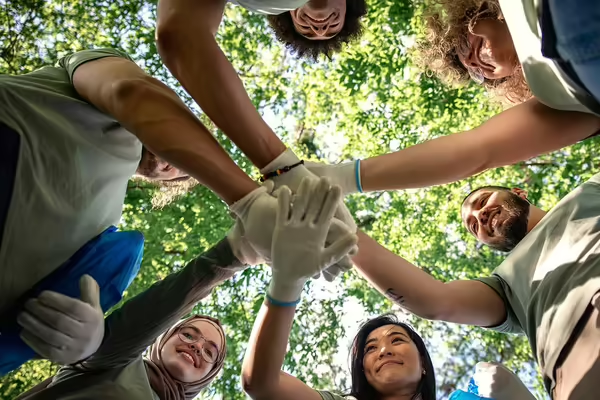
URBANA, Ill. — From a spring full of tornadoes to summers with extreme heat and flooding, Illinois communities are already living through the impacts of climate change. Be part of the solution by turning concern into collective action by taking the Climate Stewards Training this fall.
The University of Illinois Extension Climate Stewards program is a four-week, interactive short course that equips community members with the tools they need to communicate effectively about climate change, activate local collective solutions, and motivate others to join in.
“Most people are aware of climate change and its global impacts and want to know what they can do at home to help,” said Extension Climate Resilience Specialist Jessica Rudnick. “Through the Illinois Climate Stewards program, we are empowering individuals to develop the skills and partnerships they need to build communities and ecosystems that are resilient to the changing climate in Illinois and beyond.”
Local training sessions will be 3 to 6 p.m. on Wednesdays from Oct. 14 to Nov. 4 and are available through five Extension offices across Illinois in Quincy, the Chicago area, Champaign, Naperville, and Vienna. The training sessions will include conversations with local leaders, real-world scenarios, peer relationship building, hands-on learning opportunities, and a field trip to see local climate solutions in action.
Participants will leave with a better understanding of climate change and how Illinoisians think about it, strategies for effectively communicating about climate impacts, and ways to get involved in local climate resiliency work. After graduating as an Illinois Climate Stewards, participants will be equipped to get involved with community science projects, land and water stewardship efforts, and education and interpretation activities in their communities.
Find more information and to sign up for a local training by Sept. 30 at go.illinois.edu/ClimateStewards. Or learn more and meet the local program hosts at the online Climate Stewards Informational Session at 6:30 p.m. on Aug. 18, led by Extension Climate Resilience Specialist Jessica Rudnick and Climate and Energy Outreach Associate Linda Derhak. Sign up for free at go.illinois.edu/ClimateInfo by Aug. 17 to access the meeting link.
The program cost varies. The standard course fee is $80. For those who can pay more and support someone else taking the course, the suggested fee is $120. Please contact the program coordinator if the fee prohibits attendance to discuss other options.
If a reasonable accommodation is needed to participate in the information session, contact Jessica at jrudnick@illinois.edu. For the local training sessions, contact the program host whose information is available through the registration. Early requests are strongly encouraged to allow sufficient time to meet access needs.
The Climate Stewards program is offered through Illinois Extension’s natural resources, environment, and energy team, which provides research-based education for awareness and action to sustain healthy environments and ecosystems that support quality living and resilient communities. Extension staff empower people across Illinois to make a difference through the Master Naturalist, Climate Steward, and Master Watershed Steward volunteer and training programs.
University of Illinois Extension develops educational programs, extends knowledge, and builds partnerships to support people, communities, and their environments as part of the state's land-grant institution. Extension serves as the leading public outreach effort for University of Illinois Urbana-Champaign and the College of Agricultural, Consumer and Environmental Sciences in all 102 Illinois counties through a network of 27 multi-county units and over 500 staff statewide. Extension’s mission is responsive to eight strategic priorities — community, economy, environment, food and agriculture, health, partnerships, technology and discovery, and workforce excellence — that are served through five program areas — 4-H youth development, agriculture and agribusiness, community and economic development, health and community wellness, and natural resources, environment, and energy.