Share your own Everyday Observation
Questions? We'd love to hear from you!
Abigail Garofalo aeg9@illinois.edu, Erin Garrett emedvecz@illinois.edu, Amy Lefringhouse heberlei@illinois.edu
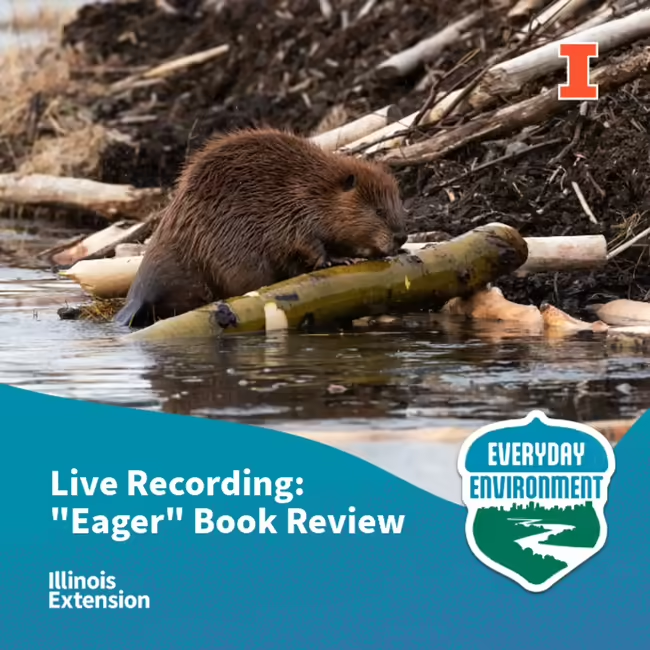
Welcome to another episode of the Everyday Environment podcast where we explore the environment we see every day. And as you can hear today, we are recording live at the 2026 Illinois Master Naturalist Conference in Springfield. Mhmm. My name is Abigail Garofalo, and I am one of the hosts today facilitating this lovely conversation with the rest of the Everyday Environment team. Let's have you all introduce yourselves.
Abigail Garofalo: 00:36Amy, you go ahead and go first.
Amy Lefringhouse: 00:37I'm your co host, Amy Lefringhouse, right? That's what it sounds like, it seems like every single time. But yep, my name's Amy Lefringhouse, natural resource educator. I come from the west side of the state in Quincy, if you haven't listened to the podcast. How about my other co hosts?
Erin Garrett: 00:53And I'm Erin Garrett, I'm also a natural resource educator and I am in southernmost Illinois.
Emily Steele: 00:59And I am here just for this podcast, not the usual cohost. My name is Emily Steele. I am a media communications manager who works with Extension's Natural Resources team.
Abigail Garofalo: 01:09We love Emily, if that's a new voice on the podcast. You've heard her just a few times in some special episodes, but she has her hands in every episode as supporting the graphics and the marketing and just making sure that it gets out to you all. So we really appreciate you, Emma. So if you've been following along this fall, you may have known that we have been talking all about nature based solutions. So how is nature helping solve problems with us and for us?
Abigail Garofalo: 01:36And we've been talking about this all since August. Right? It's been a while. And so we are nearing the end of the season, so we wanted to dive more into literature this time and discuss an animal that's kind of a hot topic nowadays. It's having a bit of a pop culture moment, right Emily?
Emily Steele: 01:52Uh-huh. Uh-huh.
Abigail Garofalo: 01:53Uh-huh. Yeah. So today we are discussing beavers. Yay. And we're reading all about it in a book called Eager: The Surprising Secret Lives of Beavers and Why They Matter by Ben Goldfarb.
Abigail Garofalo: 02:07So we had a long time discussing like which book to do. We were debating back and forth, we were debating ants, we were debating beavers, we debated snails, and we ultimately settled on beavers. We had a lot of reasons for it. We really liked Ben Goldfarb's writing. He's an award winning environmental journalist.
Abigail Garofalo: 02:26He also wrote the book Crossings, which is all about road ecology, which is really neat. And so he's just really good at being a little funny, and you can tell he's a real nature nerd when you read his stuff, if y'all know what I'm talking about. Yeah, we we felt like it was a good call. So before we really get into it though, if we're gonna talk all about beavers, we wanna make sure that we have a little primer on beavers. And another reason we picked beavers is because Emily's a huge beaver nerd.
Amy Lefringhouse: 02:51For our listeners, Emily is wearing a hoodie with a beaver hat on and a beaver tail.
Abigail Garofalo: 02:59I feel like it's like the Olympics. And Emily today is wearing
Abigail Garofalo: 03:02the beaver hat and the
Abigail Garofalo: 03:03beaver tail and she will be giving us all a primer on beavers.
Emily Steele: 03:07Straight from Paris Fashion Week. Thank you. Alright. So your fun beaver facts. And I've been told before I should, like, let other people decide if the the fun facts that I give them are fun, but I feel like this group will appreciate them.
Emily Steele: 03:19So here we go. So there are... So we're gonna talk about North American beavers today, Castor canadensis. They are semi aquatic mammals. They spend a good portion of their life in the water.
Emily Steele: 03:30Largest rodents in North America, second largest rodent after the capybara. This surprised me because they're... They can get up to like 35 to 65 pounds is the usual range, but the the largest one on record is like a 110 pounds, which is a lot of beaver.
Abigail Garofalo: 03:44If I saw a 100 pound beaver walking toward me, I'd be actually kinda scared. Yeah. Like, I'd be like, that's okay. I'll walk away now. Like, no thanks.
Amy Lefringhouse: 03:52If you've read the book, beavers do not like their pictures taken.
Abigail Garofalo: 03:55I have read the book, thank you for the accusation, Amy. Maybe
Amy Lefringhouse: 04:01I wasn't talking specifically to you, Abigail. They do not like their pictures taken though, is what Ben reports. If you remember, he was trying to get a picture taken and it almost got him in the legs.
Abigail Garofalo: 04:13It did nip him,
Emily Steele: 04:14didn't it?
Amy Lefringhouse: 04:14Yeah, I
Abigail Garofalo: 04:14think so.
Erin Garrett: 04:15Yeah.
Amy Lefringhouse: 04:16That was an extra fun fact.
Emily Steele: 04:19There you go, extra fun. Well, and I mean, even 110 pound beaver pales in comparison to the ancient beavers that roamed North America at one time. They were, I don't know, six to eight feet tall. They were massive, one of the megafauna back in the day. So I think the field museum has some displays about them.
Emily Steele: 04:36Okay. So the current beaver is three to four feet long, one and one to one and a half feet tall. Their fur ranges, we've got reddish brown, gray, black. They've of course got their, black leathery scale tail that's like a rudder when they swim. Their rear feet are webbed.
Emily Steele: 04:52And then, of course, they've got large orange incisors. If you ever see, like, a depiction of a beaver that's got white teeth, they're wrong. They've got orange incisors because they've got iron in the enamel for their teeth that makes them really strong because their teeth, like any other rodent, are gonna grow throughout their entire lifetime, and that's what they're using to cut down trees to build their lodges and and for their food. So they are herbivores. They eat leaves, the inner bark of tree from many different plants, trees, aquatic vegetation.
Emily Steele: 05:20Common misconception is that they eat fish, but they do not, so don't spread that beaver rumor.
Abigail Garofalo: 05:26Specifically beaver rumors.
Emily Steele: 05:27Yeah, yeah. Like we're all about truth, truth when it comes to beavers.
Abigail Garofalo: 05:31Only beaver truth.
Emily Steele: 05:33They also have these, they're notoriously known for these scent glands that they have called castor sacs, which is just a beautiful word that came out of my mouth, But it's near the base of their tail and they use it to mark their territory, their scent marking like many other wildlife species. So they live in freshwater habitats, across the United States. So that can be rivers, that can be lakes. They're really strong social animals, strong family bonds. They've got a breeding pair, that year's kits, and then last year's offspring hang around for another year, and those are the yearlings.
Emily Steele: 06:01They're most active at night, so if you don't see a beaver in your space, but maybe you see beaver sign, that's because they're more active, after dark, coming onto land, maybe looking for food or moving to new territory. This time of year in the fall, beavers are prepping for winter. They're building their lodge. They're making their food stash. They don't hibernate, so they overwinter together in their lodge, and then they pull their food from their food cache.
Emily Steele: 06:23Beavers, we talked a little bit about this already. They're cutting down small trees like saplings, dragging them back to the water, building dams or their lodges, and then those dams slower block the water creating these deep ponds and complexes that, helps protect them from predators, right? Like they've built themselves a moat, right? A bear's not gonna come out there for the most part to come and get them. But then also because they are creating these ponds and kind of controlling the water levels, they create wetlands that then provide habitat for other wildlife.
Emily Steele: 06:52So they're considered a keystone species, which is really cool, right? They've got this ripple effect throughout the entire ecosystem because other wildlife then depend on that wetland that these beavers create. As far as humans, there's also benefits for us as far as that. They're slowing moving water and that stores it, so it traps sediment and then it filters out the water. That slowed water then soaks into the ground and can refill aquifers.
Emily Steele: 07:17During droughts, they help keep water on the landscape and during floods, their dams kind of and their wetlands act as sponges, slowing and absorbing water. What we know and what Ben covers in the book Eager is that North America, pre European context, beaver population, and we're just kinda guessing here, was 60,000,000 to 400,000,000, right? They were across all...
Abigail Garofalo: 07:37We're just guessing.
Emily Steele: 07:38Yeah. There's no way to really know, but we know North America was wetter because there were more beavers here, right? They were controlling the landscape with their dams. And so, of course, we know in the twentieth century, along with many other wildlife species, population kind of plummeted due to they were extensively hunted and trapped, and then there was also habitat loss. So in Illinois, they, by the early 1930s, we had laws in place to protect them.
Emily Steele: 08:03They were reintroduced starting in the 1920s to the 1950s. And now we've seen a rebound in their population. Now, North America population is estimated about 15,000,000 beavers. So they are kind of a conservation success story, which is really cool. So that's your beaver overview.
Abigail Garofalo: 08:19Yes. And then for those who are listening audio or maybe those in the audience and you need to go like rewind that and listen to it on point five, we can do that too. So I'm like, it was like,
Emily Steele: 08:30I was timing myself.
Abigail Garofalo: 08:35I noticed. Wow. I feel like beavers are like, I I, again, when we were like, let's read a book all about one animal, I was like, okay, we can do this. And so, did we pick an animal. So I love it. And you mentioned something about keystone species, right?
Abigail Garofalo: 08:51So this term comes up, and then another term that we've talked about before is an enigmatic species. So, I don't know, let's talk a little bit about that. We know that they're pretty special. What does it mean to be like a keystone species or an enigmatic species? What are we talking about here, if somebody wants to take that one?
Erin Garrett: 09:10Amy's looking at me, so I guess I'm gonna start. I mean, Emily kinda touched on it, right? With a keystone species is something that kind of has a disproportionately large impact on its ecosystem, right? So you think how many different organisms are out there, they all play a part, they're all important, but like beavers, if you remove them from the system, the impact is huge, right? And so it kind of acts in that way like a keystone does in an arch.
Erin Garrett: 09:35So, you know, we've kind of seen those impacts over time, right, as they were removed. And then now as we're working and seeing, you know, what does a beaverless landscape look like, and we're missing kind of those elements that we need, and then realizing, oh, just like how much they actually did.
Abigail Garofalo: 09:52And Ben talks about how their beaver dams are integral to certain swan habitats in certain parts of the country. My only regret with this book is it didn't hit on Illinois beavers, which I was like, oh, man. But that's okay. We'll cover it for you. But yeah, so they create habitat, right, and other animals use that habitat, so.
Abigail Garofalo: 10:15What about enigmatic? Anybody wanna hit on that one?
Amy Lefringhouse: 10:19Enigmatic, now I've never heard that term before, you put this on this paper, Abigail. So had to look this up, but I mean, when talking in the context of beaver, enigmatic meaning something that's not really fully understood, or folks didn't realize that maybe taking them out of the system would make such a huge impact. So when we're thinking about beavers being kind of like both, right?
Amy Lefringhouse: 10:47Both a keystone species where it's really, really impactful, but then also like difficult to understand and maybe misaligned, I guess, where we kind of somewhat understand their ecological impact, but then we realize the ecological impact that they have, the positive ecological impact that they have. Sometimes we might focus in on the negative human impact that they might have. So that becomes that kind of rub between us. We understand that, yes, if we take them away, it would be bad, but then what if they, you know, chew one of my favorite trees in my yard? And that's where that, you know, wildlife conflict kind of comes together. And beaver especially have that kind of human wildlife conflict happening a lot in a lot of different places.
Emily Steele: 11:45From the communication standpoint, when you think about an enigmatic species, I often think of species that we highlight for conservation. Like, so in Illinois, that might be the monarch, right? It's beautiful. It's gorgeous. We love it.
Emily Steele: 11:56Think of the polar bear, right? Like, it's very easy for people to, like, emotionally connect with these species. Oftentimes, they're cute and cuddly, right? Like, to me, we we often see those species lifted up as something we should support. And the beaver's interesting because it has a history of, Amy mentioned it, like it can be a pest for landowners, right?
Emily Steele: 12:13It's coming in and taking out your trees. It also has a history of its pelt, right? It was trapped for many, many years. And the beaver's an interesting case study here.
Abigail Garofalo: 12:24Yeah. As I was reading this book, we have a a little group chat, and I was sending my random notes along throughout the many months of, like, I did the audiobook, and so I've been listening to it, and every once in while I was kinda listening to it, and I had a moment where I was like, Ben was comparing humans and beavers, and how we both engineer the landscape, and we both shape the landscape beyond what, you know, would have happened if we weren't there, or beavers weren't there. And so it just struck me how similar we were in as far as engineering the landscape. And so I was curious about you all's thoughts and when it came to that comparison between the ways that beavers and humans both reshaped the landscape, and if there you know, thoughts on that. Amy literally said these questions are so hard.
Amy Lefringhouse: 13:08And I was like, jeez, these are hard. These are hard.
Erin Garrett: 13:12I don't know, I was just thinking about it, and right, we're both changing our landscape to suit our needs, and then there's rippling effects that happen because of that, right? Whether that's good or bad, any change that you make is gonna impact something else, and like, what are all those ripple effects, and sometimes, most of the time, it's hard to see what all those impacts are, and the full extent of, like, the actions that you're taking, or the actions that the beaver's taking, right? Like Amy mentioned, we don't even know, like, all the impacts and all the relationships that are there, so it just kind of makes you pause and think about, like, for good or bad, any change, right, is gonna affect everything else.
Amy Lefringhouse: 13:47He talks about process restoration, that's what he termed, right? Process restoration, and humans, I think we want to fix a problem immediately and efficiently, right? We want to bring in equipment, bring in technology, bring in whatever tool that we have because we have the cognitive ability find all of those resources. We want it fixed quickly. Whereas a beaver is doing this to survive.
Amy Lefringhouse: 14:18They don't have, you know, that cognitive ability to figure out why I'm doing this or what I'm doing. They're trying to survive and they're engineering their own habitat, their own home to benefit themselves. And this process restoration kind of slows down our, I guess, human nature to quickly fix something and start looking around you and using some of the natural materials that are around you. It might be a longer term fix, a gradual fix, and I just thought that was really interesting in the book. I'd never heard of process restoration before this either, and it goes against that quick, easy, efficient fix that we typically do as humans.
Amy Lefringhouse: 15:06Yeah, as far as the streamline goes, I think we like to simplify, right? We're like, let's just put a pipe there. Right? It floods, let's just get rid of the water. And that has created effects that we didn't quite understand when it came to the channelization of streams and our changing climate, increasing our heavy rainfall days, and so I think about that when it comes to beavers versus humans is like, we're very much like simplifying.
Abigail Garofalo: 15:33We're like, rivers belong here, and wetlands, yeah, sure, those can go over there. Those feel a little funny, I don't like those, but they're fine over there because I understand. And the humans, we go here, right? And beavers are like, I don't care about that. I don't care where you wanna be, I'm gonna be over here, and that's gonna create all these really messy boundaries that don't honor, yeah, messy in quotations, thank you, That don't really honor municipal property lines or where we drew something on the map. I think that sits really unsettled in our brains as humans, like, I think that bothers us, and it's really hard to face that, I feel like, a little bit, in a way.
Emily Steele: 16:13One thing that I've... The author drew comparisons to kinda throughout the book was that river systems, like, you think of the Grand Canyon and how many eons that took to carve out and create, and rivers are like that too, like, they build and create and curve and create oxbows over time. They're kind of a living entity among themselves. And so beavers come in and they can actually, there's a quote somewhere in that that that like beavers are doing something in a matter of a few years that it would take like centuries for for nature to do. So you can see this kind of process happening in real time, which I just thought is really cool. Like nature carves out things, beavers carve out things, and then humans come in and try to carve out things.
Abigail Garofalo: 16:56I mean, we carve things. We just... Well, yeah, and that's what I think shocks me the most about the comparison is we tend to think of nature as slower, and we want humans too fast. And we talked about that, that slowing process, but beavers tend to turn around a system pretty quickly, which I find really fascinating. So yeah, I don't know where in my brain it settles, and I think it's okay that there's a little cognitive dissonance there when it comes to beavers versus humans, because I just don't know where to go with it in my brain a lot, which is why I asked you all to answer it for me.
Amy Lefringhouse: 17:27Well, you had down here biodiversity outcomes, you had a note here, and that's kind of interesting to me because a beaver doesn't know the outcomes of its engineering. It just does what it does, but there's a lot of good positive biodiversity outcomes from what it's doing. And we have the ability to know, well hopefully, not all the time, but we try to understand what the effects of what we are going to engineer would be on the biodiversity. So we have that responsibility, I feel like, to engineer things and think about what kind of effects on the biodiversity are going to be, whereas a beaver, it just does it.
Abigail Garofalo: 18:12Yeah.
Amy Lefringhouse: 18:13Which I think is kind of cool.
Abigail Garofalo: 18:14I mean, I agree. One of the most interesting concepts for me, I mean, were so many interesting concepts in book, but that we talked about, that we kind of heard about was shifting baseline syndrome. How... I guess if we wanna have somebody explain that, if somebody's willing, if not, I wrote down some notes if people need that. Somebody explain that and then I'll ask a follow-up I guess.
Erin Garrett: 18:36Okay, well since I brought up this question, I guess that comes to me. So shifting baseline syndrome is just the concept that the nature that we know today is a degraded version of what our parents knew, right? And so what we think of as nature is kind of a lesser, more degraded version than every generation before, and that becomes our new normal. And that's what we know. So it's like an interesting to think about, right? I think we can think in a lot of our lifetimes, like we've seen a certain natural area and how it's changed over time, but then, like your children or your grandchildren, what you know of now is what their starting point is.
Abigail Garofalo: 19:15Yeah, That gradual shifting of norms, right? That like things, yeah. That's the note I wrote down exactly on my sheet. So things are shifting. I always hear, the one I always hear is like, man, the sky was bluer when I was younger. Right?
Abigail Garofalo: 19:29And I always think that one's really funny, but that's the blue sky that I know and have always known, so. When it comes to that shifting baseline syndrome, the gradual shifting of norms of what we accept, How did that idea change the way that you all are thinking about conservation? Or did it?
Amy Lefringhouse: 19:47Well, the first thing that came to my mind was not... I mean, I read about it in the book, wetlands, what is a high quality wetland to us versus a high quality wetland before us, right? We probably tolerate a lesser quality wetland or river or stream or whatever than what it used to be. I first thought of invasive species. That's like what came into my mind.
Amy Lefringhouse: 20:13It has nothing to do with aquatics or beavers by any means, but I guess it does have to do with the aquatics. But, you know, what can we tolerate invasive species wise, and what can we manage, and what can we be okay with because it costs so many resources to get rid of. So that's like my shifting baseline. I see this woodland over here that has a little bit of bush honeysuckle and a little bit of autumn olive, and we're like, okay, that's good, that's good because it's not infested over here. So I guess that's one of my shifting baseline thinking as we educate folks, you know, all the time about the impact of invasives.
Abigail Garofalo: 20:53It's really interesting you bring that up, because the way that Erin explained it was very much like, the degradation is our new normal, versus like, I will... When I think about that invasive species switch, actually think it's very practical management, and honestly, a reasonable way that we have to manage, like we can't, it's here. This invasive species is here, it's unrealistic eradication for certain places is unrealistic, and so tolerance is needed. So yeah, it makes me wonder, does it necessarily have to be a bad thing? Is it more just like a gradual shift in one direction or the other? And as we learn more about something, we, that shift can be good or bad, right like?
Amy Lefringhouse: 21:33And resource based, too.
Abigail Garofalo: 21:35Yeah. It's not as simple as like, it's bad, right?
Emily Steele: 21:38I really like this one example from the book where the author talks about California, which the state natural resources department wasn't willing, I think, to reintroduce beavers because they weren't historically there. But, like, there were all these... When they started digging into it, there were there were local, volunteers and stewards who, started doing some research and looking into the landscape and history and Native American words, and it's... They were actually able to prove by by doing some of their own research that beavers had been on the landscape. But by the time, like, settlers had gotten there and created their their towns and things like that, there weren't beavers there because they'd been trapped out.
Emily Steele: 22:21They'd been removed from that landscape. So I think one of the lessons that that that we should should take away from that, and it it's all scientists, it's all like citizens of the world, right, that just because something's a known truth, is it? Right? What are we basing that on? Like, what do we have to go back to? And sometimes we need to go back to the source. Sometimes we need to question that knowledge and and reassess.
Abigail Garofalo: 22:41Yeah, that was kinda leading into my next question is, one of the points that we... That made me think about this is the book spends a lot of time, especially in the beginning, talking about indigenous relationships with the beavers and their traditional ecological knowledge when it came to beavers and their functions on the landscape, and even the respect and reverence for that animal. And so I thought it was... I just feel like that's that kind of idea of reevaluating our knowledge base of a certain thing really kind of tells us that, right? Because we're accepting...
Abigail Garofalo: 23:13We're saying, oh, only Western science tells us the answers at one point. And then, like, there's a high quality level of science that we've all accepted, and now we're trying to understand that, like, actually the value of, like, traditional ecological knowledge, TEK, and western science working together and recognizing, you know, even like ancestral knowledge of communities and spaces is really valuable and can help us even learn more about the world. And so, yeah, I I dunno, I just kinda think about that way, and I'm by no means an expert in indigenous communities or people. I just wanna learn as much as we can, and I feel like there's more we can learn from not just our own cultures, I guess, is kinda where I'm at. I don't know where other people are.
Erin Garrett: 23:56I think it's interesting, I don't know if it was Emily's example, but there was one moment in the book where they talked about, I think it was the California example, it was like one line in a notebook that one person had written down, like, beavers were not known on this landscape. And like, that was the reference that was used over and over and over and over again. So sometimes we just get so like narrow focused, like, this is what we know, and like, that's what we go with. And we don't ever dig back and kind of try to piece together or take other sources of knowledge, right, and bring it together. And I also like that moving forward now, I feel like with a lot of the folks in the room today, right, you're helping contribute to science too.
Erin Garrett: 24:33And so we have a whole bunch of different levels now, right? You have your traditional science, you have your more traditional ecological knowledge, you have your citizen science, your community scientists that are out there taking data now, and so it is a lot more of a collaborative approach and like the value in each of those pieces is seen and brought together and like fully what that can accomplish is much more of a broader story, right, than just like the facts that we have and can provide a lot more help as we move forward into like these landscapes that we've never lived in before that have different relationships, right, and how do we navigate that? I think we found in a lot of ways, we're not trying to go back, we're trying to move forward into a new way that we better understand, like, all these ecological relationships and where we fit in that.
Abigail Garofalo: 25:20Bringing up that point again, that one paper that was taken as gospel, it took three papers to cancel it out, like years of research, and I think that's what the book referenced, like three papers that formed an airtight argument. Talk about burden of proof, right? Like to prove that something was here versus wasn't. And I think it's just because it had so many impacts on so many industries, and that's something that I feel like we all face a lot in our Extension work, especially a lot of us work in invasive species work right now of like, if we name something invasive, now we have to think about like the impact that has on people's livelihoods who sell that product. And also, like, it's a legislative choice.
Abigail Garofalo: 26:02I don't know. There's just, like, so many different complicated pieces that are just beyond good and bad. And I'm a real nerd because I like to teach ethics in Master Naturalist, about these things. So I won't go too deep into it. But, yeah, I just... I think that there's a lot of comparisons to our work in invasive species that I think feels relevant here.
Amy Lefringhouse: 26:18I also wanted to add, sometimes we take, you know, papers and we cite papers and then we just keep, we don't question it and it just keeps moving forward and then that message sticks, and then sometimes that message goes into media and headlines and things like that. There's a lot of instances in the book where, you know, changing public sentiment because they've seen a headline over headline after headline almost trumps either science, like data, sometimes that those those believed and or perceived headlines that they see over and over trumps like new data that's been found out, trumps maybe and becomes culture too. So it's hard to overcome that culture even if you have evidence in front of you that they talk about trapping programs and those things that if they do where they don't work, you know? But there's maybe other solutions that are more efficient or do work better, but to get over that fact is... Takes a long time.
Abigail Garofalo: 27:26Yeah. My dad didn't like beavers, and my grandpa didn't like beavers, so I don't like beavers.
Amy Lefringhouse: 27:30Right.
Abigail Garofalo: 27:31You know?
Emily Steele: 27:31Well, that has, like, real world implications, like, where there's one chapter where, they go to Europe, there's a European species of beaver as well, and they were working to reintroduce them in Britain. But, CS Lewis, the author, had written a book, turned into a movie. I think it's The Lion, the Witch, and the Wardrobe. There's beavers eating fish in that. Right?
Emily Steele: 27:49Beavers are herbivores, and so when they tried to reintroduce beavers, it was a well known fact that beavers ate fish, and so all these fishermen were against the reintroduction of beavers because of this air quotes here, you can't see on the podcast, but fact, right? So...
Amy Lefringhouse: 28:02Yeah. Once again, beaver fish are not eaten by beavers
Abigail Garofalo: 28:08And fish don't eat beavers either.
Amy Lefringhouse: 28:11Fish are not eaten by beavers. I said that right, right?
Amy Lefringhouse: 28:13Fish are friends, not food. My Finding Nemo friends.
Amy Lefringhouse: 28:20Where do we go from there?
Abigail Garofalo: 28:22Now I'm stuck. Well, we are actually kind of rounding out the end of our time here. We're gonna do a little discussion amongst the group, so y'all are looking around like, wait, we have another twenty minutes. That's because we're gonna do a little discussion, but I will end this portion, and then we're gonna do some everyday beaver observations at the end of discussion with what I'm pretty sure is a quote from the book, but now that we're talking about spreading false facts.
Amy Lefringhouse: 28:45We hope.
Amy Lefringhouse: 28:47So if beavers created many of the wetlands, floodplains, and resilient water systems we historically had, are we trying to engineer our way back to something beavers once did for free? So something to think about.
Amy Lefringhouse: 29:01We are now hitting my favorite part of everyday environment, which is the everyday observation. So we are going to finish today's episode with everyday beaver observations, where we highlight the mundane and normal of our environment with beavers that is actually really interesting. So if anybody from the audience has a beaver tale, I didn't realize I was doing that. Or a beaver story they wanna share.
Abigail Garofalo: 29:32So we're gonna have... Go ahead.
Master Naturalist Guest 1: 29:39Hi I was very delighted when I came to the beaver reintroduction in Europe chapter because I've actually been to the place where Derek Gow is. And the name of it now is Rewilding Rewilding Coombeshead, but I was there for a conference about a year and a half ago in Devon. And so Derek Gow is notorious for guerilla and undercover reintroduction of beavers, you know, and sneaking them into places. I don't know if that's... He has a reputation. I don't...
Master Naturalist Guest 1: 30:10I'm just saying, people say that about him. It may or may not be true. But anyway, so these were Castor fiber beavers. And on Coombeshead, all of the beavers in the UK are very carefully monitored unless they just appear somewhere. But they all are in these contained environments.
Master Naturalist Guest 1: 30:32And it was really beautiful because I was at the the farm, and there's a beaver hide. We all went out at dusk. And I'm... You know, I grew up in southern Illinois, and beavers, they're around. I've seen them, I mentioned to my group, like, I've seen roadkill beavers, because there are enough beavers that statistically, some of them are gonna get hit.
Master Naturalist Guest 1: 30:55So it was a part of the wealth of my natural heritage as an American that I just kind of took it for granted, you know? But to go out to this beaver hide in an island country where, you know, they're really making an effort to bring beavers back into the ecosystem and standing there at dusk in this beautiful landscape while the beavers were swimming around their beaver pond and watching all of the people. I was the only American. And being with and feeling and watching all the people I was with, just like their intake of breath and their awe and excitement at seeing these beautiful wild beavers. It made me really deeply appreciate what we have as our natural legacy in this huge continent of wildness.
Master Naturalist Guest 1: 31:49And that there, in a more nature depleted landscape, how rare and precious those creatures are. So it was really delightful to come across that. And, you know, and these were, like I said, these are Castor fiber beavers, not Castor candidensis. But I felt people would ask me about our beavers because they really wanted to know about them. They wanted to know what it's like to live in a place where they're just part of life. I'm like, yeah, well I live out in the boonies and that's what we do. But anyway, so that's something I wanted to say.
Abigail Garofalo: 32:27Yeah, thank you so much for sharing that. I think that's really things, it brings me back to that baseline syndrome thing that we talked about too, like how it's so normalized here. I think sometimes too as naturalists, we can get a little stuck in the idea of like, Ugh, everything's so horrible. There's very little nature, like good nature left. And then we go to another perspective and see that people are like, Your natural world is incredible. Did you see central Illinois? And we're like, Yeah, we did. You're right. So I think it gives us that little bit of appreciation, like you were saying. Does anybody have any other beaver observations from the book or themselves?
Master Naturalist Guest 2: 33:08I was just sharing with our group that when I first became a Master Naturalist, I was doing frog call surveys and one of the places I would go to was Riverbend Forest Preserve, this is Champaign County. And Riverbend had been, where there were, like, gravel mining and so then there was, you know, lakes there and had been... Now it was a forest preserve. And so, one of the places I went to was a beautiful spot for listening for frogs and quite... Required quite a hike along the lakes And, of course, frog call surveys are done in the evening.
Master Naturalist Guest 2: 33:37And so, it was common to see beavers and they'd slap their tails and... Which was the first time kinda startling. I took my young daughter, she was probably early teens at this point, out with me one evening, and, she'd really didn't like the beavers slapping their tails. And so to this day, they're kind of her nemesis. She talks about beavers as if they're, you know, something to be feared. She's joking. But, anyway, it was just kind of fun.
Abigail Garofalo: 34:00Those natural connections that we talk about being fostered in our youth. Right? Other everyday observations. Yeah.
Abigail Garofalo: 34:08We have a beautiful park here in Springfield, Washington Park, and it has lovely trees, and I was on the tree commission, and it was beautiful trees. But a friend of mine said, well, did you know what Washington Park was doing to the beavers?
Master Naturalist Guest 3: 34:23And I said, no. I didn't know Washington Park had beavers. And she said, they have a family of beavers, but they have traps there because they've asked natural resources if they can remove the beavers. So, of course, I'm an advocate, so I called the park district and they said, well, yeah, did you know that the beavers took down 12 trees? So, they said natural resources allowed us to, get these traps, take the beavers, and take them somewhere else.
Master Naturalist Guest 3: 34:58So I didn't stop there. I called natural resources. I said, did you allow them to trap these beavers and take them somewhere else? Yes. We did because they were problem beavers.
Master Naturalist Guest 3: 35:11And I said, well, are these beavers gonna live somewhere else? Well, probably not because when one family of beavers goes to another family of beavers, a, they're bringing disease, and maybe, b, the other beavers don't want them. So that was the sad story of the beavers in Washington Park.
Abigail Garofalo: 35:34Yeah. We all thought it was gonna have a happy ending. It did not. Wow. I got married in Washington Park. Now I'm really sad. So... Yeah. Okay. Well, do we have any other beaver observations?
Abigail Garofalo: 35:47Yeah. We'll finish... You'll be the last. Okay?
Master Naturalist Guest 4: 35:51I'm afraid it's in the nuisance beaver category. So we're lucky enough to have friends that live in Portland, Oregon, and they're... They live in one of those... They're called floating homes on a moorage. It can't be called a boat home, houseboat because you can't drive it, it gets towed and parked in place.
Master Naturalist Guest 4: 36:07And they recently moved from a smaller home on the moorage to a bigger one that faces into the shore and they've been loving all the wildlife because they even see more wildlife than they did before. And they were enjoying the beavers swimming, which they didn't used to see on the channel side. But then they realized they've moved up onto our floating home, which is not a plus because it's a... They're big pontoons, and then, of course, it's a wooden structure with fiberglass underneath. They use it...
Master Naturalist Guest 4: 36:35It's a pre man made lodge for the beavers, which would be fine. My friends are nature lovers, except they gnaw on the wood, and they're not really eating it. This is, you know, long ago dried out lumber, but they have to, you know, as we learn, gnaw their teeth back now. They've tried all the things that are ecologically kinder, like you leave lights on because they're nocturnal and you have bright lights on twenty four seven and that should scare them away. But no, it hasn't.
Master Naturalist Guest 4: 37:01Loud music that you play all day when they're supposed to be sleeping, they seem to have earplugs. That has not fazed them. So they have called every single beaver relocating, vermin relocating company in the Portland area, all of which have either a voice mail message or a website that says, we won't be calling you back. We have more than enough work as it is, so sorry. We're not gonna be able to help you.
Master Naturalist Guest 4: 37:27So if you know a young person with an endowment that could move to Portland, Oregon and wants to start a beaver removal service, there is jobs to be had. Because, yeah, it's it's... They're worried what's gonna happen to their home if it keeps being gnawed on. It's a whole clan. There's babies.
Abigail Garofalo: 37:44Oh, that's totally fair. And that brings up a really good point about, like, the... Just the balance between the natural world and, like, the things that, you know, like safety and function and things like that, and I think that's a really, really tricky thing to talk about, especially when it comes to just, like, us as naturalists and what we wanna accommodate, and I also really hesitate with it because I'm like, well, but we are nature too, and how does that work? And it's really complicated. Anybody else got any better answers than me?
Emily Steele: 38:13We're looking for coexistence, and that's sometimes messy, air quotes, messy, right? Like, what have we talked about before that some of the most common words in the work that we do is it depends, right? Every scenario is gonna be different, and we gotta work towards solutions that we can all live with.
Abigail Garofalo: 38:29Yeah, and there's no one all solution, right? That's why I feel like Ben does a good job at explaining that, like beavers are not a panacea for all of our problems, right? They're a tool, and I feel like that's what we all try and talk about in our work as well, is like, and I feel like you all do that as well, is like, here are some tools that we can do to help address this landscape specifically, and maybe that tool's not gonna work at a different one. So yeah. Any other closing thoughts from the Everyday Environment team?
Amy Lefringhouse: 38:57There was one term that he had, it was like, or some quote that he had in there was, Once you become contaminated with ecological education, then you can't, you have to think about what are the ecological consequences of all of our decisions. And so we've all been contaminated with ecological education. So now what do we do with that ecological education and how do we approach problems as problems or conflicts or whatever going forward with both that ecological knowledge, but also with, you know, the goals that we and the survival economics, things that we have to keep in mind at the same time. Coexistence, like you said.
Abigail Garofalo: 39:40Alright. This has been another episode of the Everyday Environment podcast. Check us out next week where we interview Doug Tallamy all about nature's best hope. This podcast is University of Illinois Extension production, hosted and edited by Abigail Garofalo, Erin Garrett, and Amy Lefringhouse. Marketing and communications are by Emily Steele.
Emily Steele: 40:08University of Illinois Extension.