Questions? We'd love to hear from you!
Abigail Garofalo aeg9@illinois.edu, Erin Garrett emedvecz@illinois.edu, Amy Lefringhouse heberlei@illinois.edu
Welcome to another episode of the Everyday Environment Podcast where we explore the environment we see every day. I'm your host Erin Garrett.
Amy Lefringhouse: 00:14And I'm your cohost, Amy Lefringhouse.
Erin Garrett: 00:17And today, we are here with Susan McIntyre, who is a plant ecologist for the Illinois Natural History Survey. And we're gonna be chatting all about floating wetlands today. So thank you, Susan, for joining us.
Susan McIntyre: 00:31Thank you for having me.
Erin Garrett: 00:32We're really excited to have you on the podcast today. We know it's field season right now. It's super busy, so we appreciate you taking some time out of your morning to chat with us. And we were just talking before we got on today and we're like, don't even remember how we found this project, how we found you, but we know we heard about it and we were like, this is perfect for this season. We gotta have we gotta have someone chat about floating wetlands.
Erin Garrett: 00:59So we're super excited to kind of talk about this as a nature based solution and just learn more about them because I can guess what it is, but I know nothing about them. So excited to to dive in on this topic today. But before we get to that, let's back up a little bit. If you just wanna tell us a little bit about yourself and the work that you do with the Natural History Survey.
Susan McIntyre: 01:23Sure. Well, yeah. So the Illinois Natural History Survey is part of the Prairie Research Institute at the University of Illinois Urbana Champaign. So we have some sister surveys, the state geological survey, state water survey, archaeological survey, and the Sustainable Technology Center. And so I have a lots of great colleagues from all different environmental disciplines that I can work with.
Susan McIntyre: 01:43I'm primarily in the wetland science program at the Illinois Natural History Survey. So I do work in other natural communities as well, like prairies. But a lot of my work is in wetlands, looking at plants, like and looking at the natural communities, like marshes and sedge meadows, swamps, the floodplain forests along our rivers and streams. And so for my job, I get to be outdoors a lot, mapping the wetlands, recording the species that we find there, describing the communities and what the quality is, sometimes making management recommendations if it's for an entity that's interested in that. One of the I also get to be involved in different research projects.
Susan McIntyre: 02:23Some of the things I'm really interested in are how plant species and plant communities respond to man made disturbances and how we can be creative with restoration strategies. This is kinda how this floating wetland project came about. So it's kind of fun. I sort of got into it from a roundabout way with more wildlife and then the then got into the plants because plants sort of form the basis for the wildlife that I was into. So the food, the shelter, and then the more you learn, the more you realize how many elements there are that are important.
Susan McIntyre: 02:54So soil and water and sunlight and all this that just makes the entire ecosystem work and provide all these services and things that we value from nature so we don't just live in a bubble.
Amy Lefringhouse: 03:05That's really cool. We talk a lot about everything being connected. Sorry, Erin. Everything being connected in this podcast a lot. So you kind of like wrapped that up for us really nicely.
Erin Garrett: 03:16I'm curious what wildlife was like your hook.
Amy Lefringhouse: 03:19Spark wildlife.
Susan McIntyre: 03:21Yeah. Oh gosh. Well, I I guess I I always liked animals. I grew up in North Carolina, actually, in a really neat rural area where it had lots of forest and creeks and ponds around, rolling hills. And I was interested in mammals and even wanted to be a veterinarian at one time, but then I realized I didn't really wanna deal with sick animals.
Susan McIntyre: 03:44I liked living healthy animals. I wanted to be a zookeeper. And then I well, I was We all? Yeah. Everybody.
Susan McIntyre: 03:52I wanted to, like, you know, have baby lions and carry them around. And then I I did different research jobs when I was in in college. I tried out neuroendocrinology. So I was looking at fish brains and hormones. And right.
Susan McIntyre: 04:08And I decided lab work was not for me. And then I did some work with captive lemurs over at Duke University. So and that was really fun looking at cognitive studies. But, again, captive animals were kind of sad even though they were very cute. And then I ended up living wildlife, doing small mammal trapping and observing the different species and how they interact with their environment, which is how I got back to wanting to know more about the environment itself.
Erin Garrett: 04:35Yeah. I always love hearing people's backstories because sometimes it just takes like it's so fascinating and you do so many cool things. It's like, oh, yeah. I remember when I did those fun internships in college and it was like, it was like all these random topics that you could just like go study this for three months or do this and like, I don't know. Now that I've been here in my job for nine years, I'm like, oh, yeah.
Erin Garrett: 05:00I remember all those different things that lead up to that. Right? When you get some stability. But that's awesome. That sounds really fun.
Susan McIntyre: 05:06Yeah. I was looking over my CV recently and reminding myself of like, oh, yeah. My job before this was looking at bats on a wind farm. Oh. We were seeing, like, what how how the wind farms were impacting bats, which is sad, but it's still pretty cool job.
Susan McIntyre: 05:21So
Erin Garrett: 05:22Well, interest it's all fascinating. The amount of things that we still don't know that we still are getting research on and trying to figure out is just, like, mind blowing. And we could talk about this all episode, but let's shift back to the wetlands.
Amy Lefringhouse: 05:38definitely. Well, mentioned we're gonna talk to to talk about floating wetlands today, but that being a solution to a problem, let's talk a little bit about like what issues we're facing when we're going in and you talked about creative restoration strategies. So as far as this particular product, was that? What were those issues that you guys were looking at at this particular lake or reservoirs? You know, what are we as scientists trying to address?
Susan McIntyre: 06:12So well, there's a lot of issues that we're trying to address with with water quality. Of course, water water is life. Right? So we have to have it to survive. We need to be able to drink it.
Susan McIntyre: 06:22With our agricultural system, we need it for our crops or our gardens. So it's really important to have clean available water. And so some of the issues, if you think back before the Clean Water Act, our big one was nonpoint solution or sorry. Point solution. So, like, industrial chemicals getting into our waterways and things like, you know, rivers catching fire.
Susan McIntyre: 06:44That was a huge, huge problem. So after we passed the clean water act and we had these regulations in place, they really our our water is really cleaned up. And so now we're seeing more what we call nonpoint sources. It's just like and I'm sure you guys have talked about this, but runoff from roadways, agricultural fields, and and anywhere that people apply chemicals and fertilizers, so like lawns and golf courses. So you can get nitrogen and phosphorus.
Susan McIntyre: 07:12Those are two of our real big pollutants, and those are what add to the algal blooms that are dangerous in their own way. It can cause illness, and they choke out the wildlife and take up the oxygen. Soil erosion is another big pollutant. So the sediment getting in the waterways, it gets it's suspended in the water column, and so that causes problems like elevated water temperatures, which then aquatic plants aren't able to get as much sunlight to photosynthesize. So between that and the elevated temperature, you have less oxygen in the water, less dissolved oxygen that's available for fish and other aquatic animals.
Susan McIntyre: 07:48There's less visibility. And when that sediment settles down too, it's altering the the the benthic environment, so the this lake or the river floor. So animals that are living down there are having to contend with all this extra sediment. And also from a practical from more of human standpoint, it's making some of our
Susan McIntyre: 08:07areas, our lakes and rivers more shallow. So people who like to do boating or they wanna have you know, maximize their water storage capacity, they're having to deal with reduced capacity and dredging and the costs of that. And then whatever all this material is that's in that soil, then what do they do when they dispose of it? Because sometimes it has toxic chemicals or metals or that kind of thing. So there's all these problems that scientists are concerned with.
Susan McIntyre: 08:33Well, how do we reduce getting this stuff into the water? And now more recently, we have obviously microplastics. We're finding that in pretty much every water body now. It's ubiquitous. And it's not just like microbeads.
Susan McIntyre: 08:46It could be the microfibers from synthetic clothing or, you know, broken down PVC type material. And another one that I don't know as much about but is, you know, really huge is the PFAS, the forever chemicals that just they don't break down. They can get through water treatment facilities and cause all kinds of harm getting into our bloodstream. So that's another big concern is, you know, things getting into our water that we needed to survive.
Amy Lefringhouse: 09:11And when you say they, when you're like, well, they have to clean up this. They have to clean up that. Are you are you referring to, like, communities?
Susan McIntyre: 09:19Right. All of it. All of it. So so it could be like, for our example, our floating wetland is in the city of Decatur. So and and the lake is owned by the city of Decatur.
Susan McIntyre: 09:27It's their drinking water source. So the city of Decatur is concerned about, you know, maintaining the quality of the water, also maintaining for recreation, the boaters. It's very popular with boaters. People live all the way around the lake, so they want a certain quality for their lake. And then, yeah, and small, like like, HOA is often will have their ponds, and they wanna they don't want algal blooms.
Susan McIntyre: 09:48People's dogs might be getting in there, and, you know, if the dogs get sick or or people who you know, like, here at Illinois Beach I'm currently at Illinois Beach right now doing some work. And these the harbors and marinas, those are they it's a it's a different sort of thing that they get soil in there, and so the dredging is necessary. So people who manage these areas where boats are coming and going or, you know, any any shipping canal or river, you got that sediment building up, and so you need to dredge out the channels so that boats aren't running aground. So there's all kinds of problems. The the sediment is really big one, I think, with that, which is one of the things that we were looking at with the Floating Wetlands is dealing with the sediment issue for some of these entities.
Erin Garrett: 10:30That's interesting because I that like, the sediment piece, like, just doesn't come to mind for me. Right? We talk about, like, all the other pieces that you focused on, but I'm like, well, duh. That seems really obvious. So that would be a concern over time.
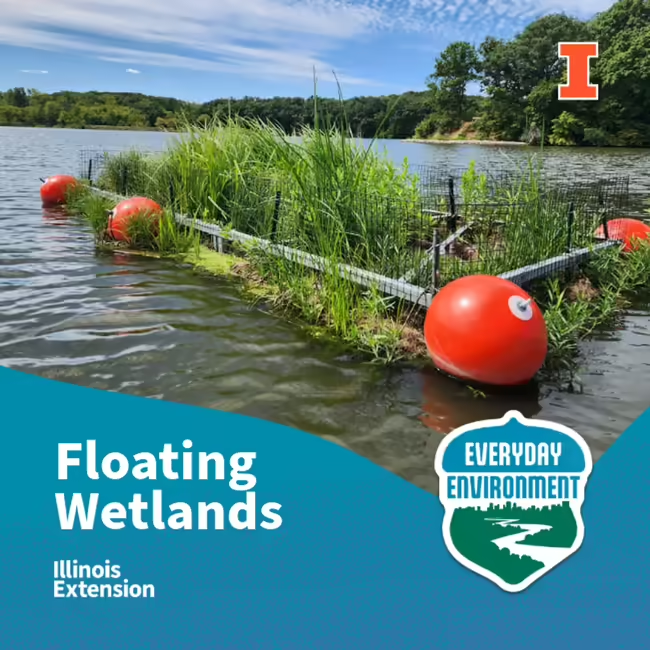
Erin Garrett: 10:44So it's really interesting. So when people hear the term floating wetlands, I'm really curious what everyone's picturing in their mind. If they haven't seen the picture that comes with this podcast episode, which I really have. But can you tell us a little bit about the project that you have going on in Decatur and just a little bit about what floating wetlands are and maybe what they look like, if you can kinda describe that?
Susan McIntyre: 11:07Sure. We'll start with kind of how my my vision of floating wetlands. So way back when I was a wee tot watching PBS videos, I I remember learning about the Okefenokee Swamp, and it's one of my favorite places on Earth. It's on the border between Georgia and Florida. And they have it's just basically, a lot of it is just one huge floating wetland.
Susan McIntyre: 11:28This peat and organic matter and roots and just plants growing on top of themselves, and you have this thick, thick layer that you can actually walk on, which you have but you still have to be careful because if your foot goes through, like mine may have done one time when I was there Mhmm. Mhmm. Then there's nothing underneath there but water and maybe alligators. So you just gotta be careful. But it's fascinating.
Susan McIntyre: 11:53It's just kinda like a like a big air mattress or water bed or something that you're walking on, and it kinda moves a bit. And but it's all held in place by plants and organic matter. You can also get them up in Wisconsin, in the bogs, and those are really neat because you get, I guess, in both places, you can get carnivorous plants growing and orchids and, you know, rare interesting things that you don't find in other places. And we do have some in Illinois, and I have also gone through some of those. We don't necessarily get the sphagnum moss that you do in some of these other wetlands, floating wetlands, but you can get just buildup of organic matter.
Susan McIntyre: 12:31Grasses and sedges and cattails and those things sometimes can build a mat that sustain themselves over time. So that's more or less what I was envisioning. There was roots kinda spreading out and and plants also send out what's called rhizomes. So that's modified stem that goes out like a root, but then pops up another plant and then can go and continue and pop up another plant and make a colony of itself. And if you get multiple species, then you get these dynamic, interesting, diverse ecosystems of plants.
Susan McIntyre: 12:58So when I was talking with my colleagues, Erin Bauer at the water survey and professor Rafael Tinoco, who is in the college of engineering, we were discussing making these floating wetlands for Lake Decatur, and that was kind of in my head the background that I was envisioning, was plants that would spread out and kinda continue growing and and propagating themselves. To start out with though, if you've seen the picture, it's definitely not a natural wetland. It's very artificial. We actually call them artificial floating wetlands or AFWs, or we often just call them rafts for short. Okay.
Susan McIntyre: 13:31So if you hear me say rafts later, that's what I mean. So what we did was we we took docks, old derelict docks that were that I think the city or the Department of Natural Resources, I don't remember, had. We basically flipped them upside down, put coconut fiber through them, and then planted the plants into the coconut fiber. And we had them suspended underneath with some coconut netting, and we're trying to avoid plastics because you can get can buy floating wetlands premade, but a lot of those tend to be made from plastics. And we wanted to avoid trying to introduce more plastic into the system because as I said, like, microplastics are a problem, and so we don't wanna introduce something into the system that just to try and fix another problem.
Susan McIntyre: 14:15So Okay. We're trying to minimize plastics, but we did have to do things like have flotation. So we have floats that are holding it up so that we can actually go onto them to do management and to do some sampling for water quality and to see what the plants are doing, maintain the the Rafts. And there's the buoyancy, but also have them so that the plants are sitting down into the water, and their roots are going down into the water column. So there's there was a little soil because we had to plant the plants and get them established.
Susan McIntyre: 14:46We did, you know, knock off a lot of the soil. But when we put them in, you know, took them from the greenhouse and put them into the floating wetlands. But by and large, they're getting a lot of the nutrients just from the lake itself because there's so much soil, so much nutrients in the lake that they don't need any fertilizer. They kinda just take care of themselves. And so then and then the goal was that the plants would the roots would grow through the coconut fiber and eventually maybe even replace the coconut fiber with themselves like you would see in a natural floating wetland.
Amy Lefringhouse: 15:18Mhmm. Mhmm. So it's a dock
Amy Lefringhouse: 15:20frame. Right? Right. So as far as like size, these are size of a dock, like a normal dock that you would walk out on, or what what's the size the scale of it?
Susan McIntyre: 15:31Right. These are these are, you know, fairly small. They're one is four by 16 feet and one is six by 16 feet.
Amy Lefringhouse: 15:38Okay.
Susan McIntyre: 15:39And this was just kind of a test. We wanted to see how this would work. Right. So then if we wanted to expand, we could implement them elsewhere. And they were kinda strategically placed because the city of Decatur had certain areas that they were interested in trying to do more sediment control because they have sediment coming in from some of the creeks fading into the lake.
Susan McIntyre: 15:57So we were looking at the bathymetry. So that's, you know, the the underwater topography, basically, and the stream flow coming in and trying to strategically place them to see if they could trap sediment and deposit it where where the city would prefer to have it rather than where it ends up, which is sometimes in the main channels or it becomes a cleanup problem for the water treatment.
Erin Garrett: 16:21That was my question too, Amy. So thank you for that one. My second question, because I'm a plant nerd, is, like, what are some of the plants that you're using?
Susan McIntyre: 16:29I love plant nerds. Yeah. So I'm glad you asked. So we started out I had a a long list of, you know, wish list of plants that I could have. I I largely focused on the rhizomatous species because that's what I wanted was, like, the ones that were gonna spread the roots around.
Susan McIntyre: 16:46We also went to see what was already growing and some wetland areas around Lake Decatur. And we use those. Professor Tinoco has a hydrodynamics lab. So he was test. We we dug up some of the plants and brought them into the lab to see how the roots would respond.
Susan McIntyre: 17:01I had a idea, but, you know, it was kinda cool to see it in the lab, test it out, and that some roots stood up better to water flow than others. So we designed the raft so that those roots the the the thicker, stronger roots that could handle flow would be on the outside of the raft. And then the more fibrous sensitive roots that might be even more important for taking up nutrients would be kind of protected in the middle. It also so I ended up we had probably more species than we needed for what was originally gonna be an experimental study, but I just couldn't stop. We'll start shopping for plants.
Susan McIntyre: 17:37Yes. So I end up with nine species plants that we put on there. A lot of them were sedges because that was what was available and because, you know, sedges are interesting for plant nerds. They don't always look the prettiest or the coolest to other people. They're just most people are just like, what's that grass?
Susan McIntyre: 17:53Yeah. Okay. Well, it's not a grass. But there are also a couple of flowering plants. So I did have an aster on there, and then water willow was kinda gonna be one of the workhorses of the raft.
Susan McIntyre: 18:06That one grows naturally around lakes. And some people don't like it, but it is excellent for lakeshore buffering. So especially on somewhere like Lake Decatur where you get waves from either the wind or from boat wakes, water willow is really good for capturing some of that impact from the water. So that was gonna be around some of the outside. Another one was lizard tail, which you often see in more shady places.
Susan McIntyre: 18:30But I wanted to see how it would do at a big open area like this. And I don't know. It's a door. I can see Erin's face. It's like Yes.
Erin Garrett: 18:37I love it. I can't say it's a favorite because I have too many favorite plants. But as, a wetland plant, it's one of my favorites. So
Susan McIntyre: 18:45It's pretty great. People were like, it's not gonna do well. I was like, I bet it will. And, also, it's just so cute. It's such a great so and it and it actually did pretty well.
Susan McIntyre: 18:55Also had rush because that one's I mean, it's a it's a more of a clump forming one, but it's also really it it it's been shown to do well in floating wetlands. So that was one. Was like, it should be fun. It's been iffy in some studies, but I think those were early, early studies. And then, yeah, one of the sedges is one that's it's known to make mats part.
Susan McIntyre: 19:16So that one I wanted to include because I wanted to that one was kinda gonna support the the water willow and the lizard tail in particular and kinda hopefully forming a mat that the other species would be able to grow in.
Erin Garrett: 19:27I want that. I'm here for it.
Susan McIntyre: 19:28I could also add this year where I I was trying to grow from seed. Last year, we bought seed bought our plants. So we were we were looking at a couple places like Stantec and Pizzo, and we got with Pizzo in the end. But this year, we're trying to grow from seed. So that's been an experience for me growing wetlands wetland plants in the greenhouse.
Susan McIntyre: 19:46And I'm I'm including hibiscus now because it's, you know, big beautiful flower and swamp milkweed because, of course, monarchs and just pretty flat.
Amy Lefringhouse: 19:56They're so tough too.
Erin Garrett: 19:58Yeah. I'm gonna stop. We're just gonna keep going down.
Amy Lefringhouse: 20:00We can go way in the weeds. Cool. Always come up with a pun. So what do you think about this one before we get too far into some of the details? But what do you think about this being a nature based solution?
Amy Lefringhouse: 20:15Like, how does that how does it meet some of meet that criteria?
Susan McIntyre: 20:20So the nature based solution, that's a that's a phrase that I haven't really used much. Think when my colleague Erin uses that one. So but I how I envision what it means is you're you're not trying to just completely manhandle nature. Like, you know, I'm currently at Illinois Beach, and right now you see all these breakwater structures. They're trying to just, like, hold nature exactly where it is right now.
Susan McIntyre: 20:45And nature does what nature wants. She's very dynamic. She likes to change and move. So you're trying to create something that can sort of adapt and evolve and work with nature. So, ideally, in a in the in the real ideal world, what our wetlands would be all through and around our water bodies.
Susan McIntyre: 21:05So we'd have wetland buffers, and we'd have these mosaics where wetlands are kind of all interspersed. But the practicality is for a lot of lake managers, they have these deep sided ponds that they can't really do that kind of excavation and regrading. They don't have the funds or the space or whatever reason. So these floating wetlands are an alternative that you can put in, and you can move them around where you want. You can take them out if you need to if they're small enough.
Susan McIntyre: 21:32Ours are pretty big, so it's hard to do. But but there are smaller ones that you can make, and you can plant whatever you want on them. Having planting native is I definitely recommend planting native species local and getting local ecotypes so that they also are a seed source so they could potentially colonize the your small wetland fringe and help build that up and provide the diversity for the other animals like insects, pollinators. We can talk later about, you know, what kind of things are on it, but there's all kinds of animals that use these. The fish, if you have fish in the pond Yeah.
Susan McIntyre: 22:05Yeah. The fish are definitely making use of the that root structure underneath. We don't necessarily want them to, but things like ducks, geese, muskrats will eat the plants too. Sometimes that's counter to what we're trying to do, but it's part of the it's part of the nature. And so we're just providing something that they would normally have had in nature.
Susan McIntyre: 22:24And so just because it's a little island that's becomes a buffet potentially, that's okay. That's you can you can just put more plants out there next year if you need to. It's not that much cost once you have the structure out there.
Amy Lefringhouse: 22:36That was like a goosebump moment, Erin. I I always talk about my goosebump moments. I'm like, ugh, working with nature, right, instead of just trying to, like, control everything.
Erin Garrett: 22:46Yeah. And I feel like a lot of the times we're like, okay. We have this problem. What do we do about it? And it's like a lot of the times we just need to, like, observe what's actually happening and the solution is right there.
Erin Garrett: 22:57And then how can we use what nature's already doing. Right? Like, it's figured it out in a lot of places, and we can apply it in this way. And so it's just fascinating to, like, all the different connections, like you said. And then, like, even the part where you were, like, we're taking this, and then we're growing it in the lab to see, like, how it actually works.
Erin Garrett: 23:15It's like, I think I know how it's gonna be, but then you actually get to see it. It's just like, love it. I'm here for it. Okay. So getting back into the details, we're putting together these plant communities that then are gonna grow together, float on the surface of the lake.
Erin Garrett: 23:34How do they actually improve the water? Like, what's actually happening below the surface that we can't really see?
Susan McIntyre: 23:42So that's that's really interesting. There's a lot that's happening down there. So first of all, the plant roots are growing at a really rapid pace. It's like they're already actually in the greenhouse, they're starting to get a little root bound, so they were ready to go once we put them out. But even after that, I mean, we went back a couple weeks later, and they're already a couple of feet or more longer.
Susan McIntyre: 24:02Like, they were they were really long. And they're dangling down into the water column and drifting back and getting tangled up with each other. Originally, wanted to see if we could just because we know that they're gonna take up nutrients. And one of the things I was interested in was can we see, you know, our different species taking up different nutrients at different rates. So that was part of why we wanted to I I wanted I planted them in rows originally was to see it.
Susan McIntyre: 24:27Maybe we can that way distinguish the roots. The roots didn't work that way. They just started getting all together. So and because it's pretty turbid underneath, you can't really go see they follow the trail to find out who it came from. And then you start getting the rhizomatous plants growing and spreading, and they end up in a place where you hadn't put them.
Susan McIntyre: 24:46And so now that's another variable, but they're definitely they're taking up nutrients. One of the things we wanna do is see, you know, is there are we seeing a difference in the nutrient levels in the different parts, like outside versus inside? In a in a with the size of our rafts compared to the the size of Lake Decatur, it's gonna be a pretty negligible amount. It's it's not gonna it's not gonna replace water treatment facilities, definitely. But it could in a smaller smaller lake, they could make somewhat of a difference, especially if that plant material is harvested.
Susan McIntyre: 25:19So you're removing it's taking up the nutrients and then you can remove some of that material from the system, then you're you know, it can take some of that excess nitrogen and excess phosphorus. Also, lot of the there's thinking now that a lot of that uptake is actually happening in the roots. And on the bio there's a biofilm that forms on the roots itself, which is these different microorganisms, fungi that are that are forming the symbiotic relationship. There is a film that's on the roots, and they're taking out a lot of that nutrients, turning it into something the plants can use, and then just feeding each other. The plants are providing oxygen, and there's this this this whole system that's happening down below there that's pulling stuff out of the water.
Susan McIntyre: 25:59And then the roots themselves with all that structure, they're they're they're slowing the current that's coming through. So whether it's like a stream flow or just wake from boats or wind, it's creating this kinda little island in the lake where there's less water current. We can, you know, we can put sensors down there and see what the flow is and see, you know, what's the velocity of the water in different parts underneath. And with the flume, we're trying to see you know, predict because can't really tell because there's so much sediment in there. But see, like, what's happening with the sediment as it hits these roots.
Susan McIntyre: 26:33Is it slowing down? Where does it drop out? What's happening on the floor underneath? Especially, well, last year, we had a big drought, and so the lake levels dropped a lot. So we put them in at one level thinking, okay, the roots aren't gonna be near the bottom.
Susan McIntyre: 26:46We didn't we didn't really want them to root in the bottom because we wanted them to be free flowing, but it dropped a lot. And so that changed what we realized was gonna happen. We're like, oh, the roots are gonna be way up here, but instead now they're close to the bottom. So what is that doing with the sediment? Is it still trapping the sediment the way we meant it to?
Susan McIntyre: 27:04And then so those are the main water quality things is like trapping sediment that's flowing around and then taking out nutrients.
Amy Lefringhouse: 27:12That biofilm around the roots, fascinating. Woah. I mean, there's some so sometimes that microscopic world that's out there that that, you know, we don't even really think about is just really fascinating that you guys can figure out that those processes are happening. Also roots, never get their glory.
Erin Garrett: 27:34Well, it's just that you don't see
Susan McIntyre: 27:35it. Right?
Amy Lefringhouse: 27:36Yeah. It's all in one. Oh, man. There's a lot going on. You know, flowers take the take all the attention, but roots, man.
Erin Garrett: 27:44Let's give you Amy's takeaway. Yeah. Take away from the season. Roots are really cool.
Susan McIntyre: 27:51Roots are cool.
Amy Lefringhouse: 27:52Roots rule. Well, you talked a little bit about habitat, know, these floating wetlands can become habitat for wildlife. Talk about what you're seeing as far as like wildlife or other organisms that are showing up around or in or on or under or
Susan McIntyre: 28:09Yeah. So right away when we put them out, we started getting spiders, which is not unexpected and is a little horrifying. I don't like spiders, but they are part of nature. Yeah. So lots of spiders.
Susan McIntyre: 28:22A lot of larval insects, particularly beetle larvae. Those are really neat. We're when they're standing on it with, you our feet in the in the wetlands And because there's not really a a substrate, you just stand on the crossbars of the dock. And we'd have we looked down, there's, like, beetle larvae on my leg. And they're like, oh, wow.
Susan McIntyre: 28:39That's fun. And then, you know, things flying in, like dragonflies and damselflies. When the flowers were flowering, we get butterflies, bees, and then just other, like, wasps and things. So things were coming to it, finding it. And then underneath this the lake is it's it's very high turbidity.
Susan McIntyre: 28:59That means, you know, you can only see a couple inches in front of your face if you're in the water. And so you can't really see everything that's down there, but we we could tell there were fish down there. And we've seen from other wet floating wetlands and other places that, you know, they're able to get GoPro cameras, you're just chock full of fish. So many fish. And we know that this has gotta be habitat for, like, the small fish, the minnows, probably larval fish, which are super important, right, for sustaining the the the sport fishing hobby.
Susan McIntyre: 29:28So the things that the bigger fish eat, they're hiding out in there. They're eating the the zooplankton that are living there and and this the biofilm and taking advantage of all that stuff in the roots on the roots, potentially the roots themselves. Some of the fish are probably eating the actual roots. And so we did come back and found that it's almost like the roots had been mowed in areas that Wow. Those two feet came became more like six inches, and then they grow a little bit more.
Susan McIntyre: 29:51And so it was kind of interesting dynamic with that way. And then up on top, so we put fence around the the wetlands to keep geese out mostly because we didn't want them coming and just eating our baby plants right away. And we knew the muskrats would probably be a problem. Like, they are the rodents, so they can chew their way through a lot of stuff. And they they did eventually manage to do that.
Susan McIntyre: 30:15Came up through the coconut fiber and but the geese seemed like they were staying out. But we did get other birds, so we found evidence of maybe it was herons or something that were perching on it because we'd find we'd find poop spread out and some, like, fish scales littering the coconut fiber. So they're they're coming on there and using it to to to hang out, to eat. We found some weird stuff. There was there one day, were a bunch of Osage oranges, which are those they look kinda like monkey brains if you've ever seen them.
Susan McIntyre: 30:46And not a lot of things eat those, but squirrels will. And so the only thing we can figure is that there must have been a squirrel that swam out to the raft and was having a picnic of Osage oranges on our rafts. I didn't even realize that squirrels would swim, but that's the only thing that we could really think was going on. Crazy. So we wanna put out game cameras now and see, you know, like, what else come in there.
Susan McIntyre: 31:09There was another one where I I nearly had a heart attack when I was reaching down into the raft to, you know, do between the coconut fiber, and there was a baby water snake came out right next to my face. And I it was it once I got over the shock, it was really cute, and then it, like, swam over and was kinda, like, hanging out on the side of the raft pretending like it was a plant root and just minding its business until I left. But that was super fun to see.
Erin Garrett: 31:35That's crazy. I I mean, it's exactly what I would expect, especially the fish. I was like, it's gotta be full of fish with all of those roots. It's perfect hiding places, right, for all of them. So that's really cool just to hear.
Erin Garrett: 31:47I don't know. These are, like, the fun stories that I like when you're doing research that you're like, I'm not looking at the wildlife, but the wildlife show up. Right? And then, like, you get to see all the cool things. That's always so fun.
Susan McIntyre: 31:57Right. Oh, another one I forgot too is so my coworker Erin was on the raft one time, and she was standing on it doing some water sampling, and a carp Oh. Jumped up through one of the muskrat holes and just was flopping around on the raft. So if you're gaze there long enough, we could get video. We have this hilarious video.
Susan McIntyre: 32:17And then eventually, it just kind of flopped back down through the hole and left. We're just like, how often does that happen that carp just come sunbathe on the raft?
Amy Lefringhouse: 32:27That's so wild.
Erin Garrett: 32:28So this is I mean, leads into the next question pretty pretty well. The floating wetlands are it's like a living lab. Right? So you have the structure that you've put out and it's not gonna behave the same as in a traditional lab. And you've kind of shared some differences that you've seen.
Erin Garrett: 32:48But what makes studying a real lake obviously, it's different, but what makes it, I would say, more complicated, but also helps get to like answers to the questions that you really want that you can't get in the lab.
Susan McIntyre: 33:01So as I said, one of my co co PIs on this project, professor Tinoko, he is a professor of civil engineering, civil and environmental engineering. And so he has a high a flume in his lab where we can just run water through and see how the plants are responding so we can put the actual plant roots in and take imagery and video at different velocities. He also can use these plastic plants and little foam rafts to simulate ours. He just he he uses them for some things. In our case, he flipped them upside down so the plants are simulating the roots hanging in the water and then put sediment in there and then videos and uses lasers and stuff to see where the where the sediment's coming out at different dynamics and different heights.
Susan McIntyre: 33:45And so it's super cool. It's really interesting work. And we've got some grad a grad student and undergrad who are working on that kind of stuff. But in the reality, when when it's moving around and it's in a much larger system and you do have fish eating the roots and muskrats digging up through it and and these different things happening and the lake levels rising and falling and potentially even breaking away. Like, we had one of them.
Susan McIntyre: 34:09Like, we had a sudden rise, and we had set our anchors to be a certain depth, and then the lake levels flushed up and we had moved it from one place, and then it ended up moving back to where we had taken it from. So it's like I wanted to go back home. So it's so all of these things we they're not it's not happening in a vacuum like in the flume. So what you think is happening, there's so much more coming at it. And and it's not just a a stream channel coming through.
Susan McIntyre: 34:37Got, you know, done you got it's a three dimension. So you've got boat wakes potentially or, you know, whatever, animals swimming through it, creating different currents than just the main one flowing through.
Erin Garrett: 34:50I liken it to, like, the importance of, like, the applied application of research. Like, you could be in a lab and be like, this is the plant that's gonna produce the most rhizomes the fastest. Fastest. It's It's gonna gonna do the best. And then you put it out and it's like, but it's also the one that the fish like the most.
Erin Garrett: 35:07And so like, it doesn't actually work. Right? And it might need to be something else that grows a little slower, but the fish don't like to eat it. So it's like all those different components. Right?
Erin Garrett: 35:15That like, I just think it's funny because you'll be like, oh, this is gonna work great. And then it's like, it actually really didn't. Or you get a drought and it's the first plant to go. So it's like, there's so many different environmental factors and other things that go into it that makes it like impossible to control for all those factors. Right?
Erin Garrett: 35:33But it's just really fascinating when you like start to see how different pieces work together in the system and like, oh, maybe like this would work because it adds this piece especially with like your dynamic system that you have. Right? And
Susan McIntyre: 35:45Right. Exactly. You're you're exactly right. One of the one of the things, you know, that I wanna do was was harvesting the biomass, like I said. And and that's important, right, for taking the nutrients out of the system too.
Susan McIntyre: 35:55But when we went back to potentially collect some of the plant material, the muskrats had gone in and just mowed it down. It was like they just like, somebody with a weed whacker had come through, and and the plants were all about an inch tall. And we're like, well, I guess they took care of it for us. They Exactly. Then turned it into muskrat.
Susan McIntyre: 36:14Exactly. Exactly.
Amy Lefringhouse: 36:16They were reducing biomass for you.
Susan McIntyre: 36:18Right. Mhmm.
Erin Garrett: 36:19Mhmm. There you go.
Amy Lefringhouse: 36:20And it's kind of I was thinking about the reason why it's good to test these projects out and have these like smaller projects, right, because you can do it in a lab all day long but you're like, I just don't know how it's gonna how it's gonna respond in a real natural system out there. And and then maybe you're learning from that as you go, what are some like steps we need to or pitfalls we need to avoid for when we do something at a different location or maybe a different scale or if we scale it up, you know, what are some things that we do know for sure it's gonna happen and that we need to make sure we pay attention to.
Susan McIntyre: 36:57Right.
Amy Lefringhouse: 36:58Yeah. So with that, what has surprised you the most so far? Have there been things that have been The muskrat . You'll have a lot of muskrat , or some things that have worked better than you thought, like how the plants have responded.
Susan McIntyre: 37:13Honestly, the muskrats were not a surprise. I I I did I did expect them to be a problem. So we we I think I was kinda joking. We're making a buffet for these guys. Right.
Susan McIntyre: 37:25Exactly. And I and I even there's some plants that are recommended. People are like, oh, these plants do great. And I was like, well, I know the muskrats are gonna eat those. Like, first thing, they're gonna go for those.
Susan McIntyre: 37:33So I didn't even put them on there. But I was actually honestly surprised that it did as well as it did. Think part of me just said this is not gonna work. But, like, these plants are like, when we first split them out, we were transferring them from, you know, tanks in a greenhouse where they're sitting in water. They come from a nursery where they've been nurtured and cared for.
Amy Lefringhouse: 37:53Yeah.
Susan McIntyre: 37:53And I was like, we're gonna stick them out in this lake. Yeah. Yeah. And we're gonna stick them out in this lake and just leave them. And and I'm like, first thing, they're probably gonna dry out.
Susan McIntyre: 38:03Like, we're not because we calculated to have the coconut fiber and the Rafts, like, at a certain height. And I was impressing of my colleagues, like, we need to have them so at least some of the roots are down in the water because they need immediately, they need to be able to get water because we're not gonna be able to go back out there and water them every day. Like, it's gonna be a couple weeks before we're back. So and I know that's been a problem with some other wetlands that we we looked into when we were researching all of this is sometimes they they dry out before they really get established. So it's important to have them at the right level.
Susan McIntyre: 38:34So when we went back, maybe a month later or something, and and some of the plants were huge. They were, you know, like, three, four feet tall, some of the sedges, and they were so lush. And it was and it was amazing. And and it wasn't even the we have two rafts in two different parts of the lake, and they wasn't the same species that were doing really well on this boat. Like, one, some one species were doing super well, and the other ones were kinda smaller and, you know, making their way.
Susan McIntyre: 38:59And then on the other one, it was the other way around. And so it was it was interesting to see how, like but they they were all everything was doing pretty well. And so that was really exciting that they were surviving on their own, doing what we had hoped, but didn't really know for sure would actually work. And then the other concern was, would they make it through the winter? Because this lake does freeze in the winter.
Susan McIntyre: 39:20And so I was just like, oh, it's not gonna make we're gonna go back out there, and it's gonna be crushed to pieces by the ice. But I was able to walk out to it in February, and it was so neat to see there was kind of snow piled up around it in some places. And then there were just little areas there that where there was exposed water making these little depressions, and the rafts had essentially made these microclimates in the ice that was I I just didn't I I didn't really expect that. I didn't they survived through the winter for the most the structures at least did. And but yeah.
Susan McIntyre: 39:52So then it was gonna see, like, what came back in the spring. So so that was that was all pretty cool to observe that process through.
Amy Lefringhouse: 40:00Are they supposed to go beyond the frame? Like in your in your envisioning mind or in your predictions, are they supposed to like keep matting out and kind of make their own, like, I guess, just go beyond the frame, or are they sticking with the frame? Or what's your, like what are your I guess, what's your hypothesis or maybe observations? I don't know.
Susan McIntyre: 40:23Yeah. That was definitely my goal. And we did attach some coconut fiber around the outside
Erin Garrett: 40:28Okay.
Susan McIntyre: 40:28As well to that was kind of to make a buffer, like a a soft escaping for the the metal frame for aesthetics and Sure. Also to provide, like, more room for the plants to grow. And they were starting to do that, especially the water willow. It was definitely spreading out and sending rhizomes out. The challenge was just that I think they were I think they were impacted by the ice, kinda knocked back a bit, and the and the coconut fiber got when it got really waterlogged, it started to sink.
Susan McIntyre: 40:56And so the plants could they can handle being submerged a certain amount, but I think it might have been too much for some of them. So but it was still impressive. Another thing, I guess, that was surprising but shouldn't have been is that when we pulled some of the coconut fiber back up to the surface that had sunk down, there were still plants growing all through it and roots growing all through it, which is exactly what we'd been hoping for. So, again, it was a lot of the water willow, but there were still some sedges and some over the hanging on, a few of the asters. It was it was kind of in some ways, it was definitely a success.
Susan McIntyre: 41:33In some ways, it's like, well, we can learn from this. There's room for improvement here. We definitely have a proof of concept. So that is really exciting.
Erin Garrett: 41:40So looking at this project on, like, a broader scale, maybe just in Illinois, are there other floating wetlands that you know of that are out there? Or, like, are you on the cutting edge of this in this state? Where are we at? And then, like, what's the, like, broader applicability, like, moving forward? Where could we potentially use these in other areas?
Susan McIntyre: 42:02Sure. No. There's there's definitely a lot of interest in floating wetlands right now. We're just trying out one strategy. That's maybe not what people are doing.
Susan McIntyre: 42:11There's a great example in Chicago of the Wild Mile. So they they're in the Chicago River. It's they're they're attached to these the metal walls of the river, and they can rise and fall with the river levels. And they're they're beautiful. They had lots of funding that they could put in to make these elaborate structures that you can walk on and sit, you know, have a have a fire or whatever, and you can paddle around them.
Susan McIntyre: 42:38They go for a pretty good ways, and they've got a lot of plants growing on them. So I definitely recommend if you're anywhere in the Chicago area, you could check those out. They're really nice. And then there's you know, you could also I think our local park district has some in a local park that they're just these small little things that float around in an in a pond, a man made pond that's part it's kind of a dammed up part of the creek flowing through. And they're I don't know how much management they do with those, but that was we checked we were checking those out before we did ours and seeing what species were doing well on their rafts and talking to them about how they did through the winter and to find out, you know, like, would this work?
Susan McIntyre: 43:17Because ours are just gonna be similar but bigger than these. Theirs are pretty small.
Erin Garrett: 43:21Mhmm.
Amy Lefringhouse: 43:21Champaign? That was in Champaign, Susan?
Susan McIntyre: 43:23That's in Urbana. Mhmm.
Erin Garrett: 43:25Urbana. Okay.
Susan McIntyre: 43:25And then we also maybe through some of the same ways that you found us, some folks in Missouri reached out. They're with the Department of Conservation, and they're working on we we were both we're connected over the fact that we're trying to avoid plastics because you can buy these floating wetlands that are petroleum based, basically. And some of them break down within a couple years. Some of them last longer, but we just didn't we wanted to avoid plastic as much as possible. And in some ways, it's it's not it's it's pretty tough.
Susan McIntyre: 43:54You end up having to have something that floats and won't get eaten or break down faster than you want it to. But but they're working on creating structures kinda like ours and using different materials, not coconut fiber. They're using some other stuff Mhmm. As the substrate and try and grow their plants. So we've been talking with them.
Susan McIntyre: 44:13And at some point, it'd great to go see theirs in person, whatever. We have time to go all the way down to Missouri. And and it would be honestly really great to have I was thinking about this, that it'd be great to have this, like, community of practitioners that are doing this to get together and talk. And and any communities that are interested in having them, like, I know there's some folks in Madison, Wisconsin that are wanting to put in floating wetlands in some of their there's lots of lakes and ponds up there, and they wanna put them in theirs. And, you know, it's just what are the what are the things to think about, like, maintenance that goes into them?
Susan McIntyre: 44:47Because you can't just you can put them out and leave them, but they might get get taken over by weedy species that you don't want, or you just get eaten by the animals or, you know, different things. That there's a lot of potential for these.
Erin Garrett: 45:00Mhmm.
Amy Lefringhouse: 45:00Yeah. I feel like I said floating wetlands in my phone, like heard my say floating wetlands, you know how that happens? And this morning or yesterday it popped up that Forest Preserve of Cook County, Forest Preserves of Cook County just launched one. It must have been recently because it just popped up somewhere in one of their lakes up there, a floating wetland. So yeah.
Amy Lefringhouse: 45:25It sounds like folks are like, this might be some type of a solution that we wanna really explore. And like you were saying there's issues at hand that folks are trying to trying to solve, find solutions for.
Erin Garrett: 45:38This is the type of content that I want my phone to show me, Amy. So I appreciate that yours is like Floating Wetlands? Yes. Let us get her more info about that.
Amy Lefringhouse: 45:47I know. I think that's weird because I was like, really? Today? This, you know, tomorrow we're talking about that.
Amy Lefringhouse: 45:54So I feel like it's listening. Okay. So last question, Susan. What could we do as like listeners and folks? We've got a lot of folks around the state of Illinois.
Amy Lefringhouse: 46:06Like what's one thing that or one takeaway maybe that they could leave with after listening to us today, our conversation today? What do you think they they should take away?
Susan McIntyre: 46:15So so talking about wetlands, it's just knowing they're they're so they're vitally important, right, for water quality and wildlife. They've been called nature's kidneys because of all the filtering that they do, but also, like, percent of the world's species live in wetlands at some point in their life. In Illinois, unfortunately, like, you know, we're we're on our two hundred and fiftieth anniversary of our nation. But in that time, we've lost probably 85 to 90% of our wetlands in Illinois since then. So and most of that was to urban development and agriculture, and both of those things are putting more pressure on our remaining wetlands and waterways.
Susan McIntyre: 46:51And, you know, we all are contributing to that in some way whether we mean to or not. But on the plus side, people are recognizing that how important wetlands are. And there's a growing interest in doing wetland creation and restoration both on public and private land. And so if you're a listener who, you know, don't you don't you can't solve the world's problems. You can't reproduce all of these wetlands in our landscape that we live in now.
Susan McIntyre: 47:18We've got two hundred and fifty years of of development, and and there's country. And so you can just we when I started in the environmental field, we would say, think globally. Act locally. So what I would say is you think about the impacts that you're having at home. You know, think about, you know, are you fertilizing your lawn more than maybe you need to?
Susan McIntyre: 47:40Can you find natural alternatives to these inputs into the waterways? If you have access to ponds and lakes nearby and you wanted to try and do wetland restoration either along the shore or putting in one of these, you know, artificial wetlands. That's a great way to get started to try and, you know, bring some of that nature back into the system instead of just having this manicured, you know, glass box kind of habitat that maybe looks good from one stand but is potentially a biological desert on the other. So every every small thing helps because you never know. Like, when I think about our our floating wetland in Lake Decatur, it's, you know, it's a four by 16 or six by 16 foot thing in this big lake, but that was important to that little baby snake that I saw or maybe that weird little squirrel that decided to swim out and have a picnic on it.
Susan McIntyre: 48:30So they they found a lot of value in those floating wetlands, so every little bit helps.
Amy Lefringhouse: 48:36Yeah. I think of folks that call me all the time about, you know, managing their own private ponds, small small ponds, sometimes small ponds, medium sized ponds. And, you know, this is if they're an engineering kind of mind, you know, this could be something that's kind of cool to try out in your pond just if you have some water quality issues and you're like, you know what? I don't want you know, I want to be able to like approach my pond and not maybe have a lot of you know vegetation in certain areas, but maybe a floating wetland could be something that you consider you know in in certain areas if you if you want to tackle something like that. But you have some a nature solution there that you know
Erin Garrett: 49:15And you got an old dock? Just got old got an dock. I'm like the DIY part of it.
Amy Lefringhouse: 49:21DIY. I have I know a lot of farmers that are very DIYers and that love their ponds and want their ponds to have, know, some good water quality for their own. So yeah.
Erin Garrett: 49:32Thanks for sharing all of your knowledge with us today, Susan. It's been great having you on the podcast. I learned so much. Yeah. I'm just dirting out over here.
Erin Garrett: 49:41I have so many I don't know. It's just been great. So thanks for coming on. We are gonna end today's episode with our everyday observations where we highlight the mundane and normal of our environment that's actually really interesting. So Amy, I'm gonna pick on you to go first.
Amy Lefringhouse: 49:57Mhmm. I knew I was first. So lately, I've been out side with kids for like two weeks straight every single day. We've seen a lot of really cool things in nature. I mean just I can't there's too many things to name.
Amy Lefringhouse: 50:15But one of them was like really crazy. It's kind of like those things, you know, when you're looking you're like looking for cars and you're like, you know what? I think I want to get a whatever car, you know, a Chevy, whatever. And then you start looking for them and you see them everywhere. That's what happened to us.
Amy Lefringhouse: 50:31We the first day of one of these camps, we saw a walnut caterpillar, a walnut moth caterpillar, and they're just they were all over the the ground and the kids were picking them up and we were like, what is this?
Amy Lefringhouse: 50:43And so we, you know, identified it and figured out what it was. Then another day, another site, another day, found another one. Then last night I had a friend text me a picture of the giant masses that they make right before they're going to molt. They come together on a tree and make this giant mass of all of these different walnut caterpillars in this giant mass before they molt and then they pupate and they go down into the soil and pupate in the soil. But woah, that was kind of really crazy.
Amy Lefringhouse: 51:19So it was one of those things where you say it out loud or you're looking, you find one thing and then you just keep seeing it over and over and over again. So it was kind of cool,
Amy Lefringhouse: 51:28kind of interesting. And the mass that they make, they like all come together. Anyway nature is weird, know, we all know this. But nature is so weird, but they all come together in this like really big huge mass on trees to to do their molting together in a group.
Erin Garrett: 51:45That's fun. I'm here for it. Cats. Erin loves the cats. Alright, Susan.
Erin Garrett: 51:51What's your everyday observation?
Susan McIntyre: 51:54Well, that did trigger something that I had I had kind of forgotten about. I was with caterpillars. Originally, I was thinking, like, oh, I could talk about, like, how cool the weather has been with, like I mean, it's unfortunate, but the the haze and the smoke coming in with the wildfires and, like because I'm up at Illinois Beach now and, like, the power of the wind and the waves and all that. But what was actually also similarly impressive to, like, the power of nature, right, was I was walking through the parking lot at Illinois Beach, an area where it's it's just just asphalt and a few street trees and some box junipers and stuff. And there was a little one sprig of milkweed growing out from under.
Susan McIntyre: 52:37It's just a spindly little sprig of milkweed growing out from under a boxed juniper, and there was a monarch caterpillar on it. And I was just thinking, how in the world did mama monarch find this this milkweed to even lay an egg on it? And then it's just it it's it's living there and growing and in just a little protected area off the side of the parking lot. It's just, again, kind of that crazy power of nature side by side.
Erin Garrett: 53:03It's fascinating, isn't it? I'm always amazed at, like, the specialists that show up, and you're like, how? Like, how did you find it? I don't know. Ugh.
Erin Garrett: 53:12I don't know how they found it.
Amy Lefringhouse: 53:13Then on the opposite end, I'm like, I have all this milkweed in my yard, and I'm waiting. Every year, I'm like waiting for my caterpillars, but they're not there yet. I think I had one last year, but be patient. Can't rush nature.
Erin Garrett: 53:26I'll wrap us up. I am going to chat about one of my native plants in my pollinator gardens. My blazing stars started blooming a few weeks ago, which is always exciting. And I don't know. I feel like I'm that person that like is always looking outside my window every single day to see what's blooming or like I come home from work and I gotta walk through my gardens and my neighbors are probably like, again, she's out But I looked outside in the morning and I saw both a hummingbird visiting my blazing star, which you know we say, like, yeah, hummingbirds will visit it.
Erin Garrett: 54:00But I'm like, but do they but do they really? And yes. It was there drinking nectar from the blazing star. And then I saw a hummingbird clearwing moth also, and I love those because they're so fun. Yeah.
Erin Garrett: 54:13And I was just like, oh, like, they just started blooming like first day, and then both of these showed up, and it was just magnificent. And I love seeing all the different critters that show up and are using the garden. It's just fascinating. Again, how they find it and, like, it's working. Like, I'm doing something and nature finds a way.
Erin Garrett: 54:34Alright. This has been another episode on the Everyday Environment Podcast. Check us out next week where we talk with Ryan Pankau about streams and erosion.