Episode Number
120
Episode Show Notes / Description
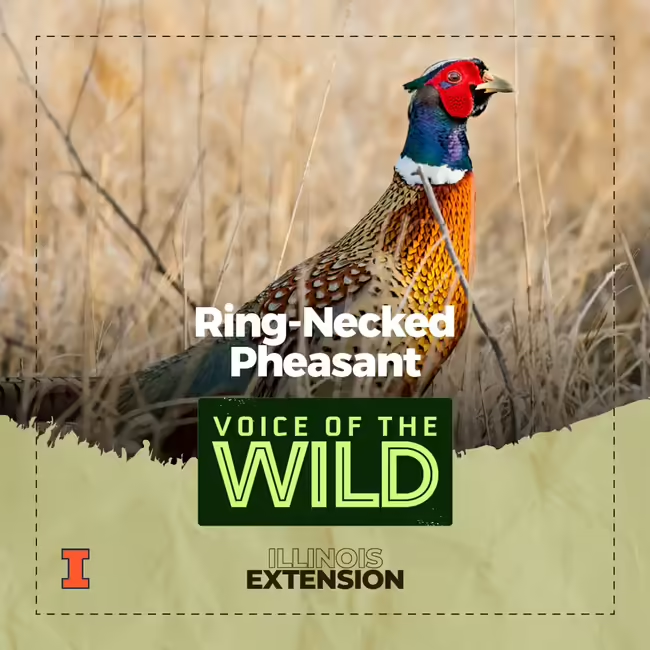
Ring-necked pheasant (Phasianus colchicus).
The gamebird with a rusty-hinge crowing.
Voice of the Wild is a podcast about wildlife and the wild sounds they make.
The following Cornell Lab | Macaulay Library recordings were used in this episode:
- Ring-necked Pheasant crowing call by Gregory Budney (ML505618)
- Ring-necked Pheasant flying call by George B. Reynard (ML505623)
- Ring-necked Pheasant short call by Geoffrey A. Keller (ML505621)
Sources and more:
- Cornell’s All About Birds
- Audubon
- Cornell’s Birds of the World
- Audubon videoguide to 505 birds of North America
- Field guide to hotspots and birds in Illinois by Colin Dobson
- Peterson field guide to the birds (Fourth edition)
- Sibley Birds East
Transcript
This is Brodie with Illinois Extension and I’m here with a new “voice of the wild”
Dawn’s light shining on morning frost, and the quiet of twilight broken by a gamebird’s crowing. Few scenes could be more picturesque for the hunters that pursue this colorful grassland and farmfield specialist. They were introduced to the states for hunting from Asia and Europe in the late 1800’s. Their numbers peaked in the postwar era and have been declining ever since due to the intensification of agriculture. The hens lack the male’s green face, red wattles, and copper-gold plumage but their chestnut feathering is attractive, and though it is much shorter than the males, their tail is still prominent and pointed.
This is the ring-necked pheasant
While the small farms and dissected fields that sustained large numbers of ring-necked pheasants have largely disappeared, the birds persist with modest numbers around the edges of prairie parks and weedy fields. They’re easiest to find in winter once the crops have been harvested and will often forage for leftover grain within running distance of good grassy cover. The loud rusty-hinge crowing done by the males which is often accompanied by a flurry of strong wingbeats, is most often given in spring, but can be heard year round at dusk or dawn. Here’s the ring-necked pheasant again.
Thank you to the Macaulay library at the Cornell lab for today’s sound. Learn more about voice of the wild at go.illinois.edu/VOW
Dawn’s light shining on morning frost, and the quiet of twilight broken by a gamebird’s crowing. Few scenes could be more picturesque for the hunters that pursue this colorful grassland and farmfield specialist. They were introduced to the states for hunting from Asia and Europe in the late 1800’s. Their numbers peaked in the postwar era and have been declining ever since due to the intensification of agriculture. The hens lack the male’s green face, red wattles, and copper-gold plumage but their chestnut feathering is attractive, and though it is much shorter than the males, their tail is still prominent and pointed.
This is the ring-necked pheasant
While the small farms and dissected fields that sustained large numbers of ring-necked pheasants have largely disappeared, the birds persist with modest numbers around the edges of prairie parks and weedy fields. They’re easiest to find in winter once the crops have been harvested and will often forage for leftover grain within running distance of good grassy cover. The loud rusty-hinge crowing done by the males which is often accompanied by a flurry of strong wingbeats, is most often given in spring, but can be heard year round at dusk or dawn. Here’s the ring-necked pheasant again.
Thank you to the Macaulay library at the Cornell lab for today’s sound. Learn more about voice of the wild at go.illinois.edu/VOW