Episode Number
154
Episode Show Notes / Description
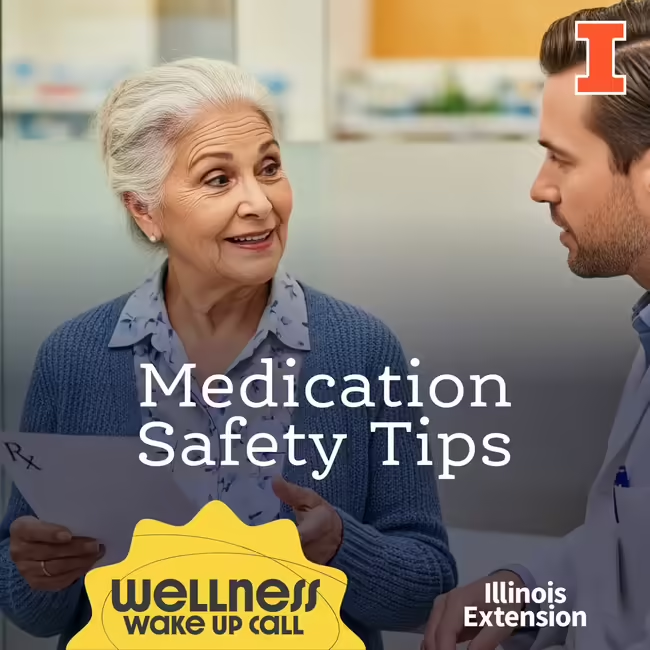
Did you know your pharmacist can be one of your most valuable partners in managing your medications? A conversation with your pharmacist can help answer questions, prevent problems, and give greater confidence in managing medications.
Transcript
Good morning, this is your Wellness Wake Up Call with University of Illinois Extension.
As we have discussed this month, health literacy is important to everyone because it empowers us to find, understand, and use information to make good health decisions. It impacts all areas of our health, including our ability to understand medication information.
Having a good understanding of our medication information is especially important for older adults because our bodies process medications differently as we age. Changes in liver and kidney function and body composition can increase the risk of drug interactions, side effects, and falls.
If you have questions about your medication, call and schedule a time to talk with your pharmacist. Before your appointment, make a list of your questions, and prepare a current list of all medications you take, including dosages and when you take them. Be sure to include vitamins, supplements, and herbal products. Also, tell your pharmacist about any medication or food allergies, and if you have difficulty swallowing pills.
Whenever possible, use the same pharmacy for all your prescriptions, as this allows your pharmacist to maintain a complete medication record and identify potentially dangerous drug interactions.
Understanding your medications and building a good relationship with your pharmacist is vital to your health. So, don’t be afraid to ask questions, as your pharmacist is a valuable member of your healthcare team.
Thank you for listening! I hope you have a happy and healthy day ahead. Content for this episode was provided by, Diane Reinhold, food and nutrition educator for University of Illinois Extension.