Episode Number
132
Episode Show Notes / Description
With so many diets out there, how can the right one be chosen? This episode explores why the Mediterranean diet stands out as a flexible, sustainable approach to eating, supporting long-term health while still being enjoyable, practical, and easy to adapt to everyday life.
Transcript
Good morning. This is your Wellness Wake Up Call with University of Illinois Extension.
When it comes to diets, there are countless options to choose from. So how do you decide which one is right for you? Start by asking whether it is sustainable and supports your unique health needs. If the answer is no, consider a balanced, flexible eating pattern that includes foods you enjoy and provides the nutrients your body needs, such as the Mediterranean diet.
Unlike many restrictive plans, the Mediterranean diet does not eliminate entire food groups. Instead, it encourages a variety. Because it is adaptable and culturally diverse, it can be personalized to fit your tastes and budget, making it realistic for long-term success.
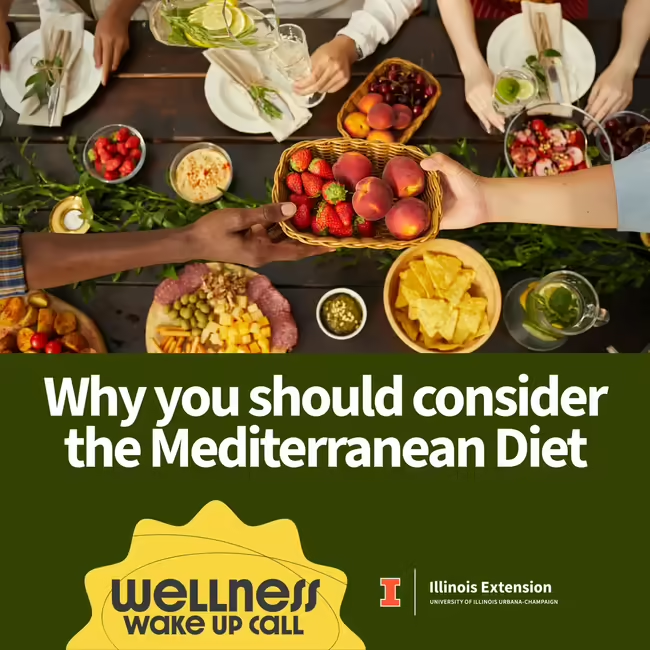
Meals are often shared with family and friends, encouraging connection and conversation. This approach values the experience of eating together, not just the food on the plate.
The Mediterranean eating pattern has been extensively studied and shown to promote long-term health by reducing cardiovascular disease risk, managing weight, lowering blood sugar, combating chronic inflammation, and boosting cognitive function.
Beyond personal health, the Mediterranean diet emphasizes seasonal, locally grown, plant-forward meals that supports environmental sustainability.
The Mediterranean way of eating is also enjoyable and satisfying. It focuses on fresh, flavorful foods, herbs, and simple preparation. Meals are meant to be savored, not rushed, which can make eating feel more enjoyable and less restrictive. Tune in next week for Mediterrean meal ideas.
Thank you for listening! I hope you have a happy and healthy day ahead. Content for this episode was provided by Diane Reinhold, food and nutrition educator with University of Illinois Extension.
Resources:
Health Benefits of the Mediterranean Diet: Metabolic and Molecular Mechanisms National Library of Medicine. Viewed: 02/24/2026
When it comes to diets, there are countless options to choose from. So how do you decide which one is right for you? Start by asking whether it is sustainable and supports your unique health needs. If the answer is no, consider a balanced, flexible eating pattern that includes foods you enjoy and provides the nutrients your body needs, such as the Mediterranean diet.
Unlike many restrictive plans, the Mediterranean diet does not eliminate entire food groups. Instead, it encourages a variety. Because it is adaptable and culturally diverse, it can be personalized to fit your tastes and budget, making it realistic for long-term success.
Meals are often shared with family and friends, encouraging connection and conversation. This approach values the experience of eating together, not just the food on the plate.
The Mediterranean eating pattern has been extensively studied and shown to promote long-term health by reducing cardiovascular disease risk, managing weight, lowering blood sugar, combating chronic inflammation, and boosting cognitive function.
Beyond personal health, the Mediterranean diet emphasizes seasonal, locally grown, plant-forward meals that supports environmental sustainability.
The Mediterranean way of eating is also enjoyable and satisfying. It focuses on fresh, flavorful foods, herbs, and simple preparation. Meals are meant to be savored, not rushed, which can make eating feel more enjoyable and less restrictive. Tune in next week for Mediterrean meal ideas.
Thank you for listening! I hope you have a happy and healthy day ahead. Content for this episode was provided by Diane Reinhold, food and nutrition educator with University of Illinois Extension.
Resources:
Health Benefits of the Mediterranean Diet: Metabolic and Molecular Mechanisms National Library of Medicine. Viewed: 02/24/2026