Commercial Vegetable Production Blogs
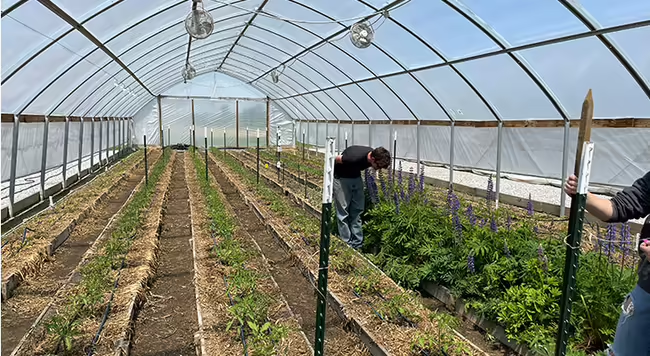
In walking through the hydroponic tunnel at the Dixon Springs Agricultural Center this week, the stark difference in powdery mildew disease pressure could not be ignored and was the inspiration for this article.
In the guide from Missouri Extension,...
Finish this story
The ginger crop languished in the Unity high tunnel during August, putting on minimal growth — even with shade cloth in place of plastic over the top of the tunnel. The ginger trial team and I are starting to think that this crop may benefit from more than the 30% shade cloth we are using in the...
Finish this story
Dew remains on plant surfaces well into the morning hours, creating conditions conducive to powdery mildew. Benefitting from the rains are weeds. This is the busy time of harvest and weeds can rapidly grow to a seed producing size if not controlled with mowing, hoeing, cultivation, or post-emergent...
Finish this story
Pumpkins are doing well. I gave my pumpkins a side dress application of nitrogen the first week of August and they have really taken off we have fruit starting to size nicely. I have not seen any signs of powdery mildew yet but have started spraying preventative fungicides, especially given the...
Finish this story
We had a break from the summer heat last week, but this week the heat dome has moved back over our region creating very hot, humid conditions. With 95-100° temperatures and heat indexes ranging from 105-120°, much of the field work in our high tunnels is completed before noon with lots of water and...
Finish this story
As we get into the later part of July, now is the time to start scouting more closely for diseases and insects in pumpkins. Powdery mildew is by far the most prevalent and common pumpkin disease, but also bacterial spot. Some years, downy mildew can also blow into the area; however, I have not...
Finish this story
High temperatures and very high humidity are the current conditions in the St Louis Metro East. The entire region has received rain recently, just not all at the same time or the same amount. In general, soil conditions worsen as you move south, but are improved from the last reporting.
Harvest in...
Finish this story
July has brought a little relief from the drought conditions, but for some that relief has been short-lived. Locally, most areas have received a cumulative total of an inch or more of rainfall this month. Some areas still have been missed for more soaking rains and the moisture has been a “band-aid...
Finish this story
We are testing soil solarization as an effective management strategy for bindweed, a nasty perennial weed, at our Unity site. We know soil solarization can work for control of annual broadleaf and grass weeds, but I have never attempted to control a perennial weed with it. A bindweed-infested bed...
Finish this story
Phytophthora blight, caused by Phytophthora capsici, is the most important disease of cucurbits and peppers in Illinois. In wet conditions, the disease may cause 100% crop losses. Following the recent heavy rainfalls, the disease developed in our pumpkin plots near South Pekin in Tazewell...
Finish this story