Owning a business is often seen as a path to freedom, and while that can be true, my experience has revealed a more complex reality marked by significant time commitments, constant adaptation, and important trade-offs. The work is ongoing and encompasses managing daily operations, maintaining a steady sales pipeline, and navigating competition in an ever-changing market. Along the way, I learned that setting clear boundaries is essential to staying effective, even when work and family life naturally overlap. Entrepreneurship can also be a solitary journey at times, as many decisions ultimately rest with you. One of the most valuable lessons was recognizing the difference between the work I enjoyed most and the work required to sustain and grow the business — learning to balance both in a way that kept everything moving forward. There are a host of other lessons learned, which include:
The Time Commitment Is Relentless
This might be the hardest truth: your business depends on you — completely. There are no real sick days. No guaranteed time off. Maternity leave? Only if you figure out how to make it work. The time commitment isn’t just large — it’s all-consuming. If the business is running well, it’s because you’re there making it run. It’s late nights, early mornings, and constant mental engagement. Even when you’re off, you’re thinking about problems, planning next steps, or worrying about what’s coming.
Adapt or Fall Behind
Markets shift, technology evolves, and unexpected events — like a pandemic — can reshape everything overnight. Staying current and being willing to pivot, even when it feels uncomfortable or uncertain, isn’t just an advantage in business — it’s essential.
My own business faced this reality head-on during the pandemic. Almost overnight, our doors closed, operations paused, and the steady rhythm of daily work came to a halt. It was an unsettling time — without my team, without a clear timeline, and without incoming revenue. Rather than staying stuck in that uncertainty, I chose to use the time to pursue something I had been considering for years.
Customers had often expressed interest in receiving our arrangements beyond our local area, and I also saw an opportunity to tap into the growing demand for convenient, online “add to cart” shopping. With that in mind, I expanded our offerings by launching shipped fresh-flower arrangements. What followed was an intensive period of learning and problem-solving. I researched shipping carriers, mapped out delivery processes, accounted for weather-related challenges, and carefully tested packaging to ensure each arrangement arrived safely and in excellent condition.
I developed systems to keep customers informed throughout the process, providing timely updates and clear expectations. Every detail mattered — from sourcing packaging that reflected our brand to crafting a thoughtful unboxing experience, complete with a personalized note and care instructions.
To refine the process, we conducted test shipments across the country and made adjustments along the way. I partnered with a marketing company to develop packaging that felt polished and inviting, and I collaborated with a video production team to create a simple “I’ve received my flowers — now what?” guide that became a helpful resource on our website.
What began as a response to an uncertain moment ultimately became an opportunity to grow, adapt, and build something that continued to serve our customers in a new way.
Boundaries Are a Survival Skill
You’ll be pulled in a thousand directions:
- Suppliers offering deals
- Donation requests
- Salespeople pitching “essential” services
Every “yes” costs you time, money, or energy. Learning to say “no” is one of the most valuable skills you can develop. Without boundaries, you’ll stretch yourself too thin and lose focus on what truly drives your business forward.
The Sales Cycle Never Ends
Here’s a paradox:
You need marketing to generate sales, but you need sales to afford marketing.
That cycle never stops. During slow seasons, like winter, or busy seasons, like wedding-heavy months (depending on your industry), having a strong pipeline of leads can be the difference between staying afloat and starting to sink.
The Emotional Reality
Entrepreneurship is often lonely.
You may find yourself envious of friends with stable 9–5 jobs, steady paychecks, weekends off, and energy for a social life. Meanwhile, you’re navigating constant uncertainty, wondering what next month will look like, and carrying the weight of every decision.
And then there’s the public. Customers can be wonderful, but they can also be incredibly difficult. You’ll quickly realize how uninformed many people are about how businesses operate, especially the differences between call centers and small brick-and-mortar operations.
Competition Is Everywhere
You’re not just competing with businesses like yours; you’re competing with major retailers. Grocery stores and big-box chains can offer convenience and pricing that’s hard to match. Standing out requires constant effort and creativity. For instance, when I owned a flower shop, seasonal plants like poinsettias, spring bulbs, and Easter lilies were a tough sell because I couldn’t compete with big-box store pricing. Instead, I focused on elevating these traditional offerings by reimagining their presentation. By incorporating decorative branches, upscale containers, and refined ribbon treatments, I transformed them into distinctive, high-end arrangements that stood apart from the mass-produced options found in larger retail stores.
The Work You Love vs. The Work You Do
You may start your business because you love a craft — designing, creating, building.
But the reality? That becomes a small fraction of your time.
Most of your energy goes into operations, logistics, finances, staffing, and problem-solving. The “why” behind your business can get buried under the “what it takes to run it.”
A Few Final Truths
Don’t start a business during major life transitions (like getting married) if you can avoid it. Both require enormous time and energy.
It’s far less glamorous than it looks from the outside. The highlight reels people see don’t show the long hours, tough decisions, sleepless nights, and constant pressure behind the scenes.
The uncertainty never fully goes away — you just get better at managing it.
Closing Thoughts
Having been in the industry for many years before opening my own store, I thought I had a good grasp of things. Would I still do it? Yes. But I would go in differently — more informed, more prepared, and more realistic.
Entrepreneurship isn’t just about passion. It’s about endurance, adaptability, and a willingness to face hard truths head-on. If you’re considering starting a business, don’t just prepare for success — prepare for everything it takes to sustain it, because this is likely to be the most-visited area you’ll be in for several years.
Building a business isn’t just a job — it’s a lifestyle. And it will ask more of you than you ever expected.
About the Author:
Hollie Schultz-Oprian is a seasoned entrepreneur who lives with her family in Lee County, Illinois. Hollie studied Horticulture at Kishwaukee College and went on to earn her bachelor’s degree in Elementary Education with a minor in Agriculture from Western Illinois University. She is a successful small business owner with 16 years of experience operating a full-service fresh flower, green plant, and gift shop. Combining her experience with her passion for horticulture, education, and entrepreneurship, she is well-positioned to write about the topic of things business founders need to know.
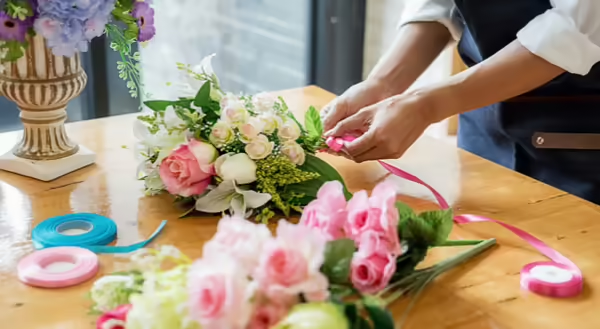
Photo by Oxana Melis on Unsplash.