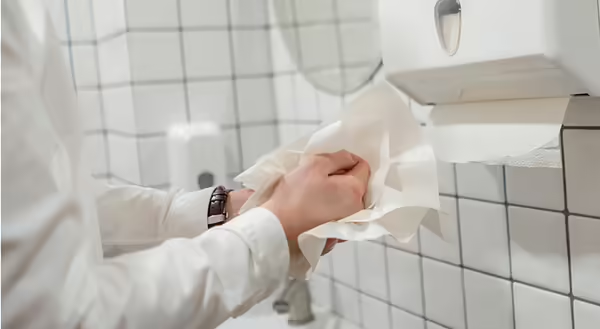
By now many of us know that washing hands involves wetting hands with clean water, applying soap and rubbing palms, between fingers, under fingernails, and the back of the hands, followed by rinsing under clean running water and then drying. This article talks more about the drying step.
It is important to dry hands properly otherwise the benefits of hand washing may be lost. When hands remain wet, they are more likely to pick up and spread contamination to and from the surfaces they touch. Additionally, water can promote survival and growth of harmful microorganisms on wet hands.
Washing hands can remove soil or dirt of different kinds and microorganisms but may not achieve 100% removal. A few hard-to-see microbes or dirt may remain in areas that may not have received a good rub with the soap. The residual dirt, microbes, and water can be removed from washed hands during the drying step.
Methods of drying hands
Hand drying can be completed using a variety of methods. It is important to choose a method that will 1) remove residual water and microbes from washed hands and 2) will not re-contaminate washed hands. Research shows that air dryers, disposable paper towels, and cloth towels can all dry properly washed hands. In today’s fast-paced environment, paper towels and single serve cloth towels can provide more than 90% dryness in less than 10 seconds. Hot air dryers would need more time to achieve the same level of dryness. When it comes to residual microbes, disposable paper towels can remove microorganisms from washed hands and will not spread them to the nearby environment (air, floor, or your clothes) if disposed of properly. Also, using more than one paper towel to dry washed hands does not remove more bacteria.
Air dryers can remove residual microbes, but care must be taken to clean the area near the dryer -about 3 feet where microbes could have been spread by the moving air and water. Research shows that opening washed hands, holding them still below the dryer, and not rubbing them during the drying process can be effective at drying and removing residual microbes from washed hands.
Cloth towels can work great to dry hands and remove residual dirt and microbes when used once and cleaned, otherwise they can become a source of contamination to washed hands. If using cloth towels, wash them regularly with soap water and dry with a hot cycle to prevent biofilm formation. Rinsing them in water alone once a week is not enough. Do not wait for the towel to smell, become visibly dirty, or to feel slippery when you rinse it.
Find more answers to your questions about hand washing from the Centers for Disease Control and Prevention
References
Biofilm Compositions and Bacterial Diversity on Kitchen Towels in Daily Use
The Common Missed Handwashing Instances and Areas after 15 Years of Hand-Hygiene Education
Microbiological evaluation of different hand drying methods for removing bacteria from washed hands
The Hygienic Efficacy of Different Hand-Drying Methods: A Review of the Evidence