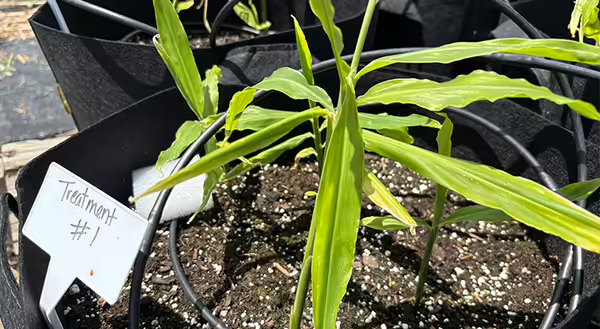
We are one month in to the second year of a statewide, cross-Illinois fresh ginger rhizome trial, with 6 Extension field staff and 14+ specialty growers collaborating to identify and improve best practices of fresh ginger rhizome production. We are looking at high tunnel and field cultivation of ginger, as well as container-growing of ginger both in high tunnels and outdoors.
The Unity Community and Demonstration and Research Garden in Normal IL is where my ginger “grow bags” are located. I have constructed pallet-tables (pallets with 2x4 legs) to hold 6x 10-gal non-woven polypropylene grow bags each. Zack Grant – Local Food Systems/Small Farms Educator – and I are running a replicated ginger rhizome grow bag trial that is specifically examining the importance of fertility levels in baby ginger rhizome production in supplemented soilless media.
Zack’s trial is occurring at SoSuCo (South Suburban Cook Urban Ag Demo and Research Farm), in Matteson, IL. Zack’s ginger grow bags are in his high tunnel on the site and mine are outdoors on pallets, but apart from that, our ginger grow bag fertility treatments are the same. This year, we are testing three levels of conventional fertility – Low, Medium, and High – along with a High Organic comparison treatment, and 6 replicates of each treatment. We are continuing to clarify just how important fertility additions at planting and throughout the season are for a successful, high-yielding and healthy fresh ginger crop, and will update readers later this year.
Zack and I just began a twice per week fertigation protocol in mid-June which will carry on twice a week through the rest of the season. Several commercial ginger growers across the country believe that beginning ginger growers in their areas of the US are generally underfeeding this crop, and that fresh ginger rhizome seems to reward those that apply high amounts of supplemental fertility with higher yields and less disease incidence. The amount of supplemental fertility we are applying per week will test that theory.
Of course, the economics of these decisions is not lost on us, at a time when the price of farm supplies and inputs seem to be increasing every month. As a bonus to our container-grown ginger rhizome fertility trial, we will include an economic analysis of all inputs to this trial, with an eye to simulating a grower target profit margin of 25-50% after expenses. The results of this trial will be presented at future Extension events.