The Cooperative Agricultural Pest Survey program, CAPS, focuses on the early detection and surveillance of harmful or economically significant exotic plant pests, diseases, and weeds that have eluded first-line of defense inspections or have been identified as threats to U.S. agriculture or the environment. With the goal of safeguarding our nation’s food and environmental resources, CAPS programs in each state work hand-in-hand with their state and federal counterparts as well as collaborate with universities, industry groups, and other stakeholders to identify invasive pest threats and prioritize surveys specific to their state.
This guest blog was written by Kelly Estes, State Agricultural Pest Survey Coordinator for the Illinois Natural History Survey.
There is a common misconception that Illinois faces little risk of invasive species introductions; after all, we’re in the middle of the country, surrounded by corn and soybean fields. That assumption couldn’t be farther from the truth.
Illinois ranks 5th nationally in the risk of invasive species being introduced. Illinois’ central geographic location and a superior network of transportation systems offer significant advantages in trade, commerce, and tourism. The busiest U.S. rail corridor for moving intermodal containers runs from Long Beach, California, to Chicago – home to the largest rail gateway in the nation and a direct connection between Canada and the eastern and western halves of the U.S.
Over 1,000 miles of navigable waterways, including the Illinois and Mississippi rivers, make barge traffic an efficient option for the upstream movement of imported steel and machinery as well as downstream grain shipments bound for the Gulf. In conjunction with 34,500 miles of highways in neighboring states, Illinois’ extensive 2,000-mile interstate system facilitates fast and efficient truck transport.
Over 80 million travelers, both international and domestic, passed through Chicago’s O’Hare Airport in 2024. O'Hare is also one of the top 20 busiest cargo hubs in the world. It is the top airport in North America for cargo by value at more than $300 billion per year.
Unfortunately, combined with the importance of agriculture to Illinois’ economy and the ever-increasing volume of foreign goods moving through the state, the size and efficiency of these pathways render Illinois extremely vulnerable to the introduction, establishment, and spread of exotic plant pests vectored by trade and travel. While these high-risk corridors tend to cluster around Illinois’ industrialized urban areas, they also traverse agricultural commodity regions and natural expanses such as woodlands, wetlands, and prairies – all of which may be negatively affected by exotic plant pests. The economic impact of nonnative pest invasions can be significant and has been well documented, but these incursions also destroy natural habitats, diminish the diversity of native ecosystems, and permanently alter the beauty of our landscape.
Invasive species detections are not rare in Illinois. Some of the more notable invasives include Asian longhorned beetle, emerald ash borer, and, most recently, spotted lanternfly. Early detection of invasive species will sometimes allow for measures to be put in place that will eradicate the threat before it becomes established – the Asian longhorned beetle in Illinois, for example. Other times, the focus becomes monitoring, awareness, and public education in the hopes of minimizing losses.
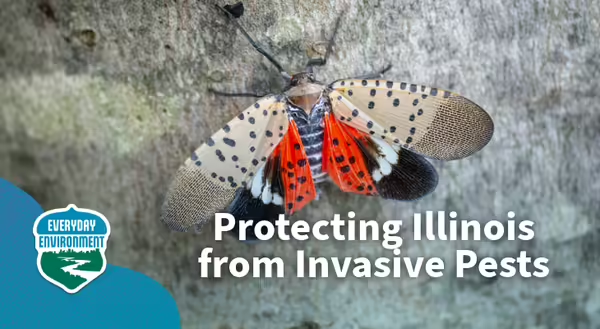
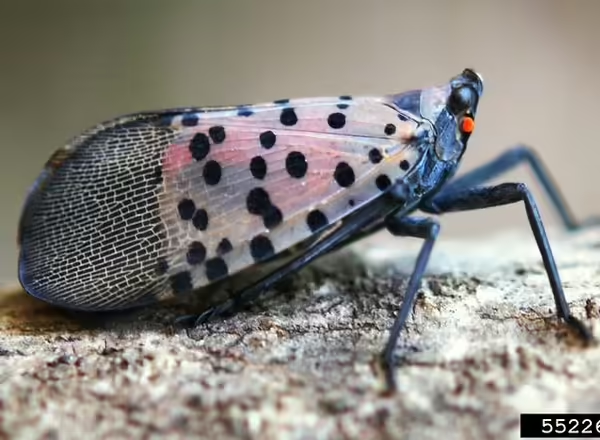
Our most recent invasive species threat is the spotted lanternfly. It was first identified in the United States in 2014. The Illinois Natural History Survey has been monitoring spotted lanternfly for many years and has also focused on public education and outreach. This invasive insect feeds on more than 70 plant species, including grapes, fruit trees, ornamentals, and hardwoods. Feeding damage caused by spotted lanternfly stresses the plants, which leads to decreased health and, in some cases, causes death. Spotted lanternfly is also considered a nuisance pest. As the insect feeds, honeydew is excreted, which not only attracts wasps, bees, and other insects but may also promote the growth of sooty mold that can cover plants, forest understory, and anything found below spotted lanternfly feeding, like benches, playground equipment, cars, etc.
In 2023, spotted lanternfly was first identified in Illinois in Cook County. Despite hundreds of reports since then, Cook County remains the only county with confirmed infestations in Illinois. It is an expert hitchhiker, and we expect more confirmations of this pest in the future. Spotted lanternfly, along with other pests, will remain a focus for future surveys.
Helpful Resources
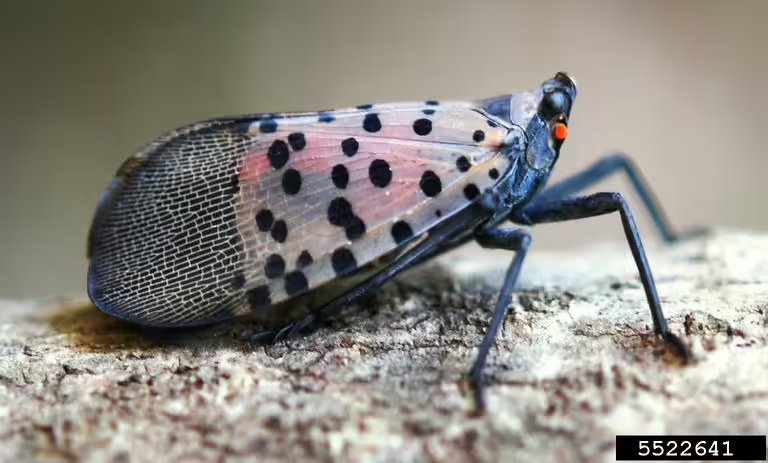
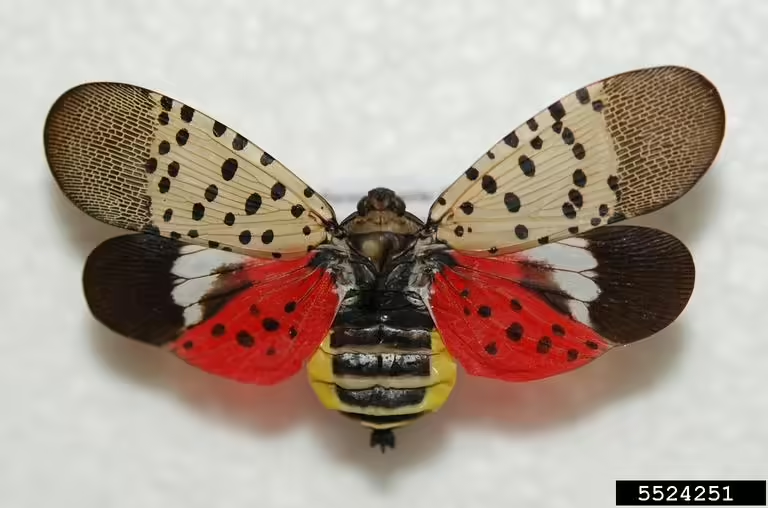
Spotted lanternfly is the newest “unwanted” invasive pest in Illinois. Learn how to identify and report this invasive insect as well as how to manage it and prevent further spread.
Tricia Bethke from The Morton Arboretum explores why monitoring for spotted lanternflies in winter is...
About Everyday Environment
Everyday Environment is a series of blogs, podcasts, webinars, and videos exploring the intricate web of connections that tie us to the natural world.
Was there something about this blog's topic we didn’t cover? See something cool in nature? Let us know! Hit "Connect with Us" below to send us your question or share your everyday nature observation with and we may share it in a future blog or podcast.