I have always marveled at pinecones and the seeds of other conifers. Whether I was picking them up for a “collection” as a kid or watching them dangle in the treetops more recently, these exotic-looking, seed-housing structures are often a point of interest for native Illinoisians like me.
Native Conifers in Illinois
Today in Illinois, we have very few native conifers; the fact that these cones are found only where humans have planted their host trees adds to their exotic allure. However, at one time, pines, spruces, and other cone-bearing species were native to our state, forming the primary forest cover.
As the last Illinois glacial period receded (around 24,000 years ago), conifers that now exist much further north, near arctic regions, colonized Illinois, following the receding ice sheets. As temperatures rose and plant succession progressed, our native hardwoods gradually began to dominate Illinois forests. Today, we have only 8 native conifer species in IL, but fossil records indicate a much greater diversity in the past.
Gymnosperms and Angiosperms
Native artic conifers in Illinois span a very short period in the geologic time scale, but conifers themselves have a much longer history on earth than hardwood trees, appearing earlier in the evolutionary history (appearing about 319 million years ago) than the diversity of flowering plants (appearing around 150 million years ago) we know today, which include everything from trees and shrubs to veggies and herbs.
It is true that conifers produce pollen in their reproductive structures, but these plant parts are not considered flowers, botanically speaking. Conifers fall into the broad category of plants known as gymnosperms, which can be defined as woody, perennial plants that lack an outer protective coating on their seeds. In contrast, flowering plants are categorized as angiosperms, which can generally be described as plants that produce flower structures and bear seeds enclosed in an ovary and protected by a fruit at maturity.
While angiosperms dominate plant communities worldwide today (9 out of 10 plants worldwide are angiosperms), there is something to be said for conifers and their “naked” seeds. These oldies but goodies have stood the test of time and continue to act as the climax species in many ecosystems worldwide, with many considered keystone species within their native ranges.
Cones as Seed-Bearing Structures
Beyond their ornamental or exotic appeal, cones have quite a story to tell as seed dispersal mechanisms. Pinecones are the primary cone structure that most will recognize, and they vary in size from the behemoth cones of Coulter pine (P. coulteri) or sugar pine (P. lambertiana), which both reach up to 20 inches, to the minute cones of mugo pine (P. mugo) at less than ¼ in.
Pines produce both male and female cones on the same plant, which are often incorrectly referred to as flowers when immature. Male cones produce pollen in copious amounts each spring, and female cones receive this pollen via the wind to mature into the larger structures we commonly refer to as cones.
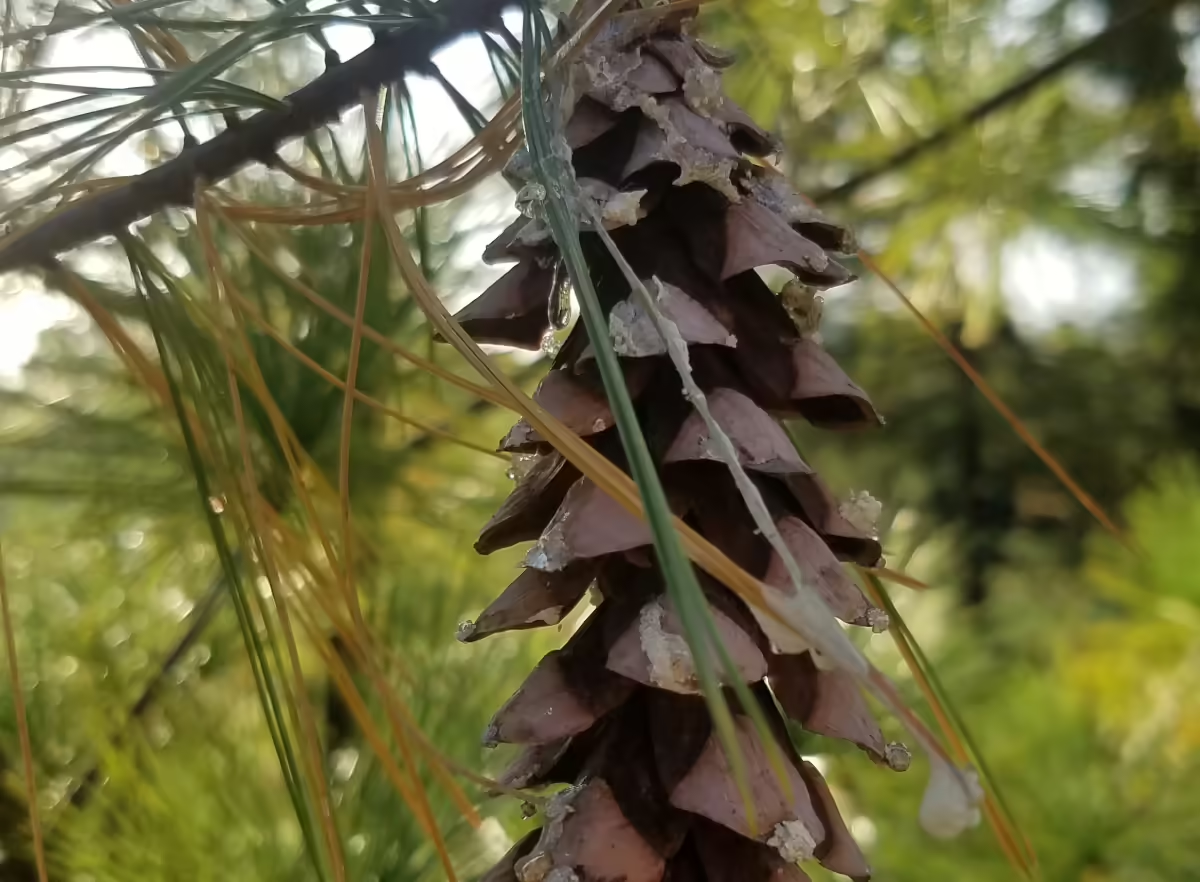
Seeds are eventually released as mature cones dry and open up. Each cone has specialized cells that shrink or swell in response to humidity or heat, releasing the seeds. This mechanism is carefully timed within the cone to release seeds at the optimal stage. In some cases, such as with our native white pine (P. strobus), it takes multiple years for the cone to open. However, other species, like fire-adapted jack pine (P. banksiana), have “serotinous” cones that need a fire’s heat to melt resin and allow the cone to open.
Cones on fir trees (Abies spp.) have their own method to the seed dispersal madness. Their lighter, paper-like scales simply fall off to release seeds while cones remain on the tree. This makes it somewhat rare to find fir cones intact on the ground.
Spruce trees (Picea spp.) also have thin, paper-like scales on their cones. However, these cones fall to the ground before opening and releasing seeds.
Cones That Don’t Seem Like Cones
Believe it or not, ginkgo trees (Ginkgo biloba) are actually conifers, making their fleshy, often smelly, fruits a type of cone. This gymnosperm is often noted for its ancient history, appearing in fossil records from around the globe. If you examine its cone, it does have a fleshy covering, similar to a fruit in appearance. However, it is considered “naked” because seeds are not enclosed in the ovary, which is the basic tenet of the naked seed definition among gymnosperms.
One of my favorite native trees, the bald cypress (Taxodium distichum) has a circular, tightly closed cone structure that many do not recognize as a cone. The securely sealed cone is designed to float, which aids in the dispersal of the seeds of this swamp-dwelling species.
Eastern red cedar (Juniperus virginiana) is the only conifer that is actually native to central Illinois. Similar to ginkgo, its cones have a fleshy outer covering, although they lack the awful smell. These cones are often mistakenly referred to as berries, but they do function in a similar fashion in the bird world, being a prized food that is readily dispersed by our avian friends.
Conclusion
For the plant lover in all of us, angiosperms offer a similar list of incredible feats and amazing seed dispersal routes. However, it's been fun to reminisce about their older cousins, the gymnosperms. Their age-old methods are some of the major innovations of the plant world to this day, warranting a place in landscapes as well.