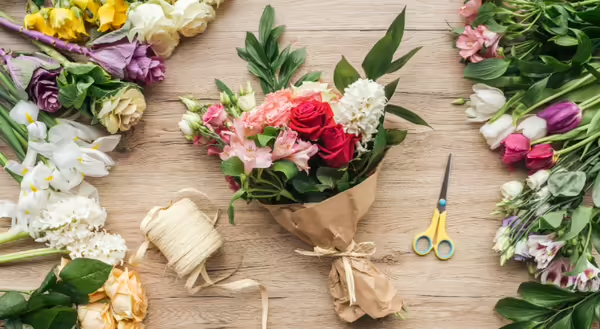
A fresh bouquet instantly brightens a room and a mood, but keeping those flowers vibrant takes a little know-how. With the right care, the vase life of a bouquet can be extended by days or weeks. Here is an easy guide to help your flowers stay beautiful for as long as possible.
High-Quality From the Start
When purchasing flowers, select stems that are firm, the blooms are robust, and are kept in fresh water. Avoid blooms that show signs of wilt or drooping, soft buds, or discolored or fading foliage.
When harvesting flowers from your garden, maximize vase life by using a sharp, clean bypass pruner or shear. Harvest flowers during morning hours when the blooms are most hydrated and harvest at the appropriate stage of openness for the species. Some species should be harvested when partially or beginning (sunflowers, gladiolus, peony, etc.) to open while others need to be fully open at the time of harvest (zinnia, and dahlias).
Place cut flowers in water as soon as possible. Take a bucket of fresh, clean water to the garden so cut stems are hydrated as soon as possible. Take care to keep soil away from the cutting by keeping stems off the ground and washing rain-splashed soil off the stems before cutting.
Location, Location, Location
Where a bouquet is displayed affects the longevity of the blooms. Even after being cut, flowers continue metabolic processes, including photosynthesis and transpiration. Without roots to replenish resources, blooms that exhaust available resources will fade quickly. Slowing down the metabolism of cut flowers helps prolong the vase life of a bouquet. Keep the bouquet away from heat, including drafts and direct sources such as stoves and ovens, keep out of direct sunlight, and away from ripening fruits that emit ethylene gas, a plant hormone that promotes ripening.
Vessel and Water
A clean vase is essential for preventing the buildup of bacteria, which can clog stems and shorten vase life. Wash containers with hot, soapy water before use to destroy bacteria and fungi that can negatively impact blooms.
Once cut, flowers can no longer pull moisture from their roots. Filling the vase to the near top with water utilizes equalizing pressure to help hydrate the blooms. It also ensures that the cut end of the bouquet stays submerged even if water levels drop. If allowed to dry out, air can enter the vascular tissue and block the uptake of water. Angular cuts on the stems help increase surface area on the stem, increasing water uptake. Make a fresh cut at each water change to keep stems open and available for water absorption.
Use and keep water clean. Remove foliage from the stems of cut flowers. Foliage submerged below the water line will decay, causing bacterial growth that is detrimental to blooms. Flower food packets contain a carbohydrate, citric acid, and a biocide, and are recommended. Carbohydrates are sugars that support bloom longevity, citric acid acidifies, and biocides both work to inhibit the growth of bacteria. For flower food packets to be most effective, dilute in the recommended amount of water per the package instructions.
Good Growing Fact of the Week: Daffodil sap contains compounds, alkaloids and polysaccharides, that negatively affect other flower species in a cut flower bouquet. Without proper conditioning, daffodils in a mixed bouquet can shorten the vase life of the other species by up to half. To condition daffodils, place cuttings in their own warm water for 12 to 24 hours prior to incorporating them into a mixed bouquet.
Downloadable version of Bright blooms
Thank You for Reading!
Sign up for our emails! Want to get notified when new Good Growing posts are available? SIGN ME UP
Give us feedback! How helpful was this information (click one): Very helpful | Somewhat helpful | Not very helpful
MEET THE AUTHOR
Emily Swihart is a horticulture educator with University of Illinois Extension, serving Henry, Mercer, Rock Island, and Stark counties since 2021. Emily provides horticulture programming with an emphasis on the home gardener, the urban forest, native plant ecosystems, and landscape design. Additional responsibilities include supporting local county Master Gardener and Master Naturalist volunteers - providing training, continuing education, advanced training, and their involvement in seasonal events and community outreach programs.


