
Nothing says summer like the chorus of cicadas. Those annual cicadas also signal the arrival of cicada killer wasps, one of Illinois' largest and most misunderstood wasps. Despite their large, intimidating appearance, they are generally harmless.
What do cicada killer wasps look like?
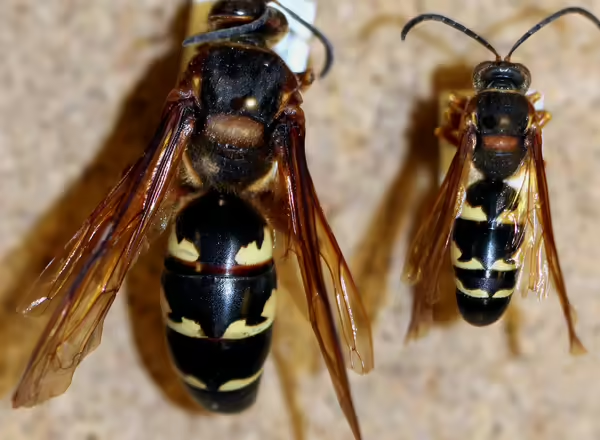
Eastern cicada killers (Sphecius speciosus) are the largest wasps we have in Illinois, reaching 1.5 to 2 inches long. They have a reddish-brown head with large, rust colored eyes. Their thorax (middle body part) is also reddish-brown, with orangish-brown wings and legs. Their abdomen is black with yellow bands. Females are usually larger than males because they must carry cicadas back to their burrows.
Cicadas’ worst enemy
Adult cicada killers begin emerging in late June or early July, around the same time annual cicadas appear. After emerging, the adults will feed on nectar and plant sap. The males emerge first and will establish territories where they wait for females. The males will patrol their territories and will attempt to drive off intruders, including humans. If someone walks into a male’s territory, it will hover in front of them (often at eye-level) to determine if they are a threat or rival. After determining the individual doesn’t pose a risk, they will ignore them.
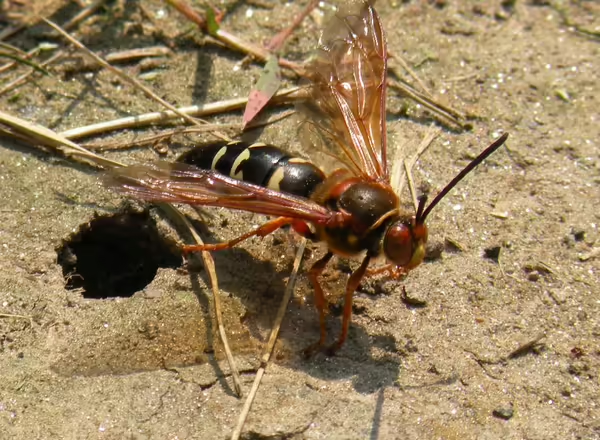
Females will emerge, mate, and then begin digging burrows. They tend to build their burrows in well-drained areas with light-textured soils (think sandy rather than clay) that receive full sun. They often burrow in areas with little or no vegetation, such as along sidewalks or patio edges, in garden beds, sand traps on golf courses, baseball/softball infields, sandboxes, and volleyball courts.
Their burrows are commonly 6 to 10 inches deep and 12 to 18 inches long and may include several side chambers. When building their burrows, they can bring a lot of soil up to the surface, which some people may find undesirable, especially in highly managed turf/yards. Once the burrow has been dug, the females will begin hunting for cicadas.
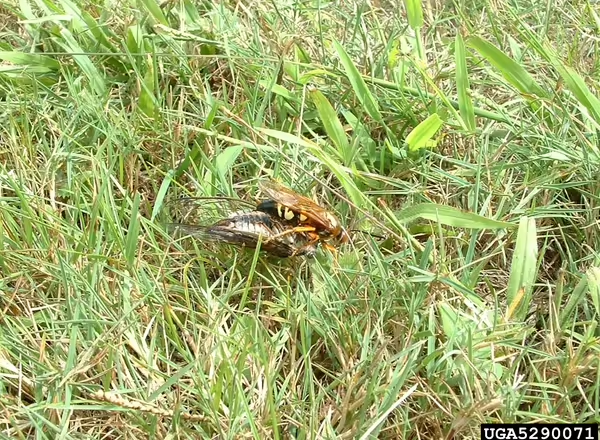
Female cicada killers will search nearby trees and shrubs for annual cicadas. Once a cicada is located, the wasp will sting the cicada and paralyze it, often while the cicada is flying. She will flip the cicada onto its back, grasp it, and transport it to its burrow. Once back, the cicadas are placed in a chamber, and an egg is laid, and the chamber is sealed. Each chamber can have one to three cicadas, with females typically receiving two or three and males receiving one or two.
The eggs will hatch a day or two after being laid, and the larvae will feed on cicadas for about one to two weeks. The mature larvae then spin a cocoon and remain underground through the winter before pupating in the spring. Most adults die by late September or early October.
How do I get rid of cicada killers?
While the males are territorial and will try to intimidate things that enter their territory, they are harmless. Females are not aggressive and typically won’t sting unless handled or stepped on. Because cicada killers are solitary, non-aggressive wasps that help regulate cicada populations, management is typically unnecessary.
One way to discourage their burrowing in yards is to maintain a healthy, dense stand of turf. If they are burrowing in landscape beds, mulch or a groundcover can be used. Another potential strategy to discourage them from burrowing in an area is to keep the soil moist. The wasps don’t like wet soil, and watering the ground may help the soil settle into their tunnels, further discouraging them.
Chemical control is rarely needed and should be used in situations where wasps are burrowing in high-traffic areas and creating a legitimate concern. Insecticide dusts with active ingredients such as carbaryl, bifenthrin, or permethrin can be applied to the entrances of their tunnels. Make sure to read and follow all label directions.
While their large size and territorial behavior can be intimidating, cicada killers are typically more interested in hunting cicadas than bothering people. Learning to appreciate these misunderstood wasps can make summer a little less frightening and a lot more fascinating.
Good Growing fact of the week: Why can’t male cicada killers (or other male wasps, bees, and ants) sting? Because the stingers of these insects are modified egg-laying devices, and only females have them.
Bonus fact of the week: Because cicadas weigh more than the wasps themselves, females will often climb vegetation and launch into a glide back toward their burrows.
References and more information
DAMBACH, CHARLES A., and EUGENE GOOD. 1943. “Life History and Habits of the Cicada Killer in Ohio.” The Ohio Journal of Science 43 (1): 32–41. https://kb.osu.edu/server/api/core/bitstreams/c7eb3ddb-1871-5f88-b612-63f29eb820f9/content.
Smithsonian Institution. 2020. “BugInfo.” Smithsonian Institution. Smithsonian Institution. https://www.si.edu/spotlight/buginfo/cicada-killer-wasps.
Photos
Male and female cicada killer wasps - Whitney Cranshaw, Colorado State University, Bugwood.org
Cicada killer near burrow entry - Jessica Louque, Smithers Viscient, Bugwood.org
Cicada killer with cicada - Kenneth R. Law, USDA APHIS PPQ, Bugwood.org
Want to get notified when new Good Growing posts are available? SIGN ME UP!
Give us feedback! How helpful was this information (click one): Very helpful | Somewhat helpful | Not very helpful
MEET THE AUTHOR
Ken Johnson is a Horticulture Educator with University of Illinois Extension, serving Calhoun, Cass, Greene, Morgan, and Scott counties since 2013. Ken provides horticulture programming with an emphasis on fruit and vegetable production, pest management, and beneficial insects. Through his programming, he aims to increase backyard food production and foster a greater appreciation of insects.