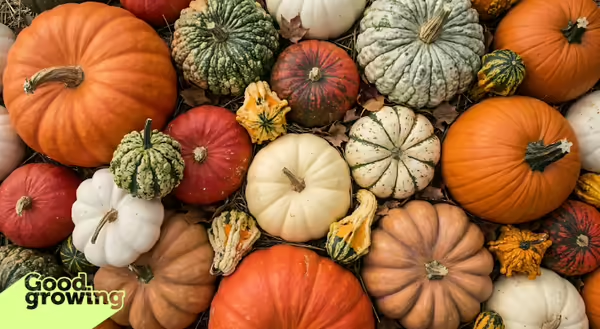
From decorations to jack-o'-lanterns at Halloween and pumpkin pie at Thanksgiving, pumpkins and squash play a central role in many of our fall holiday traditions. But long before they were cultivated by people, their wild ancestors depended on a very different set of partners: the massive mammals of the Ice Age that helped shape the ecosystems where squash first evolved. As these giant animals vanished from the landscape, humans emerged as the unlikely partners that would help ensure the survival of pumpkins, squash, and gourds.
Megafauna and the wild ancestors of modern cucurbits
Thousands of years ago, North America was home to megafauna such as mastodons and other giant herbivores. These animals played an important role in the survival of cucurbits (including pumpkins, squash, and gourds) by helping disperse their seeds and providing favorable habitat for them to grow.
Wild squash fruits contain compounds called cucurbitacins, which make them bitter and unpalatable to many animals. While the chemicals are unpleasant and potentially harmful to many smaller mammals, very large herbivores were much more tolerant of these compounds. As a result, ancient megafauna could eat the fruits and spread seeds over long distances.
When many of these large animals disappeared near the end of the Ice Age, wild squash lost their primary seed dispersers. Smaller surviving mammals were less likely to eat the bitter fruits and, when they did, often acted as seed predators rather than seed dispersers. The loss of seed-dispersing megafauna likely made it much more difficult for wild squash populations to spread and maintain healthy populations.
Large herbivores also helped create and maintain the patchy, disturbed habitats preferred by these wild cucurbit species. These plants thrive in open areas such as floodplains, field edges, and disturbed soils. As the megafauna vanished, these landscapes gradually gave way to more uniform vegetation. Suitable habitat became scarcer, forcing many wild squash populations into isolated pockets and contributing to their decline.
Humans lend a helping hand
At the same time wild populations were struggling, humans were creating new opportunities. Human habitation produced the disturbed environments that cucurbits preferred. Humans may have first started using dried gourds as a way to transport things such as food and water. It’s also possible they ate the seeds, which contain less cucurbitacin than other parts of the plant.
As humans began cultivating squash, they likely favored plants that produced larger fruits, bigger seeds, thicker rinds, and better-tasting flesh. Over many generations, these choices gradually transformed these wild cucurbits into suitable food crops. However, in order for these newly domesticated plants to keep these desirable traits, they needed to be isolated from wild cucurbit populations.
If domesticated squash were to be cross-pollinated by wild plants, the undesirable traits such as bitterness could be reintroduced. As wild populations became increasingly fragmented and disappeared from many regions, cultivated squash were less likely to cross with their bitter wild relatives. This reproductive isolation allowed humans to more effectively select for larger, less bitter, and tastier fruits, ultimately giving rise to the pumpkins, squash, and gourds we know today.
So, the next time you carve a pumpkin or enjoy a slice of pumpkin pie, take a moment to thank both the mastodons and the ancient farmers that helped make it possible.
Good Growing Fact of the Week: Preserved mastodon dung has been found that contains the seeds of ancient cucurbits, showing that these animals consumed the fruits and dispersed the seeds across the landscape.
Bonus fact of the week: Cucurbits are an ecological anachronism, meaning they have physical traits (or behaviors) that evolved or adapted to a long-extinct organism or environmental pressure. Other anachronistic plants include avocados, pawpaws, Kentucky coffeetrees, and Osage oranges.
References and more information
Kistler, Logan, Lee A. Newsom, Timothy M. Ryan, Andrew C. Clarke, Bruce D. Smith, and George H. Perry. 2015. “Gourds and Squashes (Cucurbita spp.) Adapted to Megafaunal Extinction and Ecological Anachronism Through Domestication.” Proceedings of the National Academy of Sciences 112 (49): 15107–12. https://doi.org/10.1073/pnas.1516109112
Want to get notified when new Good Growing posts are available? SIGN ME UP!
Give us feedback! How helpful was this information (click one): Very helpful | Somewhat helpful | Not very helpful
MEET THE AUTHOR
Ken Johnson is a Horticulture Educator with University of Illinois Extension, serving Calhoun, Cass, Greene, Morgan, and Scott counties since 2013. Ken provides horticulture programming with an emphasis on fruit and vegetable production, pest management, and beneficial insects. Through his programming, he aims to increase backyard food production and foster a greater appreciation of insects.