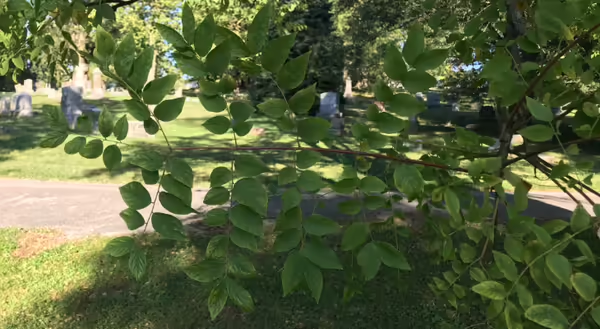
Good Growing is a celebration of all things horticulture, including the weird and wild things of nature. During this late autumn season, popular culture joins us in celebrating some of the creepy, crawly, and spooky things nature has to offer. In honor of this, this week’s article highlights a tree species that is notable for its durability and can add an element of spookiness to a landscape with its open branch structure.
The Kentucky coffeetree is a distinctive native tree that, with the help of cultivars, is becoming more popular in the ornamental landscape. The rugged beauty and durability of the species warrant a closer look.
Kentucky Coffee (Gymnocladus dioicus)
Kentucky coffeetree is a large, deciduous tree that is native to the central Midwest, including eastern Kansas, northeast Oklahoma, southern and eastern Iowa, Missouri, Illinois, Indiana, western Ohio, and southern Michigan. Trees are capable of maturing into stately, vase-shaped trees reaching sizes upward of 75 feet in height and 50 feet in spread.
Large, alternate, bipinnately compound leaves are among the largest leaves on any species of tree native to the Midwest. Leaves measure 36 inches long and 24 inches wide. Trees are late to leaf out in the spring and exhibit a reddish- pink hue until turning green for summer.
Kentucky coffeetree is a dioecious species, meaning trees are either female or male. Female trees produce small (3/4 to one-inch), fragrant, greenish-white flowers in the spring. Male trees produce a panicle that provides pollen. Numerous insects, including bees and butterflies, are the primary pollinators of the Kentucky coffeetree.
Gymnocladus is a member of the Fabaceae plant family, the pea family. Fruits of the Kentucky coffeetree develop on female trees and are pods that resemble other members of the Fabaceae family. Seed pods are five- to ten-inch-long seed pods that contain a few large seeds. Pods can persist in the winter months and add visual interest to the landscape.
A bit of spooky
The etymology of the genus name Gymnocladus is derived from the Greek words gumnos, meaning naked, and kladdos, meaning branch. Aptly named, the branching structure of the tree is irregular and lacks an abundance of side branches, giving the tree a unique, open canopy look once the leaves have been shed. This open canopy can resemble the haunted tree silhouette reminiscent of trees in spooky images and videos.
The lack of side branches is especially noticeable when the tree is young. If shopping for a Kentucky coffeetree at a nursery while trees are dormant, be prepared to see something that resembles a stick in a container. For those able to look beyond the simple structure of a young tree, they will be rewarded with a tree that is durable and adds a unique visual interest to the landscape.
Additionally, mature Kentucky coffeetrees have a gray, scaly bark that curls outward. This texture adds visual interest to a landscape and could be described as giving the tree an eerie look.
A species to consider
Kentucky coffeetree is a unique tree well suited for the Midwest that has been underrated and overlooked by the nursery industry for years. However, its time in the shadows may be finally over. With no serious insect or disease issues, a tolerance for challenging sites including urban pollution and a range of soil conditions, and cultivars that offer trees without fruit or more demure sizes, the unique Kentucky coffeetree is showing up along boulevards, in parks, and is more available for homeowners.
Good Growing Fact of the Week: Kentucky coffee tree seeds were used by early settlers as a substitute for coffee. It is not recommended that people try to brew coffee from the beans. The pods contain alkaloid cystisine that, in mild cases, can cause gastrointestinal upset and, in more extreme cases, can result in death. It is believed that toxic properties are neutralized when cooked, but Illinois Extension does not recommend consuming Kentucky coffeetree.
Bonus Good Growing Fact of the Week: Kentucky coffeetree was the state tree of Kentucky until 1994, when it was designated as the Kentucky Heritage tree. The tulip tree (Liriodendron tulipifera) is now the state tree of Kentucky.
Thank You for Reading!
Sign up for our emails! Want to get notified when new Good Growing posts are available? SIGN ME UP
Give us feedback! How helpful was this information (click one): Very helpful | Somewhat helpful | Not very helpful
Meet the Author
Emily Swihart is a horticulture educator with the University of Illinois Extension, serving Henry, Mercer, Rock Island, and Stark counties since 2021. Emily provides horticulture programming with an emphasis on the home gardener, the urban forest, native plant ecosystems, and landscape design. Additional responsibilities include supporting local county Master Gardener and Master Naturalist volunteers - providing training, continuing education, advanced training, and their involvement in seasonal events and community outreach programs.