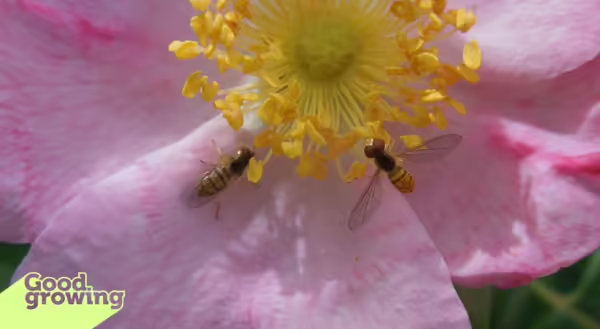
Have you noticed small bee-like insects hovering around flowers, picnic tables, or even landing on your skin this summer? If so, chances are you've encountered syrphid flies. These harmless insects are often mistaken for bees or wasps. While their habit of buzzing around people can be annoying, syrphid flies are some of the most beneficial insects you can find in your garden.
Is It a Bee, Wasp, or Fly?
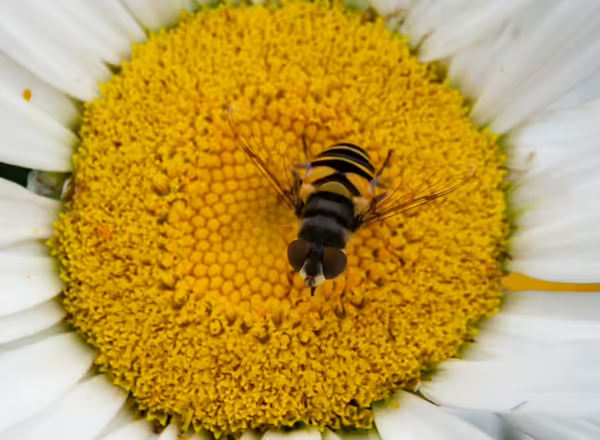
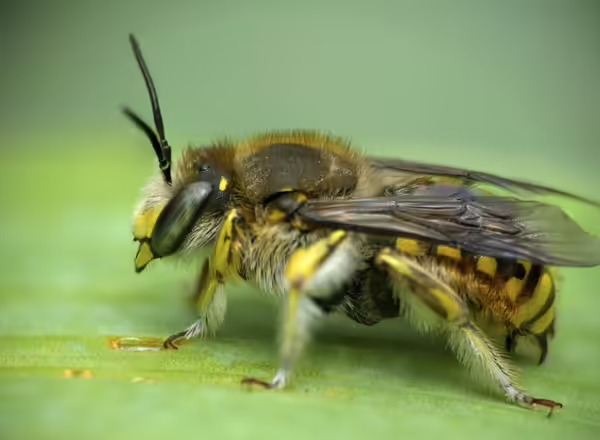
Adult syrphid flies (aka hover flies, flower flies, corn flies, helicopter flies, and sweat bees, among other names) range in size from ¼ to ¾ of an inch long. Many of them are excellent mimics of bees and wasps, with yellow, orange, and black markings. Despite their appearance, they are not bees or wasps but flies in the family Syrphidae (thus the name syrphid flies). Like bees and wasps, the adults are often seen around flowers. There are a few different ways you can tell them apart from one another:
- Look closely at the wings. Flies have one pair of wings (2 total), while bees and wasps have two pairs (4 total). As the adage goes, two wings fun, four wings run.
- You can also look at the antennae of the insects. Syrphid flies have short antennae, while bees and wasps have longer, elbowed antennae.
- The eyes of flies are large and will cover most of their face, while the eyes of bees and wasps are on the sides of their heads and take up less space.
- Bees and wasps will have a distinctive 'waist' while flies typically don't.
- Bees and wasps are capable of stinging, while flies are not, although this is probably not the way you want to determine if something is a bee or wasp, or a fly...
Beneficial Role of Syrphid Flies
Despite their annoying habit of swarming and landing on us, presumably to get moisture and salt from our sweat, most syrphid flies are quite beneficial (there are a few species, such as the Narcissus bulb fly, that are considered pests). The adults are important pollinators and are often seen visiting flowers in gardens.
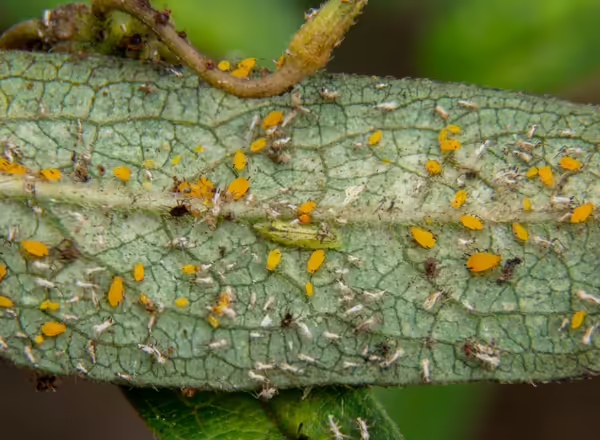
In addition to acting as pollinators as adults, many syrphid fly species are predatory as larvae, feeding on aphids and other small, soft-bodied insects such as mealybugs, scales, thrips, and eggs. Females will lay their eggs on plants near or among aphid colonies. After about three days, the eggs will hatch. The larvae (maggots) are legless, with a tapered body, and range in color from creamy white to green or brown. They will crawl around in search of food; once they find something, they will grab it with their hooked mouthparts and consume it.
Syrphid fly larvae can be quite voracious; a single larva can eat up to 400 aphids during its development. So, if you ever see an aphid infestation in your garden, make sure you check to see if there are any syrphid fly larvae around before getting too worried. The larvae will feed for seven to ten days before they pupate. After around ten days as a pupa, the adults will emerge to continue the cycle.
Between the adults pollinating and the larvae helping suppress pest insects, the occasional annoyance from syrphid flies is definitely worth it.
Attracting Syrphid Flies to Your Garden
There are several things you can do in your landscape to make your landscape more attractive to syrphid flies:
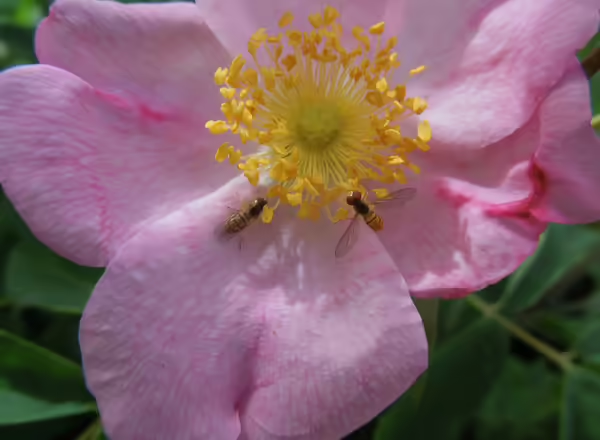
- Syrphid flies are attracted to a variety of different types of flowers. Some popular flowers with these insects include Queen Anne’s lace, sweet alyssum, coriander, dill, and other small-flowered herbs.
- Make sure you provide flowering plants throughout the growing season.
- Allow some pests to be in your landscape. The larvae of many species are predatory; if there isn’t any food for the larvae to eat, they’re more likely to move on.
- Limit pesticide applications. Avoid using broad-spectrum (non-selective) insecticides, as they kill both pest and beneficial insects.
Good Growing Tip of the Week: Syrphid flies have sponge-like mouthparts that they use to feed on nectar, pollen, and, if they land on humans, sweat. Despite what many people think, they don’t bite or sting. If you do get stung by a small insect feeding on your sweat, it is most likely a ‘true’ sweat bee.
Bonus Fact of the Week: Some syrphid fly larvae live in aquatic habitats with abundant organic matter (sewage lagoons, stagnant pools, drainage ditches, etc.). They are commonly referred to as rat-tailed maggots because they have a long ‘tail’ that is used as a breathing tube.
Photos by Ken Johnson, University of Illinois Extension
Want to get notified when new Good Growing posts are available? SIGN ME UP!
Give us feedback! How helpful was this information (click one): Very helpful | Somewhat helpful | Not very helpful
MEET THE AUTHOR
Ken Johnson is a Horticulture Educator with University of Illinois Extension, serving Calhoun, Cass, Greene, Morgan, and Scott counties since 2013. Ken provides horticulture programming with an emphasis on fruit and vegetable production, pest management, and beneficial insects. Through his programming, he aims to increase backyard food production and foster a greater appreciation of insects.