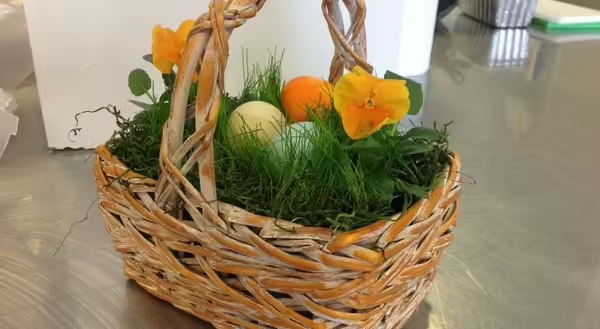
Yes, the flowers and grass in the basket in this blog's cover photo are real! Our horticulture staff added grass seed and soil to the baskets a week before class and then helped class participants plant pansy flowers into the baskets. Participants also got to dye eggs with flowers and foods to add to each basket and sample egg muffins. They learned basics of growing lawn grasses and flowers, the food science of plant colors and pigments, and the nutritional value of eggs and ways to prepare them.
This class was more than a decade ago and dyeing eggs with plant pigments is old news to many people. But this class shows one of the best things about educational programming from Illinois Extension: collaboration. With this class, participants gained new knowledge about food, learned new skills around gardening, and had time to share food and gardening stories with their peers.
As Illinois starts warming up this spring, I invite you to join an educational class at your local county Extension office. And if you want to dye eggs with plants and foods at home, here's how we did it.
Plant-Based Dyeing
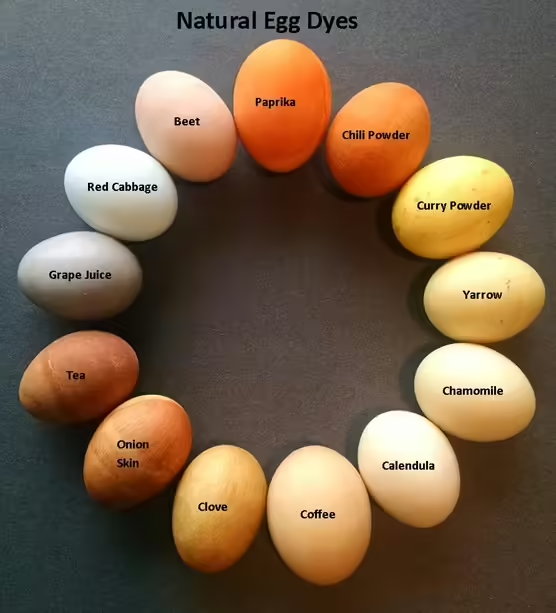
While dyes from plants and foods are much more muted or pastel than commercial dyes, they are so interesting to look at. We dyed eggs using dried spices including paprika, chili powder, curry powder, and ground clove; foods including yellow onion skins, grape juice, red cabbage leaves, beet peels, and brewed coffee and tea; and dried plants including yarrow, chamomile, and calendula. (My favorite was the stone-gray color from the purple grape juice.)
Ingredients
4 cups water
2-4 cups fresh food scraps OR 1/4 cup dried herbs, spices, or plants
Directions
- Combine water and dye material in a large saucepan.
- Bring to a boil. Then reduce heat to a simmer.
- Add eggs – still in shells – to saucepan.
- Cover with lid and simmer 15 minutes. Gently stir water or spoon dye liquid over eggs as needed to coat eggs.
- Remove eggs to clean wire rack or paper towel to dry.
Notes
- Eggs will hard-boil in this method. To eat eggs later, refrigerate eggs within 2 hours and eat within 7 days.
- Eggs will dye several shades lighter than the dye water. For a deeper color, let dye water simmer for 15-60 minutes before adding eggs.
- Instead of water, experiment with using coffee, tea, or juice.
Post originally published in 2016; content updated in 2025.
About the Author: Caitlin Mellendorf is an Illinois Extension Nutrition and Wellness Educator serving DeWitt, Macon and Piatt Counties in Central Illinois. She is a Registered Dietitian and her work focuses on helping community members gain the knowledge, skills and tools to live healthier, more nutritious lifestyles. This includes providing programs and answering questions about heart health, diabetes, food safety, food preservation, grocery shopping and cooking. You can reach Caitlin by email at chuth2@illinois.edu or call 217.877.6042.