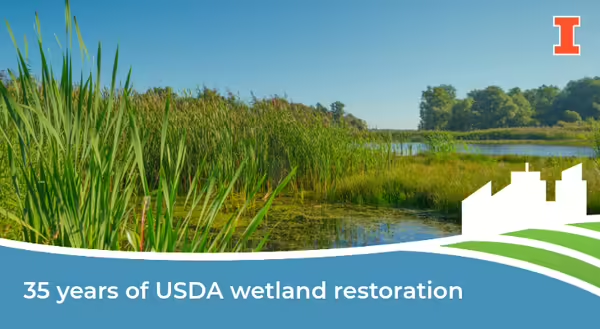
Wetlands do a lot of work. In Episode 78 of the Illinois Nutrient Loss Reduction Podcast, University of Illinois agricultural economist Marin Skidmore discusses her recent study evaluating 35 years of USDA wetland restoration. Skidmore explains how restored wetlands influence nitrogen levels in local waterways and what the findings mean for nutrient loss reduction efforts.
The importance of wetland restoration
Wetland restoration through the USDA’s Wetland Reserve Program, now part of the Agricultural Conservation Easement Program, has been in place for decades, but the broader water quality impacts had not been fully measured. Previous work has shown some field-level benefits, such as improved yields or reduced prevent-plant issues. Skidmore’s team wanted to look at the bigger picture to see whether restored wetlands helped lower nitrogen levels in nearby waterways. The study compared water quality before and after wetlands were restored across many different sub-watersheds.
How to measure changes in water quality
To understand the impact of wetlands, the research compared nutrient levels in sub-watersheds before and after restoration. This allowed the team to see changes over time within the same area. They also controlled for factors that naturally affect water quality, such as seasonal water quality patterns, soil types, slope, temperature, and precipitation.
By accounting for these factors, the team could better identify how wetlands influenced nitrogen levels.
Findings on nitrogen reduction
Skidmore found that restored wetlands were effective at reducing nitrogen in nearby waterways. Key findings from the study include:
A 62% decrease in ammonia
A 37% decrease in total Kjeldahl nitrogen (TKN), which measures the combination of ammonia and organic nitrogen
These improvements came from wetlands that were often around 100 acres in size. Even smaller restorations made a difference, showing that wetlands can support nutrient loss reduction efforts at the watershed level.
The benefits for rural communities
Many rural communities rely on surface water for drinking water and must maintain nitrate levels within federal guidelines. When nitrate levels rise, water treatment can become more expensive. Skidmore explained that lowering nitrogen upstream through wetland restoration may help reduce treatment costs over time. Improved water entering the system may help offset some of the initial investment in restoration.
Landowner perspectives
Skidmore also spoke with landowners who have restored wetlands on their properties. While these acres are no longer used for crop production, landowners said the areas still feel connected to the farm. Many use the restored acres for walking, wildlife viewing, or recreation. They also noted the value of knowing the restored wetlands will remain in place for future generations. Because the easements are permanent, the wetlands become a lasting part of the farm.
Explore more:
Listen to the interview with Marin Skidmore on Episode 78 of the Illinois Nutrient Loss Reduction Podcast.
About the authors
Rachel Curry is an Agriculture and Agribusiness Educator specializing in agriculture and watershed education, and she is part of the Illinois Extension's Nutrient Loss Reduction Strategy implementation team. She holds a B.A. in Environmental Studies from Knox College and an M.S. in Environmental Science and Soil Science from Iowa State University, focusing on soil fertility. Her work centers on education and outreach related to the Illinois Nutrient Loss Reduction Strategy, promoting agricultural conservation practices that reduce nutrient loss while enhancing water quality and soil health across Illinois.
Nicole Haverback serves as a Watershed Outreach Associate and is an Illinois Extension team member implementing the Nutrient Loss Reduction Strategy. She holds a B.S. in Agricultural and Rural Policy Studies from Iowa State University. In her role, Nicole coordinates watershed management and planning efforts aimed at reducing nutrient losses in priority areas, offers expertise on best management practices to minimize nutrient loss, and leads outreach initiatives promoting agricultural conservation practices outlined in the Illinois Nutrient Loss Reduction Strategy.
Luke Zwilling serves as a Watershed Outreach Associate and is an Illinois Extension team member implementing the Nutrient Loss Reduction Strategy. He grew up on a farm in Jasper County and earned a B.S. in Agriculture and Biological Engineering from University of Illinois. Luke coordinates watershed-based activities to reduce nutrient loss in two phosphorus priority watersheds, provides expertise on best management practices for nutrient loss reduction, and conducts outreach on agricultural conservation practices in the Illinois Nutrient Loss Reduction Strategy.
About the blog
At Illinois Extension, we’re working to improve water quality at home and downstream. Every month, our Watershed Outreach Associates will bring you stories highlighting agricultural conservation practices, current research projects and results, and from the field farmer interviews. The Nutrient Loss Reduction blog covers conservation practices recommended by the Illinois Nutrient Loss Reduction Strategy, timely updates, farm safety, and new decision tools to help farmers and producers reduce the nutrients leaving their fields.