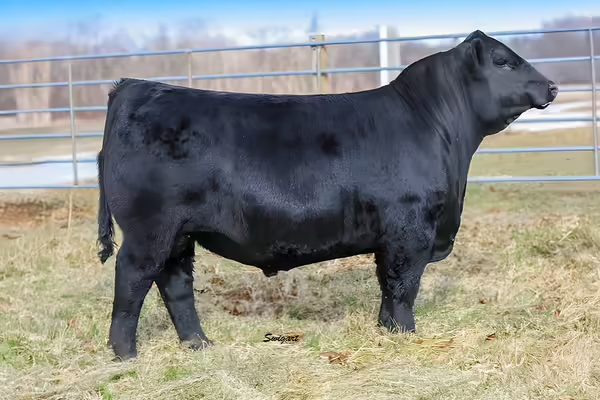
URBANA, Ill. — Enhancing cattle herds with trusted genetics can strengthen beef operations. Get started by attending the annual Illinois Performance Tested Bull Sale at 11 a.m. on Feb. 19 at the Illinois State Fairgrounds in Springfield. The sale helps kick off the 2026 Illinois Beef Expo, where families, including many Illinois 4-H members, spend the week showing their cattle.
“The sale is a yearly staple for many to attend as well as a reputable source for producers to add high-quality genetics to their herds,” says Travis Meteer, sale manager, commercial agriculture educator, and beef cattle specialist at University of Illinois Extension.
Over the past 57 years, more than 5,000 bulls have been sold for over $10 million through the IPT bull sale. As a leader in proven genetics and the latest evaluation technologies and practices, dedicated breeders and commercial cow-calf producers mark their calendars.
“Every year we get to put together another strong set of bulls for Illinois cattle producers, we know we are impacting success for the beef industry,” says Meteer.
The sale format includes the opportunity to view all bulls while they are on display for buyer inspection before the sale. The sale will take place in the Artisans Building, where attendees will view videos of bulls shown during the live auction. Halter-broke, as well as docile, non-halter-broke bulls are eligible. All non-haltered cattle will be screened for disposition before the sale.
Bull Sale Qualifications
Sale order and qualifications are determined by performance in multi-trait economic selection indexes. The sale order is based on each breed's % Rank for a maternal and a terminal Dollar Value Index. Index data can be found in the sale catalog, including:
- Angus: $Combined ($C), which consists of $Beef ($B) and $Maternal ($M),
- Simmental: All Purpose Index (API), Terminal Index (TI)
- Hereford: Baldy Maternal Index (BMI); Certified Hereford: Beef index (CHB)
Calving ease expected progeny differences must be in the top 85th percentile. A veterinarian also must conduct all breeding soundness exams. For the most up-to-date policy on genetic recessive traits and health requirements, visit the IPT Bull Sale website at iptbullsale.com/.
For more information, to view bull photos, and flip through the 2026 digital sale catalog, visit the IPT Bull Sale website at the link above.
2026 IPT Bull Sale sponsors include Illinois Extension, VitaFerm, Axiota Animal Health, Illinois Angus Association, Zoetis, Illinois Simmental Association, ABS Global, Dearwester Grain Services, Inc., FerAppease, and Sievers JCB.
For sale questions or if you will need a reasonable accommodation to participate, contact Travis Meteer at wmeteer2@illinois.edu or by phone at 217-430-7030. Early requests are strongly encouraged to allow sufficient time to meet your access needs.
Source/Writer: Travis Meteer, commercial agriculture educator and beef cattle specialist, Illinois Extension
Editor: Jenna Braasch, media communications coordinator, Illinois Extension
University of Illinois Extension develops educational programs, extends knowledge, and builds partnerships to support people, communities, and their environments as part of the state's land-grant institution. Extension serves as the leading public outreach effort for University of Illinois Urbana-Champaign and the College of Agricultural, Consumer and Environmental Sciences in all 102 Illinois counties through a network of 27 multi-county units and over 700 staff statewide. Extension’s mission is responsive to eight strategic priorities — community, economy, environment, food and agriculture, health, partnerships, technology and discovery, and workforce excellence — that are served through six program areas — 4-H youth development, agriculture and agribusiness, community and economic development, family and consumer science, integrated health disparities, and natural resources, environment, and energy.