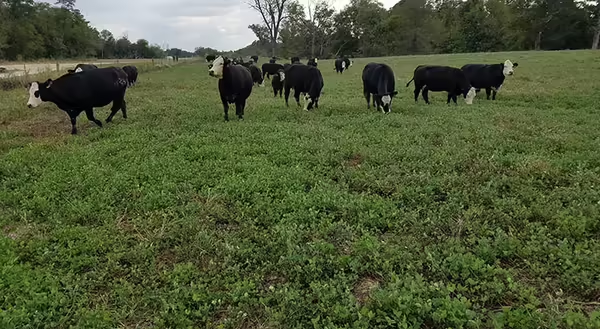
Turning cows out on immature forages can have consequences. If forages are overgrazed early, permanent damage to grass stands can lower yields and increase weed pressure.
Delaying turn-out until forages have reached eight inches in height is recommended. Even more important is rotating cows through pastures to maintain four or more inches of stubble height and giving the plants a rest period. In early spring, rotation should occur more frequently to keep up with faster growth and then slow as summer approaches. Increasing residual heights and rest periods should be considered for abused areas and dry periods.
Grass tetany is another concern with spring grass. Immature grass is high in moisture, low in mineral content, and low dry matter (DM). Grass tetany is deficiency of magnesium (Mg), this is why a “high-Mg” mineral is recommended. Start feeding the mineral 2-3 weeks before turnout. After you have the right mineral, they must consume it. If cattle are not consuming mineral at 3-4 oz. per head per day, the feeder should be moved more in line with daily travel and closer to the water source. If this fails to increase consumption, then direct feeding the mineral with a grain or co-product supplement is needed. Results of grass tetany to the cow can be dramatic: stumbling, staggering, muscle twitching and possible death. All within a very short amount of time.
The next problem is meeting nutrient requirements of cows out on spring grass. Because spring grass is lush, high in protein, and high in water content, it becomes hard to supply adequate nutrition. Mature cow size and milk production have increased in the beef cow population. This means that in some cases, cows cannot physically eat enough grass to meet dry matter and nutrient requirements. Research at the University of Illinois, shows that cows will rarely consume over 100-120 lbs. of any feed due to fill and capacity of the rumen. However, a 1400 lb. cow will require 120-150 lbs of spring grass to meet requirement. In some cases when, grass is very immature and wet (<20% DM) the intake would need to be even higher. This means it is likely best for cow performance to intervene with a mild supplement level.
Producers can supplement cows with a dry feed that supplies ample energy. Protein is not the focus and needs to be limited in the supplement. Some options for supplement would be soyhull pellets, palatable grass hay, or corn. A combination of these feedstuffs will provide DM to slow passage rate and energy to balance out the forage. Research conducted at the Orr Beef Research Center has shown a 7-15% improvement in artificial insemination conception rates when cows were supplemented on lush, spring forage.
*Originally published in Progressive Cattle