According to NOAA weather data, between May 1 and 30, Bloomington-Normal area received about 2.1” of rain – less than half the historical average of 4.8” in that month. We were heading back towards drought-like conditions for many growers – until June.
As of the time of writing this part of the article (June 22), the same data source from a Normal, IL weather station shows 7.2” of rain this month – so far – which is more than double the average of 3” for this 30-day period in the Twin Cities.
A few vegetable growers in the area have shared with me that they are experiencing partial losses of vegetable plantings, including head lettuces and cabbages due to partial contact or submersion by flood waters. There is a very informative and important FDA guidance document released in October 2011 called, “Guidance for Industry: Evaluating the Safety of Flood-Affected Food Crops for Human Consumption” that I would encourage all growers to familiarize themselves with if they are not already familiar.
In short, any crop where the edible, harvestable portion is contacted by floodwaters – water that is coming onto/into the farm property from elsewhere (not on the farm) is considered adulterated by the FDA and is not safe for human consumption due to the risk of microbiological hazards including but not limited to Salmonella, various E. Coli species, Clostridium, viruses, parasites (like Giardia), and others, as well as heavy metals, PFAS, pesticide residues, mycotoxins, and more.
There is a lot of nuances in this document, as well as very helpful recommendations for what growers can do IF they experience a flooding event, or specifically a flooding event that effects some but not all of their property. The document also includes tips for preventing cross-contamination via equipment or personnel, segregating and destroying affected crops, checking any well-heads that came under flood waters, and establishment of buffer zones.
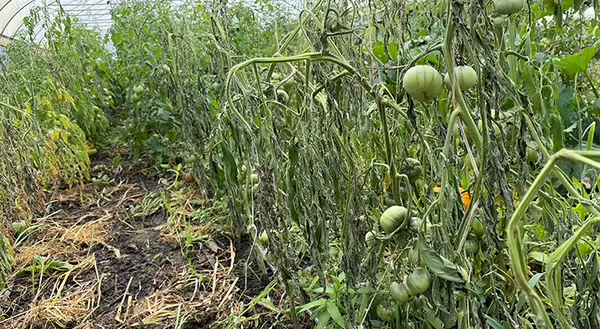
A few other growers have shared with me that their soils are so saturated that some of their produce – though it has not been contacted by floodwaters – is experiencing sudden die-off due to (we think) an anaerobic rooting zone. One grower has experienced several thousand dollars’ worth of losses of lettuce, high tunnel tomato, and high tunnel pepper crop due to this soil saturation-related die-off. Unfortunately for our specialty growers, we are forecast to get more rain in the next week.
CIDER Fund Plug
The CIDER Fund – the Central Illinois Disaster and Emergency Relief Fund – is an emergency grant fund that was established back in 2021 after the McLean County Mother’s Day Weekend flooding disaster, where parts of the county received over 14” of rainwater in a bit more than 48 hours.
A Go-Fund-Me was started for a particular farmer that was successful in raising a sum beyond what the grower was comfortable accepting, and thanks to a subsequent donation by that farmer and an additional fundraiser event in Urbana IL hosted by the Central IL Young Farmers Coalition Chapter, the CIDER Fund was born.
Central IL Chapter Young Farmers Coalition Members in the CIYFC area can apply to the CIDER Fund for a one-time, lump-sum grant of up to $2500 if they experience a loss of income related to a disaster or emergency on their farm or in their personal lives.
The application is extremely straightforward and takes place in an accessible Google Drive Word Document. A review committee comprised of farmers and ag-based service providers review applications and must unanimously approve award applications for a payout to occur. Requirements to apply are as follows:
Farm must be in Central Illinois (including up to 15 counties – though recently awards have been approved for those outside Central IL that sell into the area as well)
Disaster or emergency must be due to factors beyond the control of the farmer
In recent years, the fund has paid out awards due to derechos, floods, health emergencies of farmers, barn fires, and more. This fund exists exactly for the flooding events and die-off events/symptoms we are seeing right now due to saturated soils. I would encourage farmers that have been affected by these or any other climate or health-related disasters to apply for this funding.