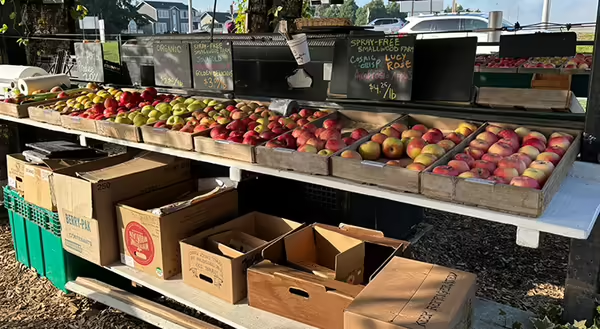
While in Mount Vernon, Washington attending a specialty crop academy with colleagues from other states, we had the opportunity to tour some commercial specialty crop operations in the Skagit Valley. It was interesting talking to commercial small fruit, tree fruit, and cut flower growers about the markets they sell to and the challenges they face. I visited in early October, so it was perfect for great apples, raspberries and pretty flowers.
Our group got to tour a commercial berry farm, which has over 300 acres of blueberries in production. It requires 300 people to pick the blueberry fields alone since mechanical harvesters are not delicate enough to pick the berries. The grower also noted that the cyclospora outbreak affected them heavily this year, even though outbreaks from berries were not widely confirmed. Their wholesale prices to berry companies dropped as demand decreased from consumer fear of contracting cyclospora. They highlighted that diversification helped protect their farm income since they were able to sell other commercial crops besides berries. It emphasizes how important it is to provide the right information to the consumer and how that can affect crops for wholesale pricing.
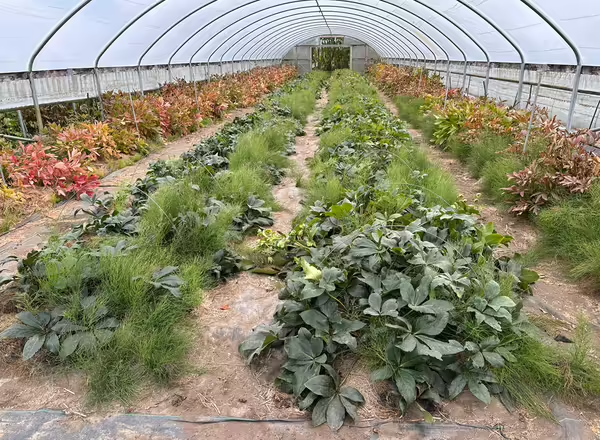
Another farm we visited was a cut flower operation called Jello Mold Farm. They are founding members of a farmer co-op called the Seattle growers market, which is a prominent cut flower wholesale market that sells to florists in Washington. They used to sell quality blooms, but noticed overtime that it wasn’t worth the labor for the cost of the bloom, so now they sell foliage from flowers and even small fruits and combine that with blooms from other growers in the co-op. I never considered growing raspberries for foliage, but they do make great arrangements with seasonal blooms and it was unique learning about them collaborating with other farmers to make arrangements and center pieces.
A concept that blew my Midwest mind was how water rights work in Washington. The state of Washington essentially controls water use and limits the issuance of new water rights. During periods of low precipitation, water restrictions may be implemented in certain regions. When purchasing farmland, a well does not automatically come with the right to use its water. Water rights must be transferred from the previous owner. Also, having a river, stream, or other waterway on your property does not necessarily give you the right to use that water. Washington States water rights also operate on a seniority basis, allowing older rights holders to have priority over newer holders for water use during critical periods or shortages. This also means that owners that have decreased water use in the last five years will have decreased water allowances for future years.
This raises many concerns for specialty crop producers in the pacific northwest, especially those that are on limited water use during high heat periods of summer. It also encourages producers to overuse water so their limit will not decrease in the future. These restrictions have also pressured farmers to get creative in certain regions, with the creation of the dry farming program out of Oregon State University to help navigate some of these drought concerns. While we don’t have these kinds of water concerns in Illinois, it is good to be aware of what other states go through and how they prepare for it.
On a high note, it was a great time touring sites, learning from producers and thinking about new ideas for farmers in Illinois. It helped me understand how important diversification and working with other growers in your community is for remaining successful. I also didn’t understand water rights and how that works in western states, and it provided a lot of good insights for me and how grateful we are to have a somewhat steady water supply in the Midwest.