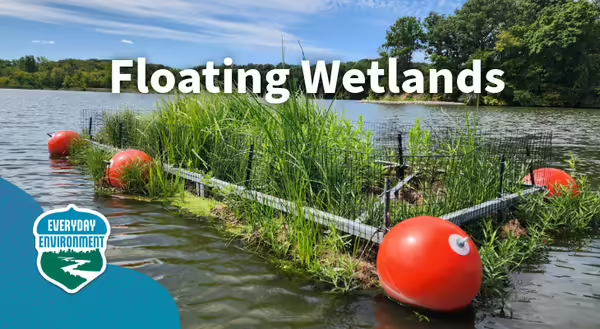
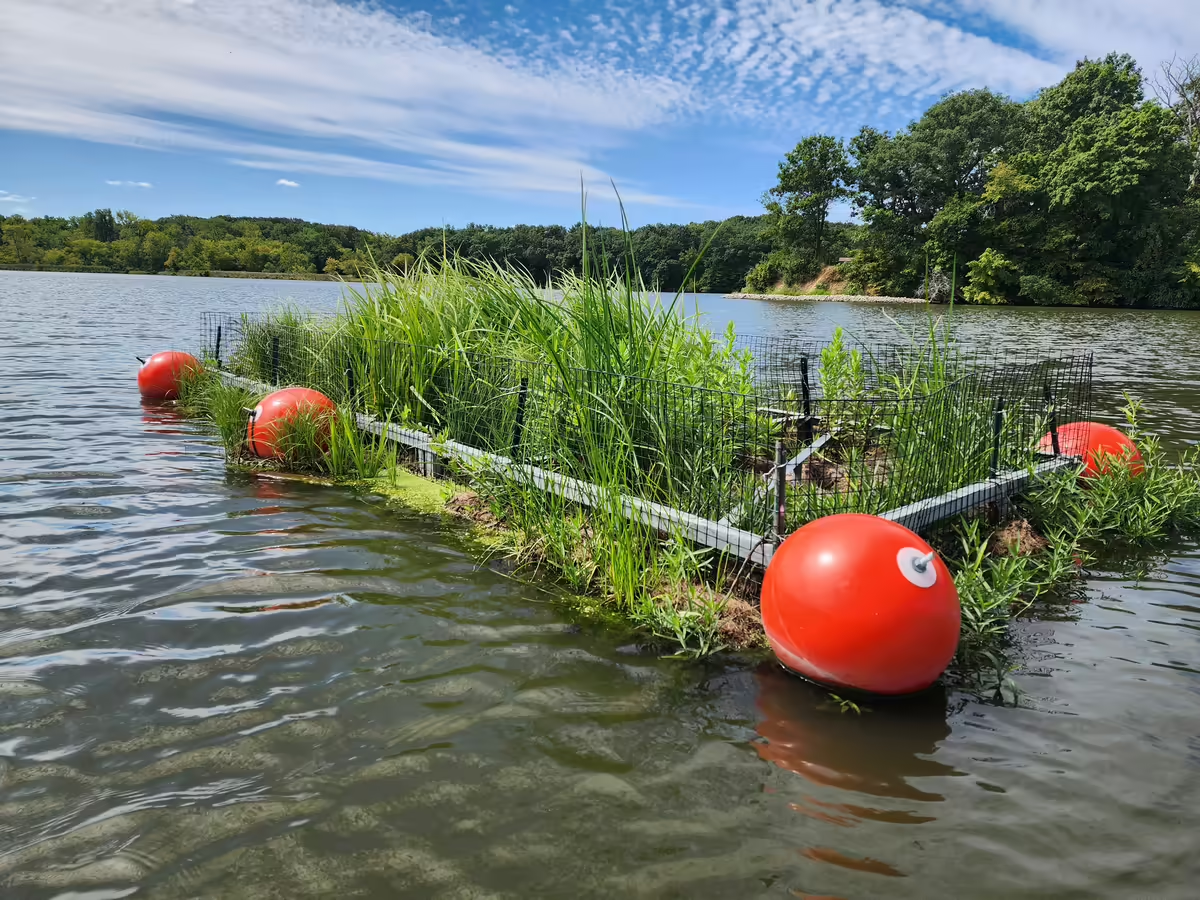
It's August, and I balance precariously on thin metal rails above the water, inspecting the garden I planted a few months prior. I move carefully, because any misstep could send me, or my colleague, into Lake Decatur. That's because this garden is an Artificial Floating Wetland, one of two that we created as a pilot project for the city of Decatur, Illinois.
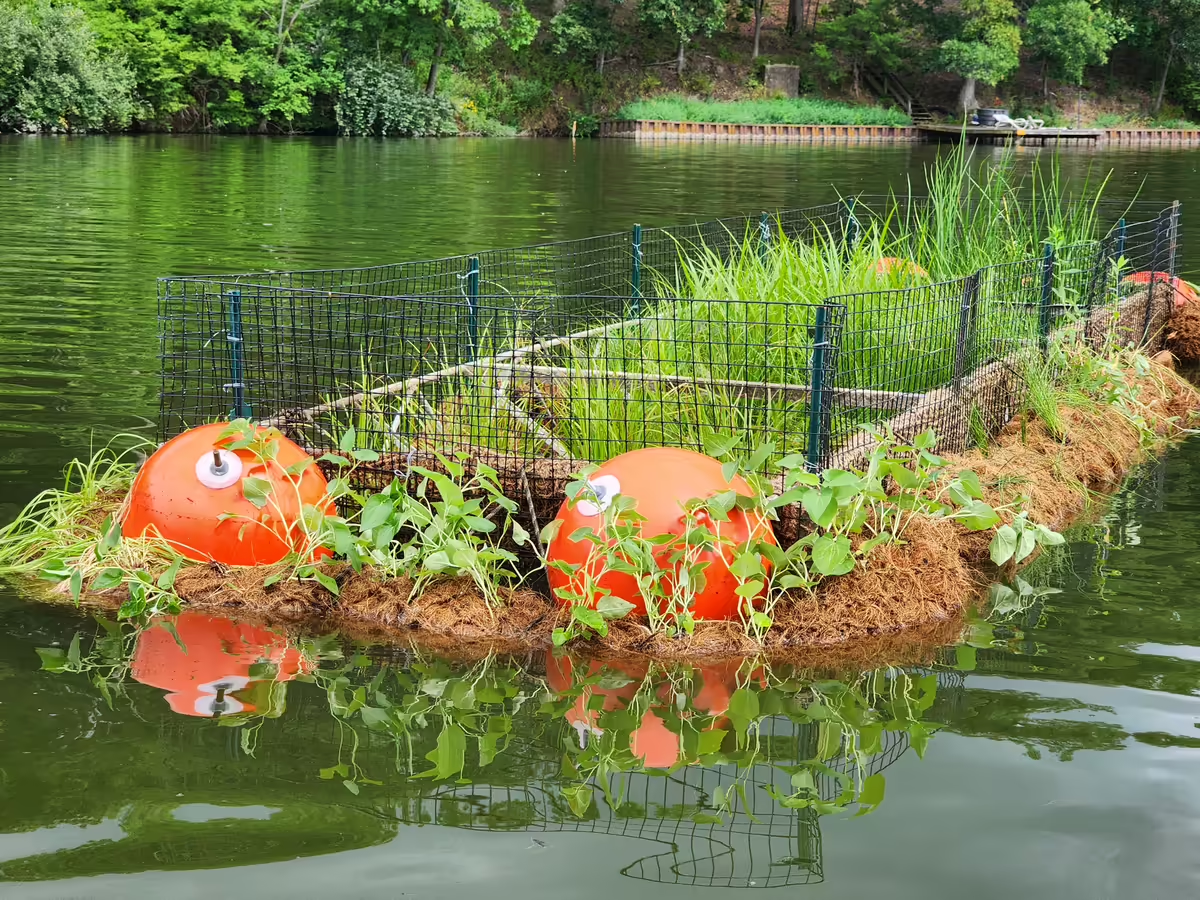
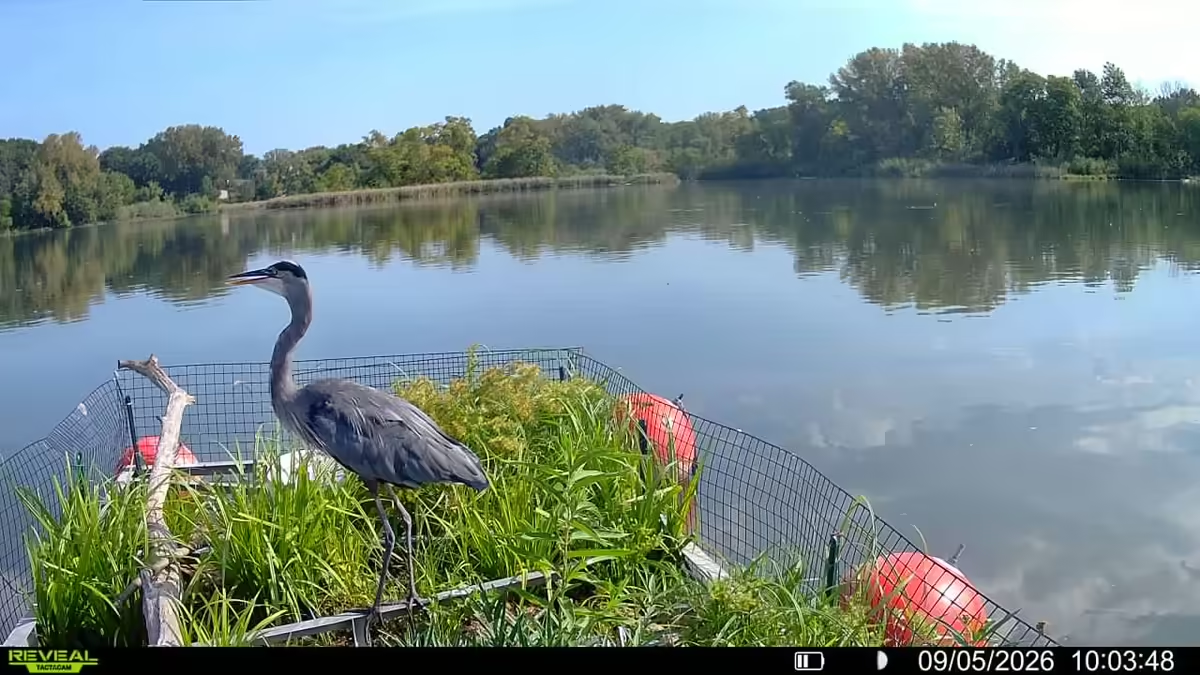
The artificial floating wetlands are made of reclaimed dock frames, turned upside down, the wooden planks replaced with coconut fiber, or coir, logs underlain with mesh. Large plastic floats keep the raft-like structure above water and support the weight of the scientists walking cautiously across it. Nine species of wetland plants are distributed throughout the coir, their roots extending through the coir into the waters below.
The goal of these structures is to create habitat for insects, fish, and other wildlife while the plants absorb excess nutrients. Their roots host bacteria and algae in a biofilm that helps sediment particles stick together and settle out, improving water clarity and quality.
This guest blog was written by Susan McIntyre, Assistant Research Scientist in plant ecology at the Illinois Natural History Survey.
What is a floating wetland?
Artificial floating wetlands, also known as floating treatment wetlands, are engineered structures that support plants above the water. Plant roots extend through the structure into the water below rather than into the soil. They take up nutrients directly from the water column.
A typical floating wetland includes:
- A floating structure: This is made up of buoyant natural or artificial materials such as intertwined roots, peat, wood, bamboo, plastic, or foam that can support plants above the water surface.
- Wetland plants: These species can tolerate permanently wet conditions.
- A root zone: This is where the roots dangle and tangle in the water column where they capture sediment, absorb nutrients like nitrogen and phosphorus, and host microorganisms in a “biofilm” all along their length.
- An anchoring system: Anchors may be needed to hold the structure in place against wind, waves, or currents, but also respond to vertical movement as water levels change.
Because they float, these systems can be installed directly in ponds, reservoirs, stormwater basins, and other water bodies without major excavation or land alteration.
How do floating wetlands improve water quality?
One of the most interesting features of floating wetlands is the interaction between plants, roots, microorganisms, and water. These interactions provide many benefits.
Mitigate nutrient pollution
Plants take up nutrients such as nitrogen and phosphorus for growth. At the same time, the extensive root network creates habitat for microbial communities. These microorganisms can participate in processes that transform or remove certain pollutants. Excess nutrients, converted into plant material, can be harvested and removed from the system, eaten by wildlife, or left to decompose and return nutrients back into the system.
Lower the turbidity or opaqueness
The floating structures slow water movement locally, which can improve water quality by allowing for sedimentation.
Sedimentation: the process of soil particles suspended in the water catching on the roots and biofilm or dropping to the bottom of the water body.
A benefit of floating wetlands is that they can be moved to different locations to determine where they can have the most impact on sedimentation.
Increase oxygen
The structures also provide shade for the water and organisms underneath. Cooler water holds more dissolved oxygen, which is important for fish and invertebrates. It also helps limit the growth of harmful bacteria and algae.
The level of improvement depends on many factors, including the size of the wetlands and the size of the water body. The small floating wetlands in Lake Decatur will have a limited effect on nutrient uptake in such a large lake, but the same wetlands could make a marked improvement on a small pond or retention basin. Such wetlands could help compete with nuisance algae and, potentially reduce the chance of harmful algal blooms.
Supporting Biodiversity
Many organisms use floating wetlands. Above the water, the plants support a variety of invertebrate species. Our floating wetlands have countless spiders, as well as aquatic snails, beetle larvae, dragonflies, damselflies, mayflies, pollinating insects, and many more.
Under the structures, small fish hide among the roots, eating tiny zooplankton. The occasional frog or juvenile snake finds its way to the structures, as do larger animals like muskrats and great blue herons. Turtles and ducks may also take refuge on floating wetlands. In areas where mosquitoes are a concern, floating wetlands provide habitat for predators of mosquitoes and mosquito larvae.
How to design a successful floating wetland
There are many ways to design floating wetlands, but a few key factors must be considered.
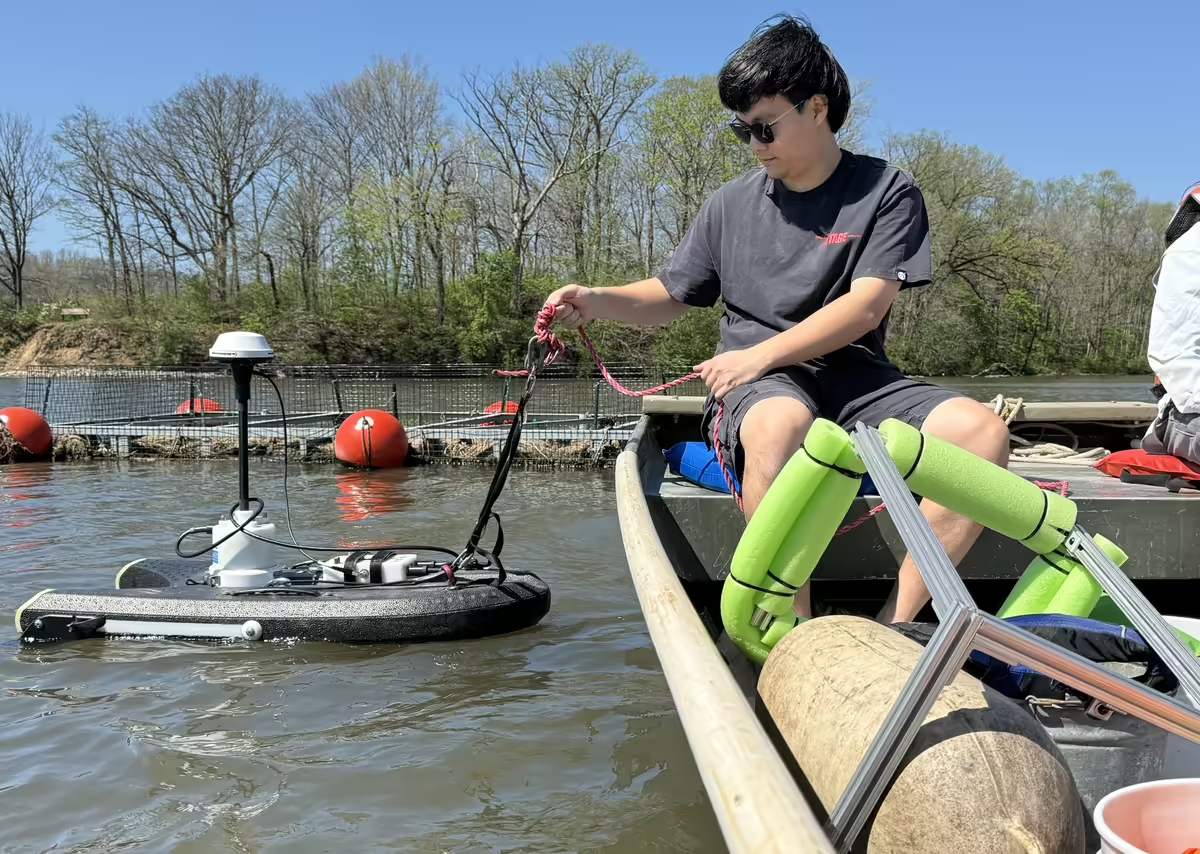
- Buoyancy and durability. The structure must remain stable and support vegetation as it grows. It must withstand wind, waves, changing water levels, and seasonal conditions, such as ice and sun. If there is concern about winter conditions, the ability to move the structure may also be a consideration. Extra buoyancy will be needed if the structures are also meant to hold the weight of people. It's also important to avoid materials that could potentially add microplastics or other pollutants into the water.
- Anchoring. Floating systems need to remain in their intended location while allowing for changes in water level. Anchor weight and design will be influenced by the size and weight of the structure, the forces (e.g., wind, waves, current) against it, and the substrate. Extra rode will be needed if water levels can rise significantly, but too much rode can lead to dragging, disturbing the lakebed or streambed, and potentially tangling.
- Plant selection. Plants must tolerate the local climate and water conditions. Native wetland species can be purchased from local vendors or grown from seed collected locally. Some vendors may even have local ecotypes. This helps ensure that the genetics are similar to local plants of the same species and adapted to the environment near you.
A local ecotype is a species with genetics from a particular area around or within the location you are targeting.
- Plant protection. Plants can be impacted by many environmental factors. The roots of young, newly installed plants need immediate access to water. If that's not possible, irrigation may be needed during the first few weeks. Our coconut fiber logs allowed wicking and quick expansion of roots once plants were in the water. Fencing around the wetland may be necessary to keep herbivores (e.g., ducks, geese, muskrats) from climbing onto the structures and eating the plants. Wire mesh may also be necessary underneath the structure, as muskrats will eagerly chew through the supporting material to access the interior of the floating wetlands, and then eat the plants or carry them back to their burrows.
- Root development. Enough space is needed both within and beneath the structure for roots to grow and spread. Plants may be placed more closely than in a terrestrial system, but their roots may still begin to compete. Roots will also grow down and out from the structure, so consider how much space is needed under and around the structure. If a water body is shallow, the roots may reach down to the bottom and become anchors; this may be counter to other maintenance goals when mobility is needed.
Maintenance. Plants may need to be trimmed or harvested, damaged components may need replacement, and invasive species or unwanted vegetation may need to be managed. Consider how maintenance activities will occur, whether from watercraft, retrieval to land, or climbing onto the structures.
Not a panacea, but a solution
It is important to note that artificial floating wetlands cannot replace the broad range of ecological functions that large terrestrial ecosystems provide; they can supplement other efforts. However, in highly developed areas where natural wetland habitat has been lost, these wetlands can add critical structural diversity into otherwise simplified waterways.
More Information
Learn more about the value of wetland ecosystems from Ramsar- Convention of Wetlands’
Floating wetlands projects in Illinois:
Floating wetland project in Missouri:
About Everyday Environment
Everyday Environment is a series of blogs, podcasts, webinars, and videos exploring the intricate web of connections that tie us to the natural world.
Was there something about this blog's topic we didn’t cover? See something cool in nature? Let us know! Hit "Connect with Us" below to send us your question or share your everyday nature observation, and we may share it in a future blog or podcast.
Subscribe to the Newsletter Connect with Us Find Your Local Extension Office