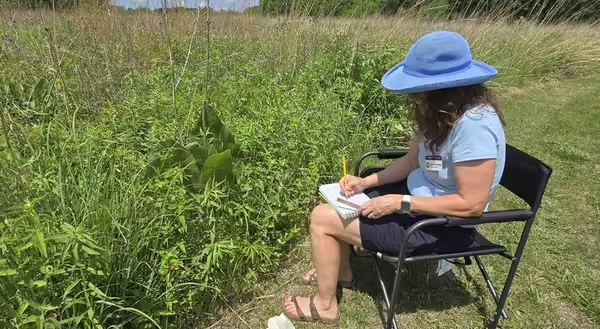
Nature journaling is a way to slow down, pay attention, ask questions, and create a record of the natural world around us. A journal might include sketches, watercolor, written observations, measurements, maps, weather, sound maps, species lists, or questions to explore later. There is no wrong way to nature journal.
Led by Master Naturalist and Master Gardener volunteers, University of Illinois Extension Nature Journaling Series introduced participants to different ways of observing, recording, and connecting with nature.
At Forest Park Nature Center, Sarah Smith introduced the basics of nature journaling and different ways to collect and record observations. Participants learned several journaling techniques as a group, including sound mapping and methods from John Muir Laws, before heading out on their own to explore the nature center and put what they learned into practice.
At Jubilee College State Park, Peggy West took participants deeper into botanical drawing. Her class focused on how to translate what we see in nature onto paper, using various techniques to capture the shapes, structures, proportions, and details that make a subject recognizable.
At Emiquon National Wildlife Refuge, Allie Goudy introduced participants to nature journaling with watercolor. She demonstrated a variety of watercolor techniques and brought plants for participants to observe, sketch, and paint as they experimented with adding color to their journals.
Laura Blackaby taught Nature in Words at Spring Creek Preserve, focused on writing. Participants learned what to observe and look for in nature and how to translate those observations into words.
People keep nature journals for many reasons. Some use them to connect with their surroundings or learn about the plants and animals they encounter. Gardeners may record bloom times, successes and failures, wildlife observations, and changes from year to year.
Nature journaling has a long history. Before cameras, identification apps, and modern databases, naturalists, explorers, and scientists used field notes, sketches, maps, and specimens to document species, locations, landscapes, and seasonal events. These historical records can still help us understand where species once occurred and how ecosystems have changed over time.
Whether through words, sketches, colors, data, or observations, nature journaling encourages us to slow down, look closer, and notice what is happening around us.
Photo caption
Janine Donahue, Extension Master Naturalist and Master Gardener was one of the participants for the four-part nature journaling series. She is pictured at Jubilee College State Park developing her botanical drawing skills. Photo by Brittany Chambers, Illinois Extension
Meet the Author
Brittany Chambers ag and natural resources program coordinator with University of Illinois Extension where she supports and recruits Master Naturalist volunteers, coordinates programming, and brings nature-based education to the community.
Outside of work she oversees a 1000-square-foot vegetable garden, a woodland perfect for foraging, 40 clucking chickens, pollinator gardens, and a fishing pond. She's the nature queen, crowned as a Master Naturalist in 2023, she is passionate about nature and dedicated to ensuring food security. When she's not tending to her wild domain and natural surroundings, you'll find her adventuring the great outdoors with her spirited daughter, embarking on epic hikes, and camping expeditions.
About Extension Snapshots
Extension Snapshots are monthly impact reports that share the stories of our programs in Fulton, Mason, Peoria, and Tazewell counties. To have them delivered to you directly sign up using our E-blast registration.