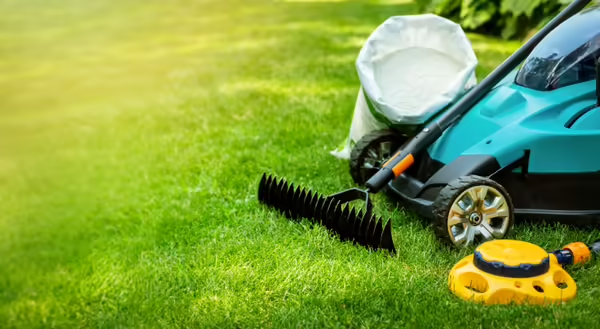
It's March in Illinois, and this is when everyone starts thinking about lawn care. The grass is greening up, and plants are beginning to grow again, signaling that garden work has begun.
You may be looking at your lawn and wondering where to start. Maybe you notice some bare patches, or the entire lawn appears thinner. Common springtime lawn questions often include:
- When should I start mowing my lawn?
- When should I sow grass seed?
- When should I start fertilizing my lawn?
- When is the right time to apply crabgrass preventer?
- Can I do all these tasks at once?
To answer the last question first, no, Illinois Extension generally does not recommend performing all these lawn care tasks simultaneously. Combined products of convenience, such as spring weed and feed for lawns, typically sacrifice ideal timing for either task. But when is the best time to tackle each lawn task?
Tips and Timing for Spring Lawn Care Tasks
Here are some tips and timing recommendations for spring lawn care.
Mow Tall
Last fall, your lawn grasses stored up lots of energy for spring. As we start to get longer days, warmer temperatures, and some rain, grass grows quickly. Before you know it, it’s time to mow. Cool-season lawns will be more competitive if kept at a height of 2 to 3 inches. Certain species, like turf-type tall fescue, perform better when mowed at 3 to 4 inches. My home lawn is cut as high as the mower deck allows, just shy of 4 inches. Once it's tall enough to mow, start mowing—don't wait. Read more about Mowing Your Lawn.
Skip Seeding Until Later in the Year
If you need to establish a new lawn or overseed an existing one, plan to finish by mid-April to give the grass time to establish before hot weather arrives. If you can wait, hold off on seeding your cool-season lawn until late summer. The best time to seed is August 15th through September 15th. When choosing seed, select a mix suited to your yard’s conditions.
Are you installing a new lawn? Learn more about planting a new lawn, whether it is seed or sod.
Forget Early Spring Fertilizers
Turf fertilizers tend to promote green, leafy growth at the expense of root development. Avoid applying fertilizer early in the season, as it can stunt root growth. Wait until mid-May to fertilize your lawn. Consider using a slow-release fertilizer, which is less likely to burn turf. Most Illinois lawns are cool-season and go dormant during hot, dry weather—so if you water, be consistent through summer. If you fertilize only once a year, late summer to early fall is recommended as an ideal timeframe to help cool-season grasses recover from summer stress.
Dive further into lawn fertilization.
Applying Crabgrass Preventers
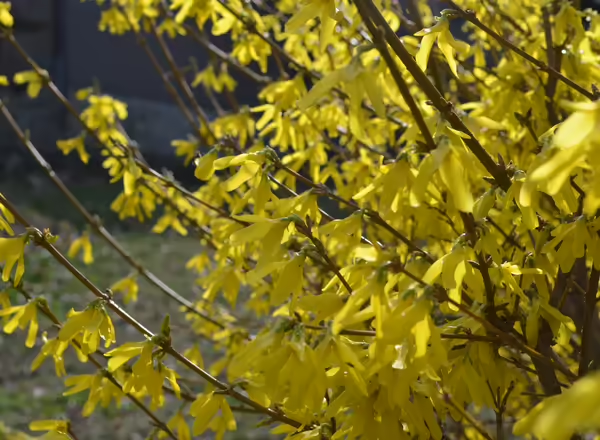
This annual weed frustrates those who want a well-maintained lawn. Crabgrass germinates when soil temperatures stay above 55 to 60 degrees for a few consecutive days. Usually, April 1 is a good time to apply control measures in Central Illinois, since most products last 4 to 6 weeks. Another mid-May application, around Mother's Day, is also recommended. Those in Southern Illinois may consider applying a week or two sooner than April 1, and those in Northern Illinois a week or two later than April 1. Many suggest spreading crabgrass preventer when forsythia bloom. In a typical year, forsythia blooms before crabgrass germination and is a good indicator for homeowners to spread crabgrass preventer so you have a barrier established. However, spring weather is fickle and has been more unreliable in recent years, so the forsythia indicator doesn’t always hold true.
While blooming forsythia can be helpful, the primary driver for crabgrass germination is soil temperature.
If you follow the first three tips to mow high, overseed, and fertilize, these practices will help lawn grasses outcompete crabgrass.
Read more about managing crabgrass and other common lawn problems.
Good Growing Tip of the Week: When applying any chemicals or fertilizers, read the label carefully and follow the recommended amount. Never apply more than instructed and ensure even coverage.
Thank you for reading!
Sign up for our emails! Want to get notified when new Good Growing posts are available? SIGN ME UP
Give us feedback! How helpful was this information (click one): Very helpful | Somewhat helpful | Not very helpful
MEET THE AUTHOR
Chris Enroth is a horticulture educator with University of Illinois Extension, serving Henderson, McDonough, Knox, and Warren counties since 2012. Chris provides horticulture programming with an emphasis on the home gardener, landscape maintenance personnel, and commercial landscapers. Additional responsibilities include coordinating local county Master Gardener and Master Naturalist volunteers - providing their training, continuing education, advanced training, seasonal events, and organizing community outreach programs for horticulture and conservation assistance/education. In his spare time, Chris enjoys the outdoors, lounging in the garden among the flowers (weeds to most).