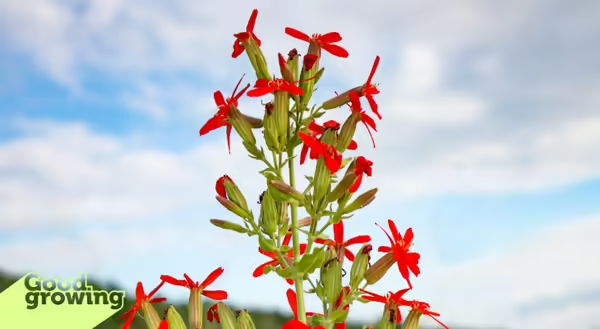
From fireworks and parades to picnics and pool parties, the Fourth of July is filled with celebrations. While gardens may not be the main attraction, they can provide a colorful backdrop to holiday festivities. What better way to celebrate America than by planting red, white, and blue native plants that provide beauty while supporting local pollinators and wildlife?
Benefits of native plants
Utilizing native plants in gardens has become increasingly popular lately. There are many benefits to incorporating native plants into landscaping.
- They have evolved to grow in a particular area and are often better adapted to those local soil and climate conditions.
- Once they are established, they typically require less maintenance.
- Because they require less maintenance than many non-native species, fewer resources (fertilizer, water, etc.) are needed.
- They provide food and shelter for native wildlife (including pollinators) and help increase biodiversity in our landscapes.
Native plants with red flowers
While native plants produce a wide range of flower colors, one color that isn’t as common is red. However, there are some plants that can be easily incorporated into gardens that provide beautiful red blooms.
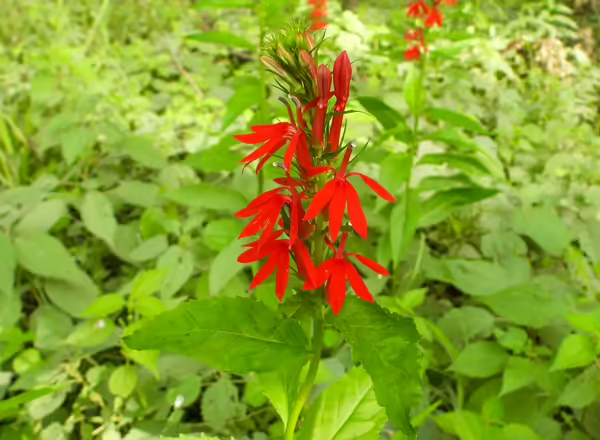
- Cardinal flower (Lobelia cardinalis) produces brilliant, up to 2-foot-long red spikes of red flowers during the summer months that butterflies and hummingbirds frequently visit. They grow in full sun to part shade and prefer moist soil (don’t let them dry out). They can even tolerate brief periods of flooding, making them good options for rain gardens. They are often short-lived but will readily reseed.
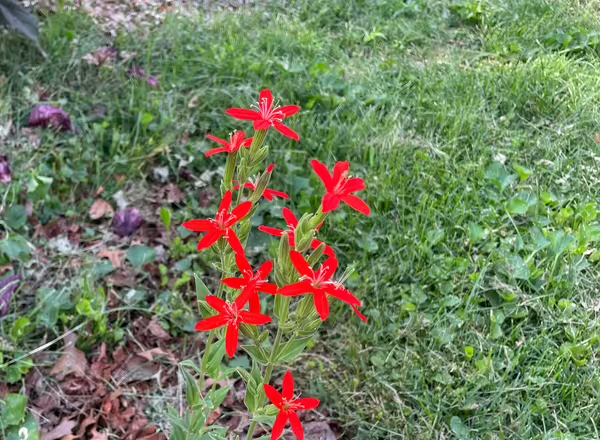
- Royal catchfly (Silene regia) grows 3-4 feet tall and produces clusters of 2-inch red flowers during the summer. They grow in full to part sun and medium to dry, well-drained soils. It is listed as an endangered species in Illinois.
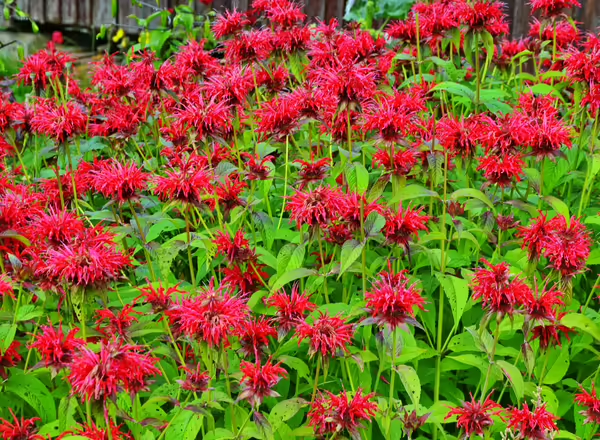
- Scarlet bee balm (Monarda didyma) grows 2-4 feet tall and produces tubular, bright red flowers on a 3-4 inch flowerhead that looks similar to a mop-head. It is a member of the mint family and will produce a minty fragrance when crushed; it will also spread. It will grow in full sun to part shade and medium to wet soils. Powdery mildew can be a problem.
Native plants with white flowers
There are many different native plant species that produce white flowers during the summer months. Here are a few examples.
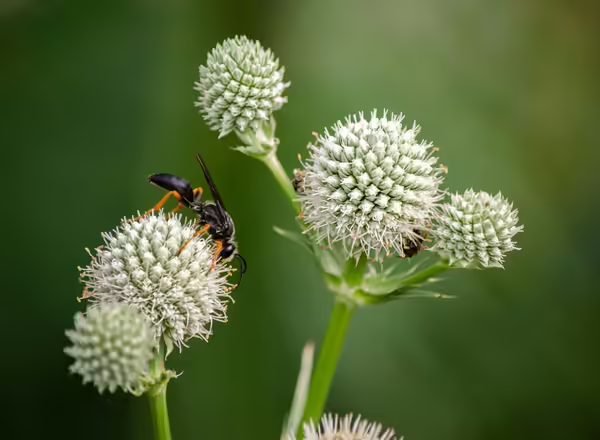
- Rattlesnake master (Eryngium yuccifolium) has bluish-green foliage that resembles yucca. These plants can grow to 2 to 5 feet tall and produce tightly packed flower heads that are ½-1” across. The round flower heads contain numerous small white flowers surrounded by prickly bracts. They grow best in full sun with slightly moist to dry conditions.
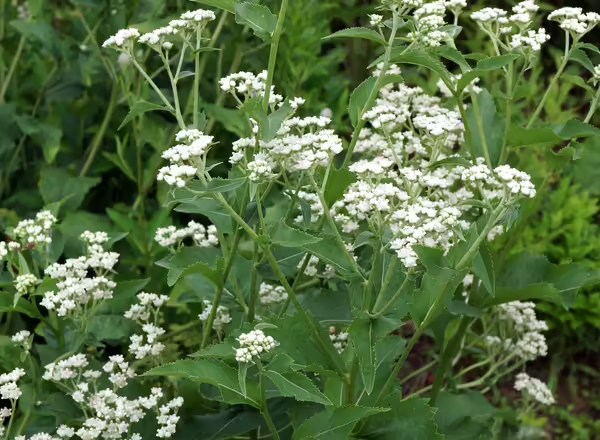
- Wild quinine (Parthenium integrifolium) grows 2-4 feet tall and produces flat-topped white blooms from late spring to summer. It grows in full sun and in average, dry-to-medium, well-drained soil.
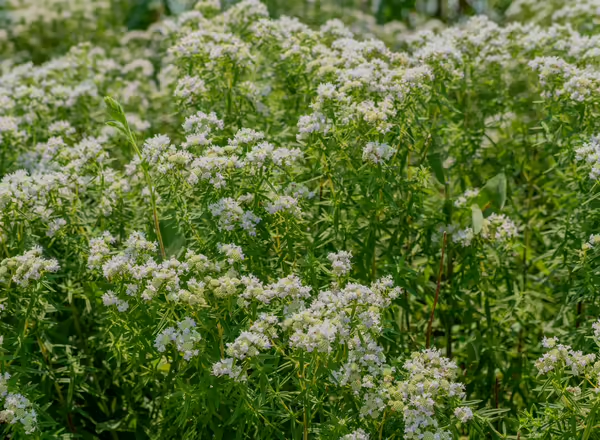
- Common mountain mint (Pycnanthemum virginianum) grows in full sun to partial shade in medium to wet soils. It will grow to be 2-3 feet tall, and like many other members of the mint family, it has fragrant foliage and will readily spread. They produce dense clusters of small white flowers that are readily visited by pollinators.
Native plants with blue(ish) flowers
True blue flowers are even rarer than red flowers, but several native species in Illinois produce blue-to-purple flowers during the summer.
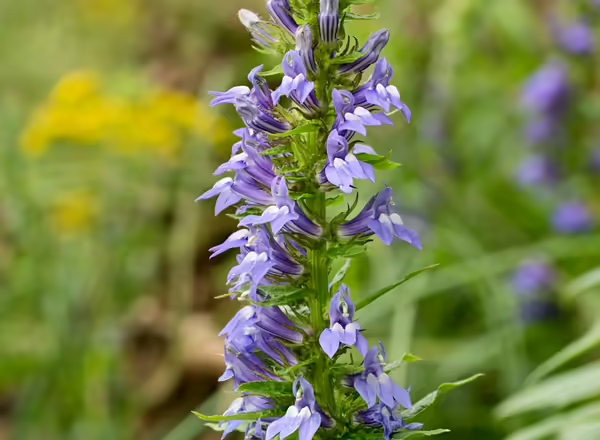
- Great blue lobelia (Lobelia siphilitica) produces spikes of bluish flowers in mid-to-late summer. Like cardinal flower, they grow in full sun to part shade, prefer moist soils, and need consistent moisture. It is also relatively short-lived but will readily self-seed.
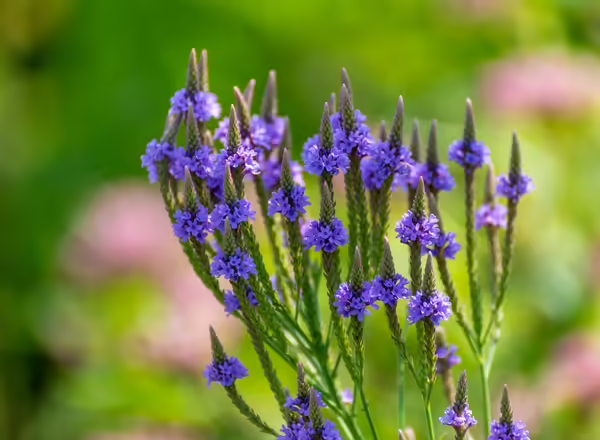
- Blue vervain (Verbena hastata) has an upright growth habit and will grow 2-5 feet tall. They produce spikes of purplish-blue flowers that bloom from the bottom up. They grow in full sun to partial shade in average, medium-to-wet soils.
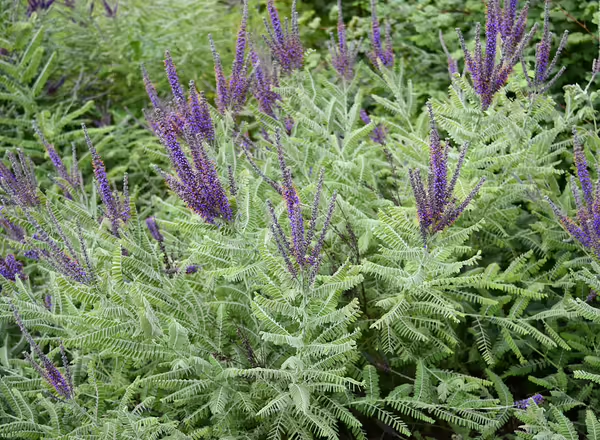
- Leadplant (Amorpha canescens) is a small (2-3’ tall) shrub with silvery-green compound leaves. They produce 4-8 inch spikes of purple-blue flowers that bloom from the bottom up. They have an extensive root system that can reach 15 feet deep. They grow best in full sun to partial shade and in well-drained, dry to medium moisture soils.
You can find more information about native pollinator plants at Illinois Extension’s Illinois Pollinators website.
Bonus Good Growing Tip of the Week - Group plants of the same color together rather than alternating single plants. Blocks or drifts of color create a stronger visual effect from a distance.
Bonus Fact of the Week – The calyxes (the collective term for sepals) of royal catchfly are covered in sticky hairs (glandular trichomes), and smaller insects are often trapped in them, giving rise to their name.
Photos:
Cardinal flower - Brian Woolman, Adobe Stock
Royal catchfly – Ken Johnson, University of Illinois Extension
Scarlet bee balm - wiha3, Adobe Stock
Rattlesnake Master – Ken Johnson, University of Illinois Extension
Wild quinine - Nancy J. Ondra, Adobe Stock
Common mountain mint - Barbara, Adobe Stock
Great blue lobelia - Gerry, Adobe Stock
Blue vervain - Barbara, Adobe Stock
Lead plant - agatchen, Adobe Stock
Want to get notified when new Good Growing posts are available? SIGN ME UP!
Give us feedback! How helpful was this information (click one): Very helpful | Somewhat helpful | Not very helpful
MEET THE AUTHORS
Ken Johnson is a Horticulture Educator with University of Illinois Extension, serving Calhoun, Cass, Greene, Morgan, and Scott counties since 2013. Ken provides horticulture programming with an emphasis on fruit and vegetable production, pest management, and beneficial insects. Through his programming, he aims to increase backyard food production and foster a greater appreciation of insects.