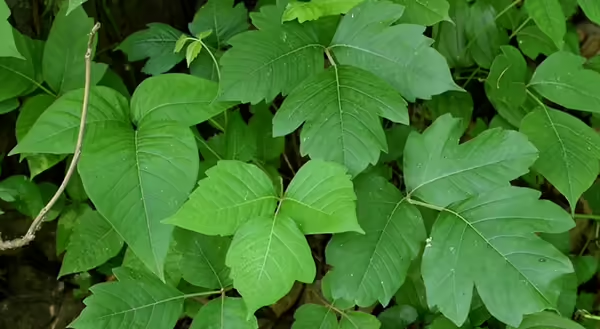
Dealing with the effects of a “run-in” with the poison ivy plant is probably the most common negative wildlife encounter people in the Midwest experience (mosquitoes notwithstanding). Most people who spend time outdoors will eventually experience a poison ivy rash. But poison ivy isn’t all bad; it has traits worthy of praise, even if we have to appreciate those traits from a safe distance.
The Obligatory
Poison ivy is a dangerous plant. If you’re seeking direct guidance on how to control the plant or deal with exposure, check out our poison ivy identification and lookalike video on YouTube in English and Spanish.
Poison Ivy ID and Lookalikes Identificación de la Hiedra Venenosa y las Plantas Parecidas
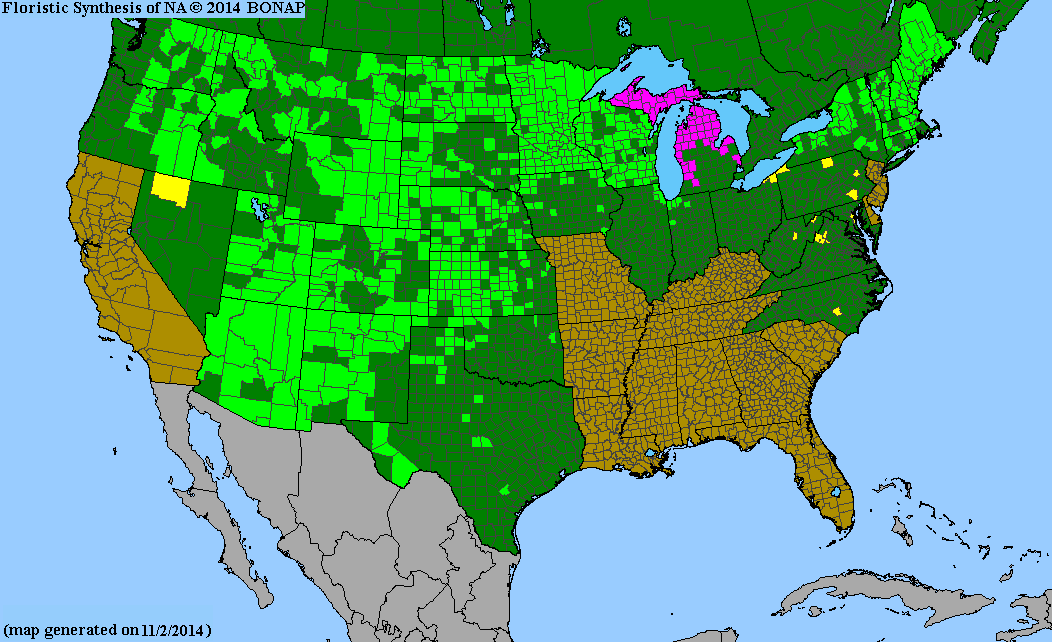
Also, this blog post treats poison ivy as a single species because nearly all the poison ivy found in Illinois is Eastern poison ivy (Toxicodendron radicans). Western poison ivy (Toxicodendron rydbergiii), can also be found in the state, but only in a few scattered locations in the northeastern counties. In any case, the two species look about the same and function similarly in their ecosystems.
Wildlife Value
Poison ivy is poisonous to a very limited number of animals: just us, other primates, bats, and guinea pigs.
While we think of it as strictly a nuisance, poison ivy is just as valuable to the Illinois ecosystem as our other native plants. Poison ivy roots stabilize soil, its foliage provides food for arthropods and herbivorous wildlife — there’s even a caterpillar that’s an obligate feeder and eats nothing else. And its tiny flowers provide nectar and pollen for pollinators.
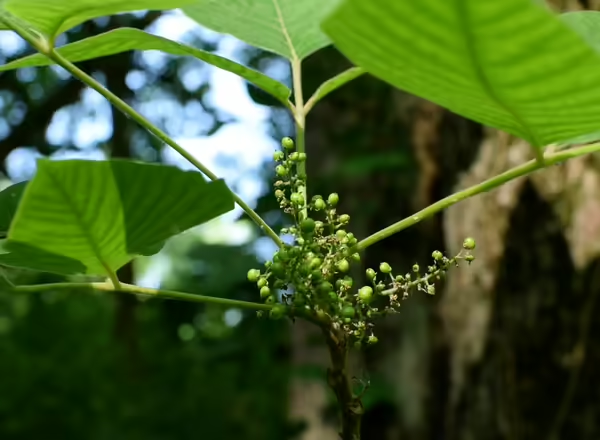
Even its berries, which are not particularly nutritious compared to the berries of other plants, serve a good purpose. While they’re largely ignored by the masses of migratory birds that pass through the Midwest each fall, poison ivy berries are often eaten in winter when food is scarce, especially by animals like the yellow-rumped warbler, which can better digest the waxy compounds in the desiccated fruit.
Adaptability
Poison ivy is an admirably adaptable plant. Most native plants seem to occupy only a relatively narrow niche, but poison ivy manages to thrive in a huge number of habitats. Its adaptable biology is behind this success:
- It can handle full sun and nearly full shade.
- It forms vines that climb, but it can also grow independently as a shrub.
- It spreads by seeds dispersed by wildlife, but can also reproduce clonally through vegetative offsets.
- It also isn’t picky about its growing medium, flourishing in a forest’s moist loamy soil but also not seeming to mind a dry, rocky roadside.
This adaptability means that no fencerow, hedge, roadside, forest, prairie, or neglected backyard is free of poison ivy — or, if it is, it won’t be for long.
Variability
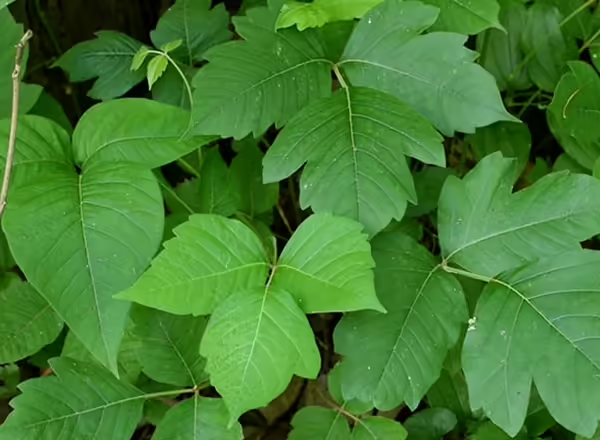
Poison ivy’s appearance is wildly variable.
- Leaf size ranges from the size of a dinner plate on well-established plants growing in deep shade to truly tiny, with individual leaflets no larger than a quarter on new vegetative offsets growing in full sun.
- Color can be inconsistent. Deep greens are common in the shade, and lighter greens in the sun.
- Reflectivity can be variable, with the leaves of some plants showing a strong sheen and others being mostly matte.
- Leaf shape is only broadly consistent. Poison ivy leaves are always trifoliate – hence the phrase “leaves of three, leave it be” – but the thumblike notches pointing outward on the two mitten-shaped basal leaflets and from both sides of the central leaflet may be faint or even missing on some plants.
This variability is fascinating, but also troubling because it makes the plant tricky to identify. Watch the poison ivy video linked above if you’d like to get familiar with some of that variability.
A Challenge
We want to end this blog with a challenge: learn to identify poison ivy and the varied forms it can take in the many habitats it can live in.
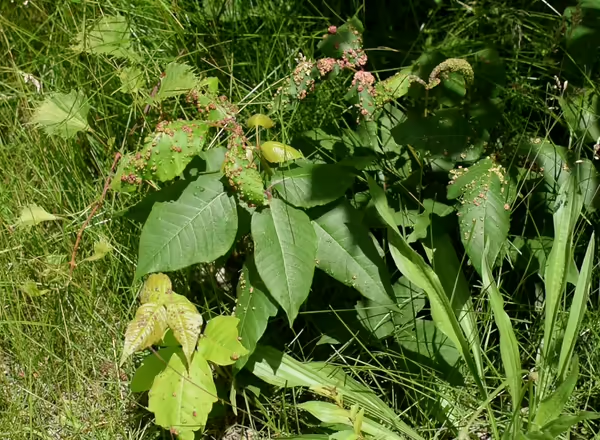
We also encourage you to learn to see its role in the ecology of Illinois. Note when you see it creeping beyond the bounds of a woodland, pushing forward the edge of the woodland’s influence. Note when you see colorful galls across the surface of poison ivy’s trifoliate leaf; these are caused by mites…yet another animal that is served by poison ivy’s existence.
Poison ivy is certainly a difficult plant to love, but it has redeeming traits. More importantly, it has a role to play in the Illinois ecosystem. Well away from the beaten path, and always at a safe distance, poison ivy is worth our appreciation.
Sources and More
- National Park Service Poison Ivy fact sheet
- Western Poison ivy (Toxicodendron rydbergii) range map
- Poison ivy fruit fat analysis
- Insect feeders
- Interesting blog on poison ivy fruit from Rouge River Bird Observatory
- Thesis discussing digestion of poison ivy fruits by birds
Learn how to identify poison ivy and how to differentiate it from common lookalikes.