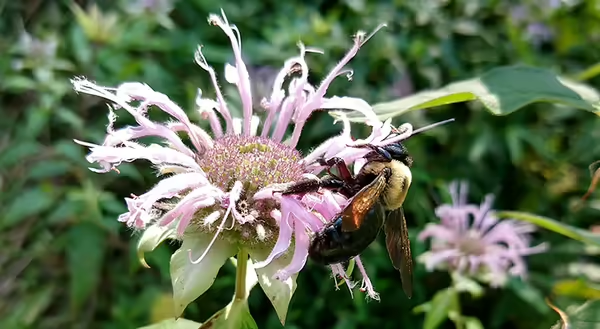
Everyone loves seeing an adorable bee, covered in pollen, descending into a flower for another helping. Native bees — like many other animal pollinators — are relied upon by plants for reproduction. Illinois has approximately 500 species of native bees with various behaviors and roles. Most are completely harmless to humans and live solitary lives, bouncing from flower to flower and nesting in hollow stems and soil cavities.
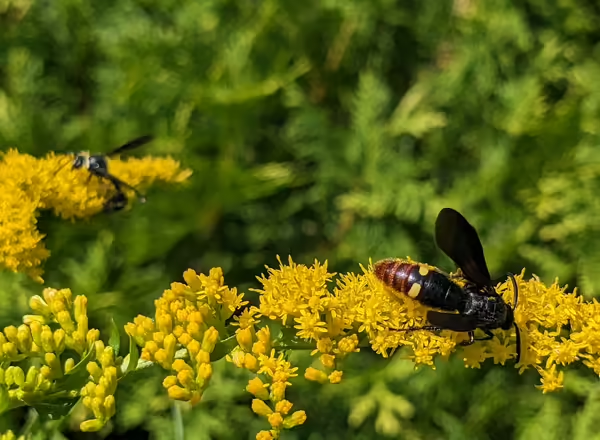
Most people only know about wasps and hornets because their stings ruin picnics. However, like bees, they play a valuable ecological role through pollination. They also contribute to the food web by eating insects and spiders, which can benefit any human gardener frustrated by caterpillars and aphids munching around in their vegetable garden.
Note: this blog is guest authored by Dan Marshalla.
How do I know which species are dangerous?
While most are not dangerous, it’s true that some bees and wasps can be. To know how careful we should be around them, we must first learn how to tell these insects apart. Hornets, wasps, and bees are so closely related that scientists group them together into the same taxonomic infraorder, known as Aculeata.
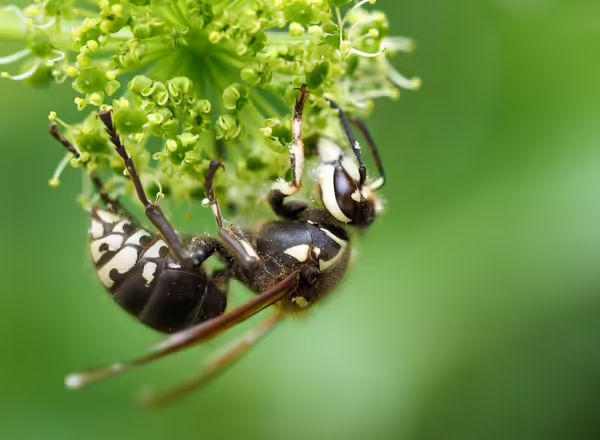
Hornets are a specific type of wasp, one that belongs to the genus Vespa. The native bald-faced “hornet” (Dolichovespula maculata) is not a hornet at all, but is actually a member of another wasp genus. The only true hornet in North America is the non-native European hornet (Vespa crabro).
Bees are usually hairy and have a rounded body, while wasps and hornets are hairless and typically have a slender “wasp waist” (the region between thorax and abdomen). Our colleague Ken Johnson did a great write-up on identifying different hornets back when "murder hornets" were in the news.
We should also think about bee and wasp behavior when trying to understand potential aggression. Like humans, wildlife sometimes have to decide between “fight or flight,” and bees and wasps are pretty good at the flight option! So why do they sometimes fight? These insects are more likely to be aggressive when they have something to defend, such as a nest or a colony. The majority of bee species make solitary nests and get along fine by fleeing humans. However, wasps, honeybees, and some bumblebees make social nests that they will defend, making these species riskier when encountered near a nest. Avoid disturbing their nests, and you can mostly avoid conflict. But if bees or wasps are nesting somewhere that cannot be avoided, contact a professional to come and safely remove the nest.
Another bee species that may be a slight nuisance is the carpenter bee (Xylocopa virginica). They look very similar to bumblebees (genus Bombus) but have a shiny black butt instead of a hairy one. To make their solitary nest, they tunnel into above-ground wood, which can include human structures like backyard decks. Nesting can be deterred by adding a layer of varnish or paint onto the outside wood. However, they are unlikely to sting; the males aren’t even capable of stinging!. In many instances, you can take joy in viewing this cute bee knowing you have provided a home for a kind neighbor.
How to safely enjoy and encourage our native insects
While insect stings can be very serious, more Americans die from being struck by lightning then stung by bees or wasps. Risks to humans do not mean we must vilify or hate entire families of wildlife. In fact, many of our food crops require pollinators like bees and wasps to be productive. We need these guys!
Bees and wasps are key parts of Illinois’ ecosystems, but they can be threatened by habitat loss and climate change. To support these pollinators, you can plant native plants in your yard and garden, or volunteer at a local nature preserve to improve their wild habitat. Also, when it comes to garden work, less can be more! Minimizing the removal of plant litter in the fall through the spring allows solitary bees to overwinter in dead stems and the ground until their spring re-emergence.
Learning how to be respectful neighbors to bees and wasps is important for agriculture, our ecosystems, and our own lives!
Explore more ways to support Illinois Pollinators.
What should I do if I am stung?
For many, being stung a single time is uncomfortable but does not warrant much worry. Allergies to bee and wasp stings, on the other hand, can be life-threatening and should be taken very seriously. An estimated 1% to 5% of the population is allergic to stings. Symptoms of these allergic reactions can include swelling in the face, lips, tongue, and throat, difficulty breathing or swallowing, nausea, dizziness, fainting, rapid pulse, hives, and rashes.
If you experience these symptoms following a sting, administer first aid according to CDC recommendations and seek medical attention immediately.
If you work or recreate outside often, it is possible to get a lab test to discover if you are allergic to bee and wasp stings. Those who are allergic should carry emergency epinephrine, an EpiPen, to prevent anaphylaxis. Talk to your doctor if you think getting tested is right for you. It is better to discover an allergy from a doctor’s test than from a bee’s sting.
While one sting is often not a big deal, being stung multiple times at once can be dangerous for anyone. We elaborate on these dangers in "Dangerous Encounters." The short version is this: if you or someone you know has been stung ~10 times or more, seek immediate medical attention even if you're not showing any immediate symptoms.