This is the first of several blog posts that we hope will be helpful to city planners as they try to navigate updating their residential landscaping codes to accommodate native, pollinator-friendly gardens. These posts will be long and will use terms related to city planning and municipal code that might be unfamiliar to our typical audience.
Because of the subject matter, we have to add a disclaimer here at the top: nothing we say in this post is legal advice, and any ordinance we cite or suggest in these blogs should be reviewed by the municipality’s attorney prior to implementation.
Title
Introduction
Residential gardens across the U.S. have historically been dominated by a narrow suite of plants and the European style of gardening for which those plants are suited. Over the past two decades, native plants and a more naturalistic style of planting have begun to displace these older gardening practices. This change has been driven by landowners’ recognition that native plants are ecologically friendly and climate-adapted, require little to no irrigation, have deep-set roots that improve groundwater recharging, can be used in rain gardens that mitigate stormwater flooding, and provide substantial benefits to native pollinators. The myriad benefits have prompted many homeowners to add native plants, e.g., “pocket prairies,” to their yards.
However, the shift towards homeowners gardening with native plants can cause friction between neighbors and place pressure on municipalities to update landscaping ordinances. This blog is an introduction to native gardens and the reasons why they cause code conflicts.
Title
What exactly is a native garden and how are they different from regular gardens?
In Illinois, native gardens are planted with grass and flower species that could be found in the Midwest before European contact. These plants evolved as part of one or more of our native ecotypes — black-eyed Susan, for example, would have been common in the tallgrass prairies of central Illinois as well as the limestone glades that dot southern areas.
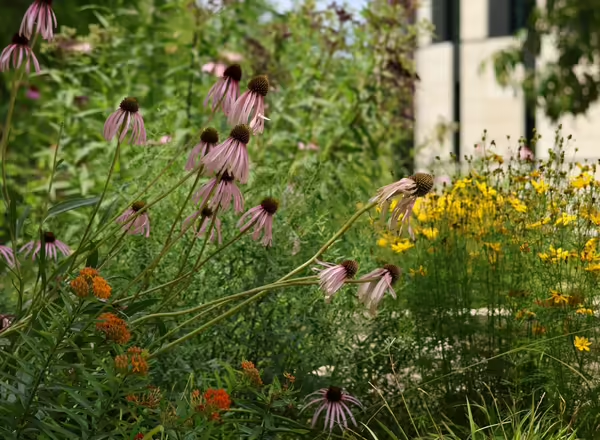
Gardens that use native plants can be indistinguishable from traditional gardens. Many residents may already use native plants in their landscaping without realizing it: purple coneflower, orange coneflower, black-eyed Susan, and prairie blazing star were common in the horticulture trade before they became more widely used in native plantings.
However, a native garden is usually taller and planted with a greater density than a more traditional garden. The tallgrass prairies and savannas that were once widespread throughout the Midwest favored tall herbaceous vegetation. As a result, most plants from these ecosystems are at least 3 feet tall, with many substantially taller. Because these plants evolved in close competition with their neighbors, they benefit from increased planting density because of the structural support that neighboring plants provide.
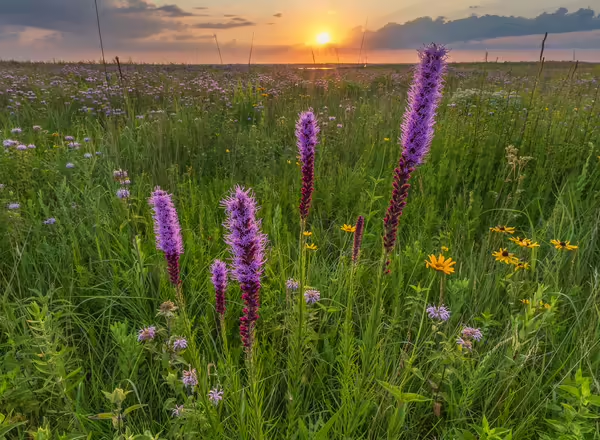
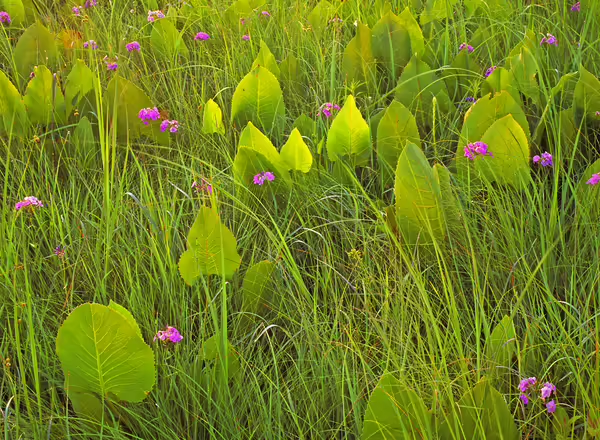
In addition to height and density, native plants are likely to have a smaller ratio of bloom size to green vegetation than plants which are common in the horticultural trade, as they have not been subject to intensive breeding for flower size by horticulturalists. Furthermore, ecologically important species like milkweed, on which monarch caterpillars famously feed, may have shorter bloom times and mostly just present as green stems and leaves.
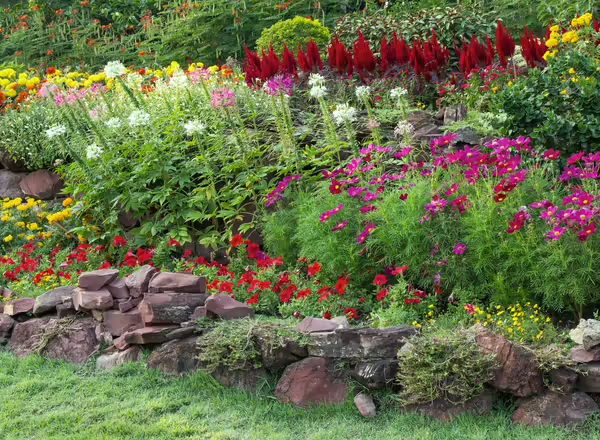
To casual observers, these characteristics may give native gardens a weedy appearance. While non-native plants have a tendency to be showier, with smaller stems and leaves and more flowers, they typically do not provide the same ecosystem services like supporting pollinators and stabilizing soil.
Title
Why do native gardens get cited for violating landscaping ordinances?
Native gardens are often cited for violating height limits set in a city’s nuisance weed ordinance, but understanding this citation requires additional context.
It is common for municipalities to adopt landscaping ordinances that provide wide latitude to city officials to enforce property maintenance, prevent damage to city infrastructure, and mitigate conflicts between neighbors. A typical set of ordinances usually does the following:
- Sets a low maximum height for all herbaceous vegetation, typically between 6 and 8 inches, which enforces basic turf maintenance
- Provides either a narrow exemption to this height limit for a defined set of plants (e.g. ornamental flowers and vegetables) or otherwise sets a second allowable height for these plants between 12 and 24 inches
- Bans planting of vegetation other than grass between the road and the sidewalk (parkway, hereafter), inside of sight triangles (the triangle of land at intersections that must be clear to prevent collisions), or within a set distance from a property boundary, sidewalk, or street
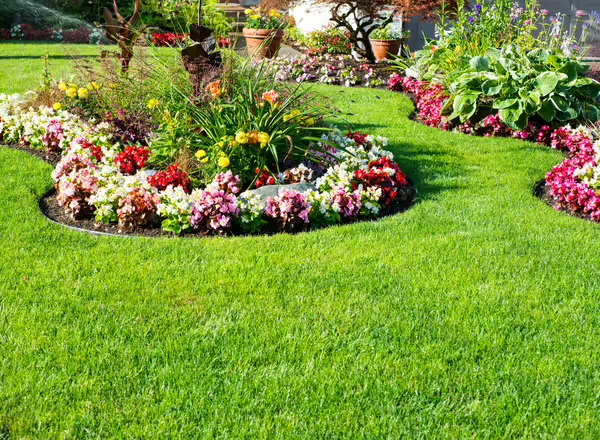
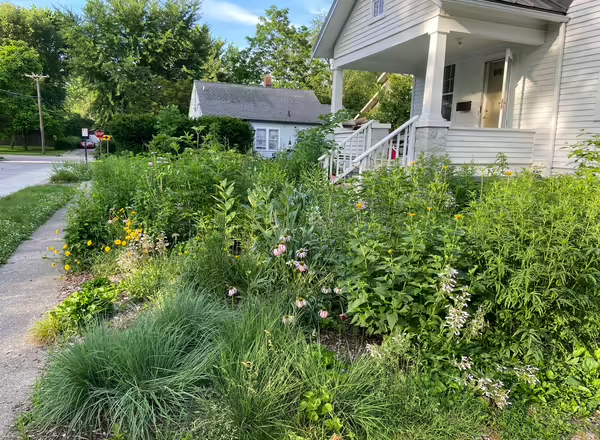
The strictness of these ordinances creates an uneasy situation; depending on the town, many residential yards, including those with non-native plantings, are technically non-compliant, but have never been ticketed because the municipality’s landscaping codes are only enforced when a complaint is submitted. Consider the following photographs of plantings which are common features of residential landscaping throughout Illinois:
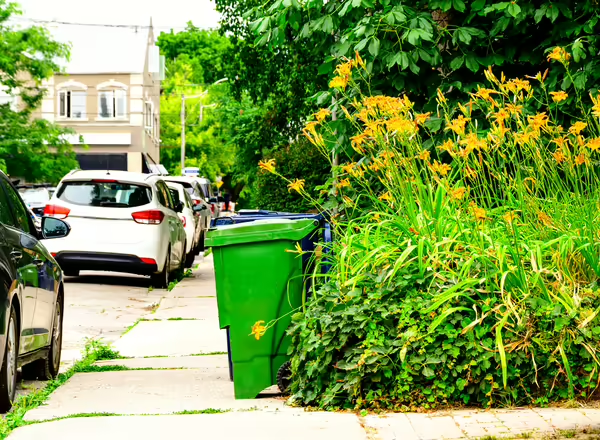
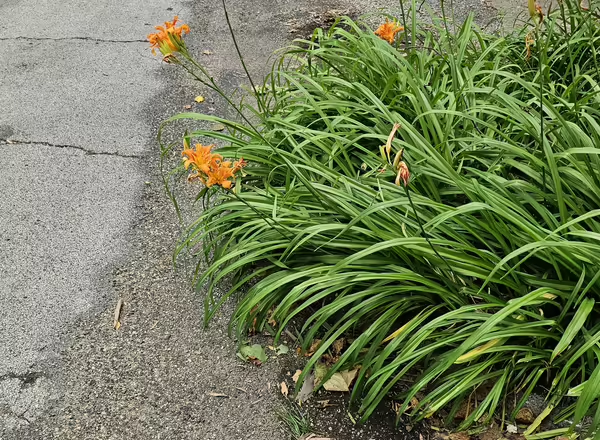
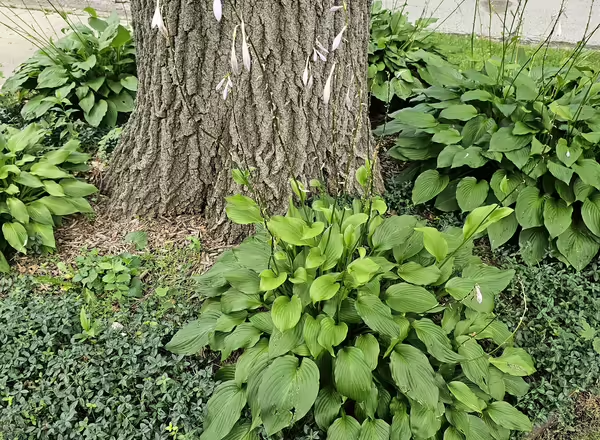
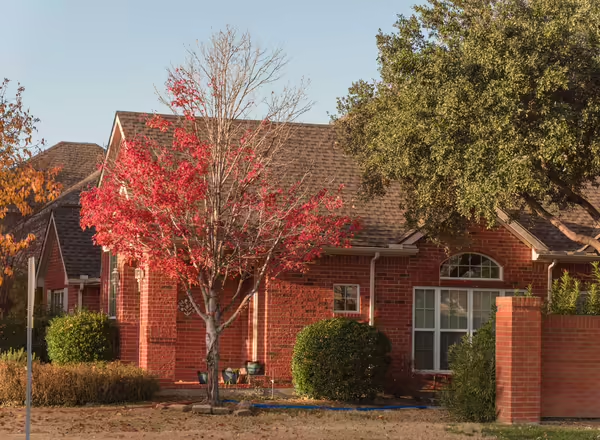
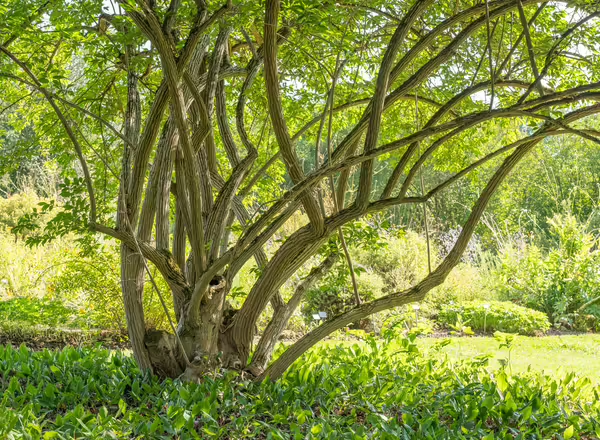
Because landscaping ordinances are only proactively enforced by municipalities in unique circumstances (e.g. utility right-of-way conflicts or property abandonment) and neighbors are unlikely to complain about common landscaping practices, “compliance” for everyday residents is socially mediated. So long as residents do not draw the attention or ire of a neighbor, they can usually maintain a non-compliant yard in perpetuity.
Consider the following native garden:
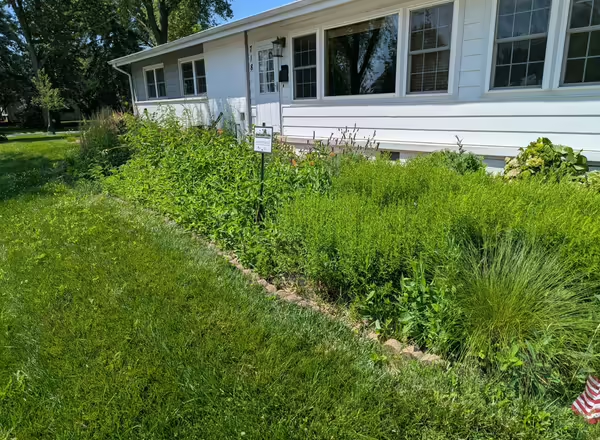
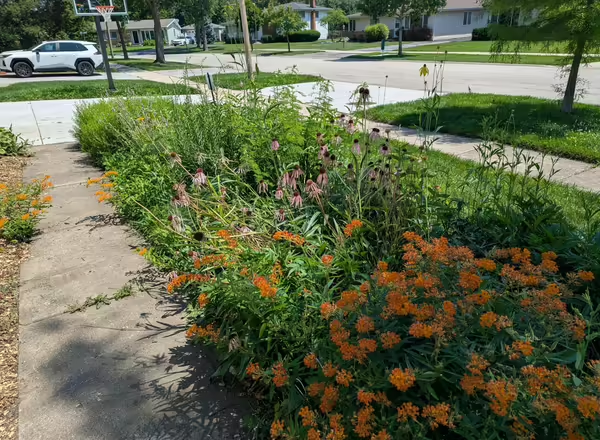
This native garden is typical. It was deliberately planted, purposefully and regularly maintained, and follows the setback and sight triangle rules within the municipality where it was planted. The municipality’s weed ordinance contains an exception to its 8-inch allowable vegetative height for cultivated flowers and gardens. By all accounts, this garden is compliant.
Nonetheless, this garden (and others like it) is at a high risk of being reported to the city as weeds. Even native gardens installed by professional gardeners are at risk of receiving a citation. To mitigate this problem, residents will often employ signage to denote that their garden was planted intentionally, though this doesn’t help if neighbors simply dislike the aesthetic of the garden. Native gardens are often physically cited for height violations, but in the context of the standard set of landscaping ordinances, widespread noncompliance in most municipalities, and socially mediated ordinance enforcement, the actual reason for the citation is usually that the native garden simply does not conform to traditional landscaping norms.
Title
Why is this a problem the city should address?
The use of native plants in landscaping isn’t going away — the practice has seen steady growth over several decades, and numerous native plant nurseries in the Midwest have grown in size year-over-year in that period. We think it is likely that adoption will continue to accelerate, if for no other reason than native gardens are less resource-intensive than traditional gardens. This is to say that, if the city is not currently seeing an uptick in complaints or conflicts rooted in the adoption of native gardens, they likely will in the future. At a functional level, we think municipalities should address these conflicts because complaints require city resources and personnel time to process, inspect, and adjudicate.
It is our hope that municipalities will update their code because it would address the cause of some of the unhappiest phone calls we get from Illinois residents. It is understandably upsetting to invest time and money into a garden, only for it to be declared a nuisance that must be removed under penalty of law. This is especially true when neighboring yards have non-native gardens that are equally in violation of the code.
We also think that many municipalities can accommodate native gardens without jeopardizing their ability to mandate basic maintenance. It will usually be possible to accommodate native gardens with very modest changes to landscaping codes and sometimes simply with training for whoever in the municipality handles ordinance enforcement. Our next blog in this series will be about these low-change and no-change options.
Illinois Wildside is an AI-free blog. Large Language Models were not used to create or research any portion of this post.