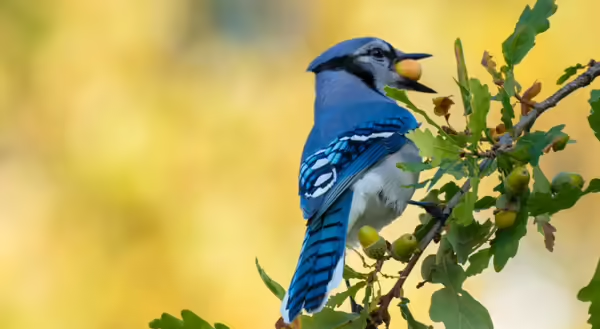
As leaves change color, fall migration brings many birds through central Illinois. Warblers, vireos, thrushes, and other songbirds stop along the way to rest and search for food. Some will remain in Illinois for the winter, while others still have a long journey ahead.
Bird feeders can supplement the foods available in our yards, but not every bird visits a feeder or eats seeds. With a landscape rich in native plants, birds can find a variety of insects, fruits, seeds, and nuts, as well as places to sleep, forage, and hide.
Birds still need insects in fall
Insects are an important food source for birds, especially during the spring and summer when many species need to feed young. This connection continues even after nesting season has ended
During fall migration, many insect-eating birds search leaves, branches, and bark for caterpillars, beetles, spiders, and other insects. Resident birds, including chickadees, nuthatches, and woodpeckers, continue looking for insects as the weather cools.
Native plants are especially valuable as a home for insects, and research that compared the value of native and nonnative plants has found that yards with more native woody plants provide better foraging and nesting habitat for insectivorous birds.
Choosing the right plant (not just a familiar name) is important
Two trees may look similar and both be called maples or oaks, but that doesn't mean they are interchangeable when it comes to supporting local insects and birds.
A native maple would likely provide more value than a maple from another region, and when choosing a new tree or shrub it is important to remember that selecting a species native to Illinois that also fits the conditions at the planting site is best.
This doesn't mean that you need to tear out all the nonnative plants at once, but it is a good idea to look for opportunities in the future. When a nonnative shrub needs to be replaced, or there is a bare spot in the forest to fill in with something new, look for a native alternative.
Include high-value native plants
Some plants are associated with more insects (and thus more birds) than others, and are sometimes called keystone plants because they are keystone species in the food web. Providing a diversity of insects helps to provide a diversity of birds.
Oaks are some of the most commonly mentioned trees for supporting wildlife, and for good reason. Not only are there many species of caterpillars and other insects that feed on oak leaves at different times of the year, but the acorns also provide food for birds and other wildlife, and the rough bark and branches give birds a place to search for insects.
Native cherries and plums are another great choice, as their leaves support caterpillars, their flowers support insects, and their fruit is used by birds. Trees like hickories, birches, and American basswood also add in diversity while supporting wildlife.
While a large shade tree won't fit in all our yards, there are also many smaller native trees and shrubs available that can help support wildlife as well. Dogwoods, serviceberries, wild plums, elderberries, spicebush, sumacs, and native viburnums can all help to add in more diversity with food and shelter for birds. Before planting, make sure to check the expected size and needs of the plant.
Layers add more diversity
Having a nice shade tree in your yard is good, but if it is surrounded by a monoculture of lawn or other vegetation that doesn't provide food or shelter, there are fewer birds that can benefit from that tree.
When planning or modifying your landscape, think about adding layers. For example,
- A canopy tree (like oaks and hickories)
- A smaller understory tree (serviceberry, dogwood, wild plum)
- Shrubs that provide fruit and/or cover
- Native flowers, grasses, and sedges at ground level
Different birds forage in different places. Some birds search the upper canopy while others stick to the shrubs or even scratch along the ground looking for insects. Having layered plants puts food and cover in different heights, and provides more options for birds to use.
Even a small yard can have layers. A single native tree planted and underplanted with shrubs, flowers, and sedges can be a great start.
Let autumn help build the food web
With just a few changes to your fall cleaning routine, you can help provide more food and cover for the birds.
Leave fallen leaves on the ground. Moving leaves from lawns and sidewalks to garden beds and around trees and shrubs will provide shelter for insects over the winter, which in turn will provide food for birds.
Birds such as sparrows and towhees search through this layer for food.
Leave healthy seed heads and fruiting branches. Resist the urge to cut back every perennial to the ground or to prune fruiting shrubs to make your yard look neater. Those seeds and fruits can continue to feed birds throughout the fall and winter.
Keep some dead wood if it is safe. Dead limbs or logs can support insect populations and provide feeding and nesting sites for birds. Have dead or hazardous trees evaluated by an arborist if they might fall on a person or structure.
Limit pesticide use. A few holes in a leaf may be evidence that the plant is participating in the food web. Before treating a plant, identify the insect and consider if treatment is really needed.
Add in what you can, not just tear out what isn't needed. It isn't necessary to completely redo your yard this fall, but planting a native tree, adding a few shrubs, or increasing your native flower garden bed can all help to build the food web and support birds.
Native plants help support insects and birds, and planting in layers and leaving some leaves, fruits, seeds, and stems will give birds more options for food and shelter during migration and winter.
Sources:
Homegrown National Park. Keystone Plants for Your Yard.
National Wildlife Federation. Keystone Plants by Ecoregion.
University of Missouri Extension. Improving Habitats for Wildlife in Your Backyard and Neighborhood.
Burghardt, K.T., Tallamy, D.W., and Shriver, W.G. Native Plants Improve Breeding and Foraging Habitat for an Insectivorous Bird.