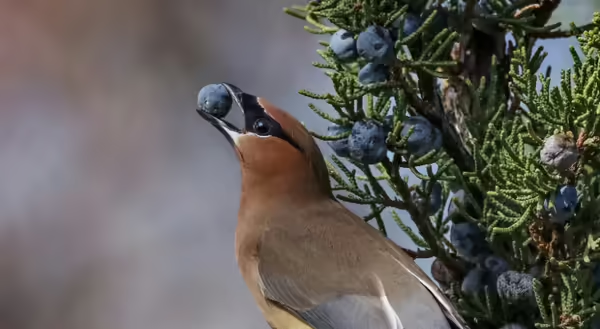
Native trees and shrubs provide more than flowers, fall color, and wildlife habitat. They also create a diverse selection of food for birds throughout the year. A serviceberry might feed birds in early summer, spicebush and dogwood during fall migration, and winterberry after the leaves have fallen.
To support pollinators and beneficial insects, it is recommended to choose plants that bloom from spring through fall. In the same way, choose trees and shrubs that provide fruit all season for wildlife including birds. Some fruits ripen when young birds are learning to forage, others provide nutrition for fall migration, and some remain on branches well into winter when food is limited. With a variety of native plants, gardeners can provide a variety of plants that will feed birds from summer to winter.
Birds don't need the same foods all year
Birds face different challenges as the seasons change. During summer, adults are busy raising young. In fall, millions of birds pass through Illinois for migration. Winter brings fewer food choices and harsher conditions.
Not all fruits provide the same benefits. Some fruits are higher in sugar and are more likely to be consumed quickly in summer and early fall. Other fruits contain more fats and become important during migration, when birds need concentrated energy for their journey. Some fruits persist into winter, providing food after other sources are scarce.
Are all berries equally valuable?
Autumn olive, bush honeysuckle, and multiflora rose are invasive shrubs that produce fruit that birds are happy to eat. That doesn't mean that birds are getting all the nutrition they need just from these plants.
The evidence is more complex. Some invasive fruits are relatively higher in sugars but lower in the fats that migrating birds capitalize on to fatten themselves for the journey. Native shrubs often produce fruits that better address the needs of birds throughout the year.
That doesn't mean that birds never eat from invasive plants. They do. The issue is that invasive shrubs can take over an area, crowding out native plants that have a more diverse set of foods for birds at different times of year. Native trees and shrubs also support insects, which are an important food for many birds, especially in the nesting season.
For gardeners looking to support birds through the seasons, the goal isn't to just grow berries, it's to grow a variety of native plants that can give birds the foods they need at different times of year.
Summer fruits for nesting birds and fledglings
Summer is a busy season for birds. Adults are still feeding young, while fledglings are learning how to forage on their own. Native fruits provide an easily accessible food source.
Serviceberry (Amelanchier spp.)
One of the first native fruits to ripen each year, serviceberry often disappears quickly as robins, cedar waxwings, catbirds, orioles, and other birds take advantage of the early-season bounty. Serviceberries also support insects that parent birds feed to nestlings before the fruit is even ripe.
American elderberry (Sambucus canadensis)
By mid- to late summer, elderberry produces large clusters of dark purple fruits that attract a variety of bird species. It is a good choice for gardeners with moist soils.
Blackberries and raspberries (Rubus spp.)
Native brambles provide fruit throughout the summer and are a source of cover and nesting material. Birds enjoy both the fruit and the shelter that the brambles provide
Fall fruits for migrating birds
As summer moves to fall, large numbers of birds pass over Illinois on their way south. These migrants need reliable food sources to help fuel their trip.
Gray dogwood (Cornus racemosa)
Gray dogwood produces clusters of white berries in late summer and fall. The fruit is used by many bird species while the branches also provides cover.
Spicebush (Lindera benzoin)
Spicebush produces bright red fruits that mature in early fall at the right time for the peak migration of many songbirds. As a bonus, spicebush is a host plant for the spicebush swallowtail butterfly.
Blackhaw viburnum (Viburnum prunifolium)
Blackhaw viburnum provides birds with fruit in the fall, while adding beautiful flowers, fall color, and wildlife value throughout the year. This plant's fruit can continue to feed birds into early winter.
Fruits that persist into winter
By winter, many fruits have already been consumed. A few native species hold their fruits well into the colder months feeding birds when the cold weather sets in.
Winterberry (Ilex verticillata)
Winterberry is known for the bright red fruits that often stay on branches after the leaves have fallen. The persistent fruits can provide food during winter weather.
Chokeberries (Aronia spp.)
Chokeberries often hold their fruit well into winter. Even though birds may pass them by when other fruits are available, the berries can become increasingly important later in the season.
Eastern red cedar (Juniperus virginiana)
Eastern red cedar provides two important resources: winter cover and fruit. Cedar waxwings, bluebirds, and other birds regularly feed on the blue berry-like cones while taking shelter in the evergreen foliage.
Planting for birds through the seasons
When selecting plants for your yard, think beyond a single season. A yard with one berry-producing shrub may provide food for a few weeks, but a variety of plants can provide food for months.
Choose plants that fruit at different times and that match your growing conditions. Remember that some plants like winterberry need both male and female plants to produce fruit.
Look for plants that provide multiple benefits. The best plants for wildlife don't just produce fruit. They support insects, offer nesting sites, provide shelter, and contribute to the larger food web that birds rely on throughout the year.
Think beyond flowers and fall color
Flowers, fall color, and screening may be reasons to pick a tree or shrub, but so can the timing of the fruiting.
Birds don't need the same foods all year long. Young birds learning to forage, migrating songbirds building energy reserves, and winter residents surviving cold weather all face different challenges. By planting a succession of native fruit-bearing trees and shrubs, you can help birds have the foods that they need in each season.
Learn More
Homegrown National Park. Keystone Plants for Your Yard.
National Wildlife Federation. Keystone Plants by Ecoregion.
University of Missouri Extension. Improving Habitats for Wildlife in Your Backyard and Neighborhood (G9500).