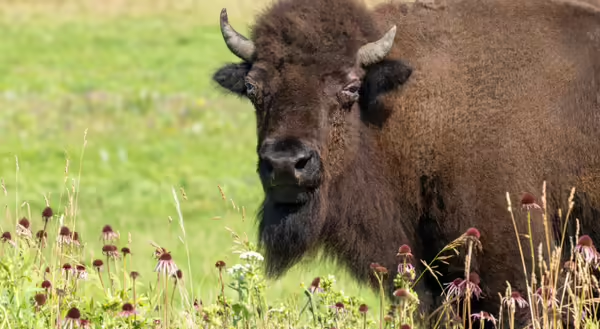
What gardeners can learn from one of Illinois' most influential prairie animals.
Most people think of bison as animals of the western plains. Yet bison can still be found in Illinois today. Herds at Nachusa Grasslands, Midewin National Tallgrass Prairie, Fermilab, and Wildlife Prairie Park help preserve an important part of the state's natural heritage while supporting prairie conservation and education.
Illinois Was Once Bison Country
Long before corn and soybean fields covered the landscape, tallgrass prairie stretched across much of Illinois. Large herds of bison moved through these grasslands for thousands of years.
During the 1800s, increased hunting and the conversion of prairie to farmland caused both bison and their habitat to disappear. Less than one percent of Illinois' original prairie remains.
The decline of bison was dramatic. North America's population fell from millions of animals to roughly 1,000 by the late 1800s. Conservation efforts helped prevent their extinction and led to the herds found in Illinois today.
Bison helped shape prairie landscapes through their grazing, movement, and interaction with fire. Together, bison and prescribed fire help maintain healthy, diverse prairie habitat.
More Than a Big Cow
Bison may look like cattle, but they are built for life on the prairie.
Adult bulls can weigh more than 2,000 pounds and stand up to six feet tall at the shoulder. Despite their size, they can run up to 35 miles per hour. Their large shoulder hump contains powerful muscles that help them move through deep snow during winter.
How Bison Benefit Prairie Ecosystems
Bison do not graze every part of a prairie the same way. Some areas stay short while others grow taller. This creates a variety of habitats that support different plants and wildlife. For example, some bird species prefer shorter vegetation, while others need taller cover for nesting.
Bison also create shallow depressions called wallows when they roll in the dirt. These open patches can collect rainwater, provide habitat for insects and amphibians, and create nesting sites for some native ground-nesting bees.
Even the fur bison shed serves a purpose. Birds often gather loose hair in spring and use it to line their nests. Bison dung returns nutrients to the soil and supports insects that help recycle organic matter.
Even though few of us have room for a herd of bison, the ecological principles they demonstrate can be applied at a much smaller scale. By grazing, wallowing, and moving across the prairie, bison create a dynamic landscape that supports a wide range of wildlife. Gardeners can apply the same principles by incorporating native plants and providing varied habitat features within their own landscapes.
Bison create a mix of tall grass, short grass, bare soil, and small disturbed areas, each serving a different ecological function. Home landscapes can provide similar benefits. Native plants such as purple coneflower, wild bergamot, butterfly milkweed, prairie blazing star, and little bluestem provide food and shelter for pollinators, birds, and other wildlife. Leaving seed heads through winter, allowing some leaf litter to remain, and preserving small patches of bare soil can further increase habitat value for insects and ground-nesting bees. These features may look different from a traditional lawn, but they help support the diversity of life found in healthy prairie ecosystems.
Where to See Bison in Illinois
Several sites across Illinois maintain bison herds for conservation, restoration, and education.
Nachusa Grasslands
Located near Franklin Grove, this Nature Conservancy preserve reintroduced bison in 2014. The herd now grazes more than 1,500 acres of restored and remnant prairie as part of an ongoing restoration effort. Visitors may spot bison from designated viewing areas while exploring one of the Midwest's largest prairie restoration projects.
Midewin National Tallgrass Prairie
Managed by the USDA Forest Service, Midewin introduced bison in 2015 as part of its prairie restoration efforts. The preserve was created from land that once housed the Joliet Army Ammunition Plant. Visitors can explore miles of trails and view bison from designated observation areas.
Fermilab
Near Batavia, Fermilab has maintained a bison herd since 1969. The herd was established by founding director Robert R. Wilson to honor the region's prairie heritage while scientists explored the frontier of particle physics.
Genetic testing found no evidence of cattle ancestry in the herd, making it an important part of ongoing efforts to conserve bison genetics. Visitors traveling through the laboratory grounds can often see the animals grazing in their pasture.
Wildlife Prairie Park
Located near Hanna City, Wildlife Prairie Park offers visitors an opportunity to see bison up close while learning about native Midwestern wildlife. Educational programs highlight the animals' behavior, adaptations, and role in North American grasslands, making it one of the easiest places in central Illinois to experience bison.
A Living Part of Illinois History
Bison are part of Illinois history and Illinois' future. Herds at prairie preserves, research facilities, and educational parks help people connect with a landscape that once covered much of the state At the same time, their grazing, wallows, and daily movements continue to create habitat for plants and wildlife across prairie ecosystems, a principle gardeners can apply by incorporating a variety of native plants and habitat features into their own landscapes.
Sources
- Ratajczak, Z., et al. (2022). Long-term impacts of bison on prairie plant diversity and habitat structure.
- The Nature Conservancy. Nachusa Grasslands Bison Program.
- USDA Forest Service. Midewin National Tallgrass Prairie Bison Program.