URBANA, Ill. — Planting native flowers in a backyard, patio container, or community garden can provide critical food and habitat for butterflies, bees, and other pollinators. This June, in recognition of National Pollinator Month, University of Illinois Extension encourages community members to create pollinator gardens at home to support the vital role insects and other wildlife play in the environment.
More than 150 crops rely on pollinators to produce one-third of the U.S. food supply, directly and indirectly. Beyond agriculture, other species depend on pollinators for well-pollinated plants to bear fruit, nuts, and seeds on a scale that sustains ecosystems and biodiversity.
Flies, bees, moths, beetles, wasps, and butterflies are among the pollinators experiencing population declines due to habitat loss and reduced pollen and nectar sources. Growing a pollinator garden with flowering plants is one simple way Illinois residents can make a meaningful environmental impact at home. To help, Illinois Extension is sharing pollinator gardening resources and upcoming programs during National Pollinator Month and beyond.
Community members can learn how to attract pollinators to their yards, identify these vital species, and learn what to plant to support them. Residents can also explore the Extension’s Illinois Pollinator tool available at go.illinois.edu/IllinoisPollinators, which has expert recommendations on plants for pollinator gardens, plant design tips, community science opportunities, and additional resources to support pollinator habitats.
"People want simple ways to support pollinators at home," said Jamie Viebach, Extension horticulture educator. "Learning more about pollinators helps them understand what is needed to encourage them to visit our yards."
Since 2016, nearly 600 residents have reported small neighborhood gardens across Illinois through Extension's "pollinator pocket" initiative. Anyone can create one and report it through the pollinator pocket website to be added to the map of gardens in Illinois and across the nation. Small actions like this contribute to the positive impact needed to support pollinators.
"The incredible response from the community shows how individual actions can add to the larger effort to support pollinators. Each of these registered gardens helps sustain a healthy environment for pollinators and people," said Horticulture Educator Ryan Pankau.
Whether planting a few native flowers in containers or transforming part of a yard into a pollinator habitat, every garden can help support ecosystems across Illinois. For more information on how to support pollinators locally, find your neighborhood Extension office at go.illinois.edu/findextension.
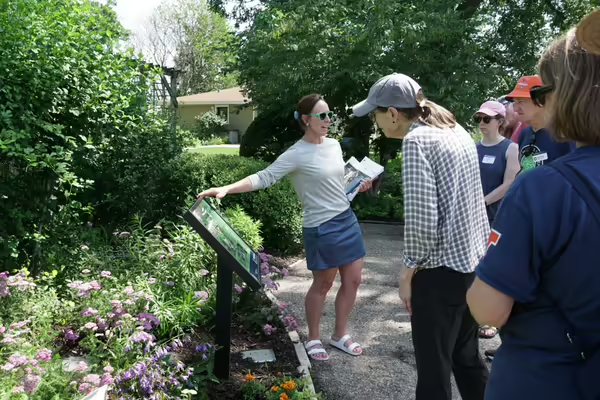
Photo Caption: Rockford, IL Master Gardener volunteers touring a local pollinator garden.
Photo Credits: Shekina Mullen
University of Illinois Extension develops educational programs, extends knowledge, and builds partnerships to support people, communities, and their environments as part of the state's land-grant institution. Extension serves as the leading public outreach effort for University of Illinois Urbana-Champaign and the College of Agricultural, Consumer and Environmental Sciences in all 102 Illinois counties through a network of 27 multi-county units and over 500 staff statewide. Extension’s mission is responsive to eight strategic priorities — community, economy, environment, food and agriculture, health, partnerships, technology and discovery, and workforce excellence — that are served through five program areas — 4-H youth development, agriculture and agribusiness, community and economic development, health and community wellness, and natural resources, environment, and energy.