URBANA, Ill. — As gardeners begin planting seedlings and planning for warmer weather, it’s also time to think about what needs to be preserved. Home preservation methods like canning, freezing, dehydration, and fermentation extend the shelf life of foods compared to storing fruits and vegetables fresh. Preserving food at home helps reduce waste, frees up refrigerator space, offers convenience with ready-to-use ingredients, and helps retain nutrients.
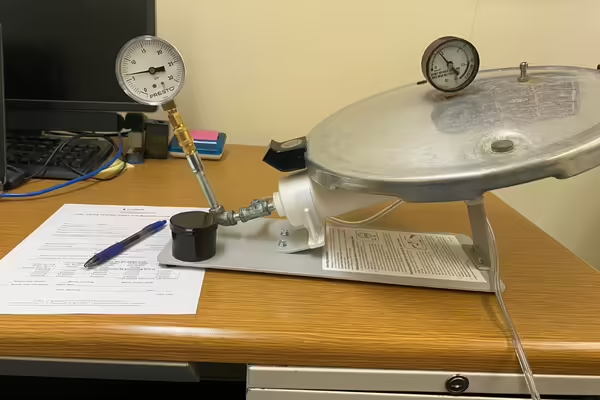
A variety of foods can be canned at home using boiling water bath canning and pressure canning. Pressure canning is necessary when preserving low-acid foods, especially meats and vegetables. It's important to have your equipment checked each year. Visit the Pressure Canner Testing Sites map to find the nearest University of Illinois Extension testing center. Tests are free and typically take about 15 minutes per canner.
“Over time – and sometimes new out of the package – the needle on a dial-gauge pressure canner reads incorrectly,” says Caitlin Mellendorf, food and nutrition educator. “If the dial gauge is not measuring the accurate pressure, foods inside the pressure canner may be under-processed, which increases the risk of serious illness from botulism.”
Along with testing, Illinois Extension offers in-person canning and preserving classes around the state. Watch recorded trainings from the Canning with Confidence and Fill Your Pantry series at home. Read more about canning, freezing, drying, and fermentation on the Food Preservation website.
SOURCE/WRITER: Caitlin Mellendorf, food and nutrition educator, Illinois Extension.
EDITOR: Herbert Chavez, media communications coordinator, Illinois Extension.
University of Illinois Extension develops educational programs, extends knowledge, and builds partnerships to support people, communities, and their environments as part of the state's land-grant institution. Extension serves as the leading public outreach effort for University of Illinois Urbana-Champaign and the College of Agricultural, Consumer and Environmental Sciences in all 102 Illinois counties through a network of 27 multi-county units and over 500 staff statewide. Extension’s mission is responsive to eight strategic priorities — community, economy, environment, food and agriculture, health, partnerships, technology and discovery, and workforce excellence — that are served through five program areas — 4-H youth development, agriculture and agribusiness, community and economic development, health and community wellness, and natural resources, environment, and energy.