Check out Chris on the Good Growing podcast and blog!
Share your own Everyday Observation
Questions? We'd love to hear from you!
Abigail Garofalo aeg9@illinois.edu, Erin Garrett emedvecz@illinois.edu, Amy Lefringhouse heberlei@illinois.edu
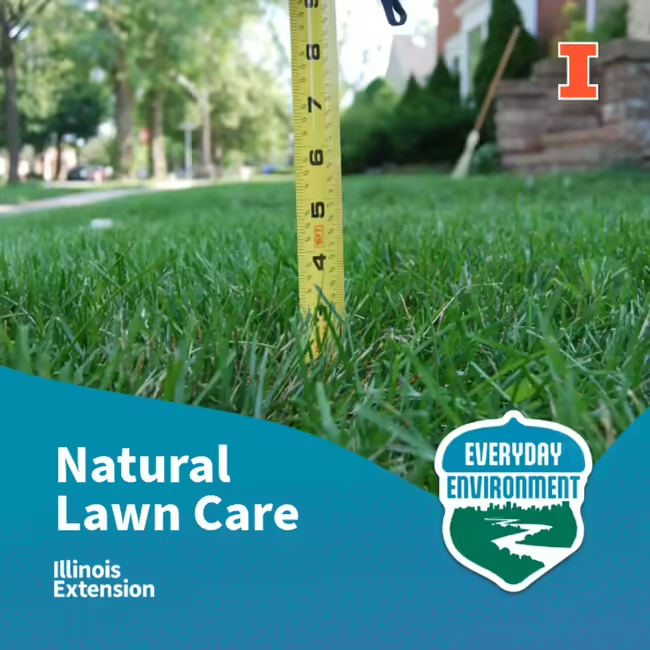
Welcome to another episode of the Everyday Environment Podcast, where we explore the environment we see every day. I'm your host, Amy Lefringhouse.
Erin Garrett: 00:14And I'm your cohost, Erin Garrett.
Amy Lefringhouse: 00:16And today, we're here with Chris Enroth. Yay. Pew. Pew. Pew.
Amy Lefringhouse: 00:21Have you ever heard those?
Chris Enroth: 00:23Oh, yeah. Laser blast.
Amy Lefringhouse: 00:24Laser. Is that what it is?
Chris Enroth: 00:26In my head, that's what I hear.
Amy Lefringhouse: 00:28Pew pew. Yeah.
Chris Enroth: 00:31That could be too.
Amy Lefringhouse: 00:33Chris Enroth, he is a horticulture educator with us at Illinois Extension. I'm sure those of you who listen to our podcast have heard him last season, invasives, talking about invasives in our lawn. And if you listen to Good Growing, he's also one of the hosts of Good Growing. So if you're a long time listener of Good Growing, he's hopping on both. He's on both sides of the I guess, you'll be let's let's see. This one releases on a Thursday, and you can hear Chris on a Friday. So you can yeah. All Chris Enroth all the time. Thanks for being here.
Chris Enroth: 01:10That's great. I feel sorry for people. Sorry.
Amy Lefringhouse: 01:17Well, thanks for being here with us, Chris, on the Everyday Environment Podcast.
Chris Enroth: 01:22Well, thank you for having me today, Amy. It's it is a pleasure to be here. It is always a fun time to stop by, chat with you, Erin. Every every once in while, Abigail is here too. Yes.
Amy Lefringhouse: 01:32Absolutely. Absolutely. Well, Chris is gonna talk to us today about lawns, and this season we are talking all about nature based solutions and how to just work with our home landscapes and work with nature in solving some of our challenges that we might have in our home landscapes, challenges that we might see in our communities, and just kind of taking the ecological approach, looking through a lens to in working with nature. So Chris is gonna talk to us about lawns. Chris, why don't you start us off, by telling our audience just a little bit about you, just a little bit about the work that you do here at Extension.
Chris Enroth: 02:14Certainly. So I'm a horticulture educator, which is a very broad term as I've come to find out in being with Extension for, like, almost fourteen years now. Horticulture, we deal with pretty much everything that grows, creeps, crawls, flies, buzzes. Mhmm. And and so but I I do deal a lot with, like, a home and also kind of commercial fruit vegetable production and also the ornamental landscape.
Chris Enroth: 02:39And I also really enjoy conservation work, being in prairies, timber, wetlands, things like that. So I don't know. I guess the the horticulture person is a generalist, I would say, and it it definitely fits my the way my brain works. So, yeah. I guess today, we're gonna be able to maybe try to blend two of these worlds with lawns, which which I do help people with.
Chris Enroth: 03:05I try to if they call the Extension office and they want a lawn that is so green and glows in the dark, I try to help them with that. Or if they wanna kill the cool season grass in their prairie, which is often Kentucky bluegrass or something like that, I help them with that also. So let's try to marry these two thoughts together.
Erin Garrett: 03:25It is funny how sometimes, like, when we talk about the definition of a weed, a weed is a plant out of place, and it's like, yep. I try to make it live in this setting, and I try to get rid of it in this setting. And sometimes you think about it, and you're like, it's kinda funny what we do.
Chris Enroth: 03:39Yes. Yep. Thanks.
Erin Garrett: 03:43Well, let's get started and we'll try to focus in today on lawns. And Chris, you get a lot of emails from me because folks know that I'm a grass person, but I don't I there's an exclusion after that that's like but not lawn grasses, and Chris is great with all the lawn questions, so he gets a lot of them from me. So thank you, Chris, for answering all of those questions. But we kind of think of lawns a lot of the time as just grass, but what's actually happening if we are trying to build a healthy lawn ecosystem that people might not notice at first look?
Chris Enroth: 04:20I I really like that question because I I do feel like a lot of times when you're dealing with, with homeowners, they they see it as a carpet. Mhmm. Carpet as a nonliving, inorganic thing that every once in a while gets messed up and you gotta fix it. But grass is a plant. Lawn grass, these are plants.
Chris Enroth: 04:41They have just like all other plants, they have specific cultural needs, and they can both add to and take from the system, the ecosystem of which they're a part of. So they will use soil nutrients, they will use water, but at the same time they can also help to build up soil organic matter, they can also help to preserve some soil from erosion, and they can provide a nice kind of cooling space for soil dwelling organisms and things like that. So lawns, they do contribute and they do take away like all living things do. And so I I would just say, what's in a healthy lawn ecosystem? Well, hopefully insects.
Chris Enroth: 05:22That is one thing that I do try to convince people that not all bugs are bad. Actually, there's very few insects that will attack a lawn. So I try to convince folks, hey, just because you saw, you know, a couple moths or something doesn't mean that your lawn's going to need some type of a pesticide application. So, you know, I I think insects are good. I think as long as we're seeing like good organic matter content of the soils, which we can find out with the soil test, how that's going, and as long as you're not getting horrible erosion, I mean, I think those are some really easy things for most homeowners that they can do.
Chris Enroth: 05:58No erosion, We're building up soil organic matter, and we're letting some other living things join us in our own yards.
Amy Lefringhouse: 06:05When you say this is like a a pause for some term a terminology segment here. So I hear plant folks or even manage management folks talk about the term cultural, and you said, you know, Lawn has cultural needs. Can you, like, just define cultural for me and just because sometimes I'm I don't know exactly what folks are talking about when they say that.
Chris Enroth: 06:30Certainly. So culture is, in essence, how we take care of the plant. Then how we take care of the plant, how we culture it is gonna be determined by what are the needs. So there's multiple different species of lawn grasses out there. For the most part, most people in Illinois, if you have a cool season lawn, which is what we typically focus on, you're going to be growing either Kentucky bluegrass, which is a species, and then also we have a turf type tall fescue that people like to use.
Chris Enroth: 07:02We also have perennial rye grass. We have a group that we call the fine fescues, which is comprised of multiple species of grasses. And those are kind of the ones that you'll find at the store. You go to the home garden center or whatever it is, those are the species that you will find. We also do commonly have like creeping bent grass, but those are more for golf course grasses.
Chris Enroth: 07:24But every once in a while, that creeping bent grass will creep or wind up via bird or squirrel in somebody's lawn that might be adjacent to like a golf course. But in in in all of these, they're they're different species and they have different needs. And so just knowing that fine fescues, they don't really like to be taken care of too closely. Like, don't over fertilize them. Don't irrigate them too much.
Chris Enroth: 07:48And they're gonna be the first ones to to brown out in the summer. And they they are the most shade tolerant of all of our grasses. And so, you know, when I I talk with folks and they're they're struggling in in a shaded lawn area, first thing is, well, let's talk about species because we have to talk about culture. Who's gonna be more successful in this setting? Well, it's gonna be your fine fescues.
Chris Enroth: 08:09We have bit more standing water, drainage issues to drought, then we're looking more at our tall fescue type grasses because they're a bit more tolerant of the swings in soil moisture. And then a good all around candidate's going to be Kentucky bluegrass. Each one of these species has their own cultural requirements fertilizer, irrigation, so on and so forth.
Amy Lefringhouse: 08:30Okay. I'm looking at it, of course, from a natural resource perspective, so I'm like, oh, what what are the site conditions that that this plant or, you know, what is the habitat that this animal lives in and, you know, whatever, on a nat in a natural lens. And then you're thinking, like, cultural, we're trying to prop we're trying to encourage this to grow. We're trying to make it as successful as can. Just kind of like a a term that you would use in that field.
Chris Enroth: 08:58Yes. Yeah.
Amy Lefringhouse: 08:59Okay. Thank you. Sorry. Back to our regularly scheduled program. That just helped me.
Amy Lefringhouse: 09:04I just I just heard that. I've heard that term, I just I was, like, trying to fit it in to, like, what I knew, and I just wasn't quite sure, so thanks. We all have differing views about what our lawns should look like, right? But where does our where does the idea of a perfect lawn come from? And, yeah, like, what are what's the history of like, why do we why do we have a lawn?
Chris Enroth: 09:30Well, I I think maybe the idea of the perfect lawn, it it comes from history, and the lawn really started more as a functional piece of our landscape. And I'm sure, you know, throughout history, different cultures, you know, we've we've all utilized pasture grasses for forage, for for feeding livestock. You can really start to draw that line though specifically when we get to, like, that, European kind of romantic era, especially in The United in the Great Britain in some of those kind of pastoral landscapes. You can see in in paintings and in in in landscape plans of these old castles and villas and, just these massive mansions that they'd have there. These rolling grassy hills and plains where where sheep, cattle, and everything would be out there grazing.
Chris Enroth: 10:22And that was really kind of reserved for for folks of that status, which I'm guessing would be more like lords, ladies, and all those, you know, words, statuses, I don't know. And this sort of carried through throughout the entire world. But when we see how it translates then into The United States, when we get to colonization, you know, we look at places like Monticello, Mount Vernon. George Washington and Thomas Jefferson had beautiful lawns, which had to all be clipped by hand, and they had to be maintained very meticulously. Now, of course, these two gentlemen farmers didn't do this.
Chris Enroth: 11:02They had enslaved people to do it for them. And I even think that Washington once saw footprints in his lawn one morning, and and he became very upset, and he went and he measured the boots of every person, including from from free to enslaved on his property to figure out who walked on his lawn. So I think that is the original old man yelling at someone to get off his lawn story.
Amy Lefringhouse: 11:25Get off my lawn.
Chris Enroth: 11:27Yes. And and so so from there, I mean, it was still being reserved for the wealthy. As we get progressed through the eighteen hundreds, things do shift a little bit, but it's not really until we get to World War II where we become very efficient at just building stuff, and then we come out on top of this whole world war. You know, we we basically have everything at our fingertips, these all these factories that have been geared as these for building war machines, you know, now we can shift and transition back to domestic building and development.
Chris Enroth: 11:57And so, you know, we figured out, you know, timber frame, stick frame housing, we start to develop suburbs. A lot of people in the urban areas start to then migrate out to the city fringes. And what do we put between all of these houses? Well, the easiest and the quickest thing to grow is gonna be lawn. And plus, it was desirable because if you are now like a middle class individual moving out to the countryside with all the other wealthy people because they had their estates out in the countryside where they would hide away from the city, well, you want it to be just like the upper class folks.
Chris Enroth: 12:31And so lawns were readily accepted and became a pretty big status symbol. And the fewer weeds you had in your lawn, the better. And this was made even easier because we figured out fertilizers. You know, we figured out, well, if you take this gunpowder, and maybe we change the formulation and the creation just a little bit, and we, you know, put a cool little coating on it, can just dissolve with time and doesn't explode right away. We now have fertilizers, And we no longer have a need for clovers and all these other nitrogen fixtures, which used to be common pieces of our turf grass before that.
Chris Enroth: 13:07And so we then became the you know, we really want this manicured looking lawn now, And that has really carried through from the fifties, even up until today. Now now I think there is a shift. It seems like more folks are becoming accepting of perhaps more, quote, weeds in in their in their lawn. But still, I mean, I deal with folks all the time. A broadleaf plant in the grassy lawn is not allowed.
Chris Enroth: 13:33So we still do have that that perfect lawn mindset. And so I think it's a status symbol.
Amy Lefringhouse: 13:39Yeah. In in your blog, Chris, you write it's a really great blog article, but you talked about two historically status, but like just, I guess, thinking of a lawn more in the design perspective. Can you talk a little bit more and and talk a little bit about what you wrote in your blog article about that? Just like lawn, you asked the question, like, are lawns good? And just, you know, again, I started the question with, like, we all have these kind of, like, differing perspectives on what what lawns are.
Amy Lefringhouse: 14:11Talk about that design piece about lawns and mixing it in your landscape.
Chris Enroth: 14:17Certainly. And I was trained as a as a landscape designer, and so we see lawns as a necessary part of the landscape because we want people to be a part of, like like, the home landscape. So you want to be able to entertain folks, recreate, gather. Lawns are important for that. You know?
Chris Enroth: 14:39It's a they're a good surface for that, activities to occur. The other thing, though, is that lawns provide sort of that that yin and yang. You know, if you have a busy shrub border or pollinator garden, those are full of colors, different sizes of plants, different textures of plants, and so our brain has to process all that information. And when you look at some of those that some of that busyness that might occur, or maybe you're looking at a prairie, timber, wood, whatever it is, our brains are constantly churning through processing this information. And the lawn, kind of like water or fire, is this sort of this canvas, this blank surface, maybe a bit more uniform space where our eyes can rest and allows our brain to rest for a bit.
Chris Enroth: 15:34And we can return back to interpreting that more ornamental or wild type landscape. And so I really think it is a necessary part of our home landscapes, our American landscapes that we have from a design standpoint. It it is just that that void to that mass, and you you just need to have those two things, that yin and that yang. It's just necessary there. I I also do think, you know, lawns, they're they're able to connect spaces.
Chris Enroth: 16:03So even if you have shrub borders, trees, pollinator, prairie, anything like that, having a strip of of turf grass to connect different spaces allows people to move through a landscape more intentionally. When we were taught, you know, how do we plan larger space areas, we don't design necessarily for plants, we design for experience. How do people move through a space? Lawn was critical. So I feel that lawns are great when they are defined by plant material or building or structure or as a connector.
Chris Enroth: 16:43Unfortunately, though, with the development of, like, suburbs and everything, the lawns kind of defined everything. It was like these houses in this, like, sea of turf grass. So, yes, lawns are important. I think they're useful. We have too much.
Chris Enroth: 16:59There's too much lawn out there. Yeah. Yeah. So shrink that size a little bit, I think, would be maybe the kind of the the messaging there. But but, yes, from a design standpoint, totally necessary.
Erin Garrett: 17:10Mhmm. Mhmm. I think that's really interesting too because I know when we moved into our house, we have almost a half acre lot in town, which is like kind of remarkable for where we live. And you could tell the people that lived there before us were not outside people. Like, the lawn was the thing that you mowed, and you got it done as fast as possible.
Erin Garrett: 17:32It's definitely not a perfect lawn by any means, which I'm fine with. Lots of different things growing there, but when we moved in it was that and a bunch of, like, dead shrubs and invasive shrubs. So I liked it because it was a blank slate, and I could start to take some lawn out and kind of turn it into my own landscape. But I think you bring up a good point in, like, the intentionality of how you use lawn and, like, for me, I'm gonna do a lot more gardening, planting trees and shrubs in the front yard because we live in a really busy area, so, like, that's not gonna be a place where we hang out, right, in the front yard? And so we're gonna do a lot more transformation there, but in the backyard, we're gonna keep Lawn, right, for the kids to play in and to have that, like, gathering space.
Erin Garrett: 18:17So I think it also, like, thinking about it in that context of, like, the design element, but then also the use element, like you say. Right? Like, where are you gonna use the lawn? Like, we're gonna use it in the backyard, not the front yard. And other things too, like, we're having some construction done in the backyard too.
Erin Garrett: 18:33We got, like, a whole bunch of I don't know. Well, I do know. Our house used to have like a vet's office in the back, long story. So there was a lot of concrete and like a whole parking lot. So we got a bunch of that taken out and our contractor was like, we'll get it going with some lawn seed soon.
Erin Garrett: 18:49We'll get it looking nice. We're like, no. No. No. Like, we're not gonna put more lawn in.
Erin Garrett: 18:53Like, it's already gone. It's a weed free site. We're gonna, like Yeah. I'm gonna do a wildflower planting there. But I'm like, no.
Erin Garrett: 18:59No. I don't want more turf. I already have enough of that. Just like kind of again thinking about like your use of the space and like what can you keep in lawn and and use it and what can go also and trying to find that balance I think. But yeah, but some people it's just it comes with the house and you just mow it.
Erin Garrett: 19:17That's what you do. Like, that's what a lawn is. Right? That's, like, kinda how we grew up, and that's how we treat it. But maybe, like, moving to more of a thinking about it as a living thing, right, you talked about at the beginning as that, like, a missing piece for a lot of people.
Erin Garrett: 19:32So it was just interesting to think about.
Chris Enroth: 19:34That's a very good point, Erin. And I have to remind myself too sometimes, like, you know, with your podcast or, like, my podcast, and then I walk out the office, and I go into the real world, and I I meet people who are like, they don't care. They don't care about Yeah. Whether a plant is native or non native. They're just they're mowing their lawn.
Chris Enroth: 19:52It's something they have to do. It is a chore. I just have to remind myself that. Now now that's not our audience that's that's listening to us today. You know, at least I don't think so.
Chris Enroth: 20:00So it but but I think maybe all us people listening, we just have to remember that some people just it's it's not on their radar. They have other issues, other things going on in their life. And if if lawn is a place where we can connect, well, then then that's it. I'll I'll take it. If we can talk about the living world outside their door, and it's gonna be lawn grass, I'll use that as a as a stepping stone.
Chris Enroth: 20:24So, yeah, if people are starting to turn off the the podcast right now, it's like, oh, there's no native talk here. It's like, well, hang on. It's
Amy Lefringhouse: 20:32come back, come back
Amy Lefringhouse: 20:32trying to find common ground here. Yes.
Erin Garrett: 20:37So people a lot of times will get frustrated when they have issues with their lawn, and I'm gonna list a few. And I've dealt with all of them. Okay? So weeds, I mean, half my lawn is creeping Charlie. I'll just be completely honest with you.
Amy Lefringhouse: 20:52Ken Johnson said he could beat us all with creeping Charlie and I said no, I don't think so. I think it's me. We all We didn't have a competition. Let's go measure.
Erin Garrett: 21:03So we've got different weeds, however we want to define that, right? We said a weed is a plant out of place. Brown patches, thin spots, definitely standing water. Definitely found that, you know, two weeks after we moved in. That was fun.
Erin Garrett: 21:17So how can we think about addressing these quote unquote problems maybe in like this newer, like, natural or ecological lawn care versus kind of traditional lawn care? Can you kind of walk us through maybe how we might want to approach these in a slightly different way?
Chris Enroth: 21:35Yeah. And I think we look at them as systems, plant systems, wildlife systems, hydrology systems. So, you know, you might they're all interconnected, but maybe if we separate them a little bit, because especially with drainage issues and when we have, like, standing water or something on a lawn, that is something where it's like, well, how do we deal with that problem? Well, the lawn can only do so much. It can absorb some moisture, it can transpire some of that back out, it can tolerate a little bit of inundation.
Chris Enroth: 22:10Tall fescue's going to be the most, as far as I know, tolerant of it, but it's not going to like standing water for like days at a time. So how do we address that hydrology problem? Well, we have to look at the watershed of the property. And usually, I say to folks, where do we start with that? We start at the top of the watershed, and that's your roof.
Amy Lefringhouse: 22:29Yeah, the literal top.
Chris Enroth: 22:29So we we kind of Literally. Fall Yes. So we follow that runoff. Where does it go, and how can we intercept it maybe before it becomes a problem like that? And that's when we, you know, we could then dive in on topics of like rain gardens and, you know, bioswales and and and creating more water functional landscapes.
Chris Enroth: 22:52Also, idea of sometimes if we have a lot of standing water, perhaps we need more trees, because trees are amazing storm water devices. Now, that's not going to be an overnight fix, but it's going to be a long term solution. You know, so for when it comes to drainage, it is oftentimes let's look at the watershed and figure things out. Every once in a while, though, you know, we have so many drainage issues in maybe a particular property, this is going to require maybe some regrading. Because water can be pretty destructive the closer it gets to the house.
Chris Enroth: 23:28And, I mean, the whole goal of the roof of the whole house is to keep water out. Mhmm. It's like we we work so hard to do that. And so a lot of times, it is is regrading to try to fix that drainage issue. But when it comes to we like weeds, I'm doing the air quotes for people listening, it really is in the eye of the beholder, I think.
Chris Enroth: 23:49I mean, there are some plants that really I will not let grow in my yard, which is like tree of heaven. You know? It's like sprouting in my lawn. I'm like, no. I I get the herbicide out, and I will treat each individual little sprout because I know what lurks underneath the ground is this whole massive root system, and I'm just like, slowly start to poison that thing, kill it.
Chris Enroth: 24:11But anyway, that's my own vendetta. Dandelion doesn't bother me in the lawn. Creeping Charlie doesn't bother me in the lawn. Oddly enough, one of our native plants, nimble will, kind of bothers me in the lawn.
Erin Garrett: 24:25Does it?
Chris Enroth: 24:25It just looks it just looks so weird and off.
Chris Enroth: 24:31I'm not going to spray it. I'm not gonna do anything about it, but I'm just like, nimble will. I don't like you there, but I guess it's where you're gonna stay. And so, you know, I I personally do not reach for an herbicide when I encounter lawn weeds except for tree of heaven, which just wants to sprout my lawn for some reason. But the things that you can do, some of those cultural things also, is going to be how you take care of that lawn.
Chris Enroth: 24:59So if you want to encourage lawn grass, make it more competitive to some of those other broadleaf plants, for our cool season grasses you're going to want to mow your lawn at a, like from a two to four inches mowing height. So whatever you choose in that range. If I have kids running around, they're kicking a soccer ball, maybe I'll choose more of that two, two and a half inch cut height. Now for other parts of my yard, I might raise it up to like four inches where I know kids aren't going to be. Cool season grasses, just like they they do better at that taller cut height, makes them more competitive to some of those lawn broadleaf plants, those weeds, and then it could be really helpful.
Chris Enroth: 25:37The other thing is overseeding again, because a lot of people will struggle and struggle with their lawn, and I'll ask them, well, you know, do you know when your lawn was installed? And they'll say, well, yeah, like 1960. Like, well, you know, that's a long time. Every year, the turf grass industry is putting out brand new, like like, varieties. Let's try to overseed with some new stuff.
Chris Enroth: 26:05You don't have to kill it. Just come in. A slit seeder is a fantastic mechanical tool for just incorporating new seed into an existing lawn or surface without having to to till anything up. But it's really hard to find slit seeders, at least where I'm at in western Illinois for rent. But so mow high, interseed, overseed, and mow often, I would say.
Chris Enroth: 26:31Now we could probably talk about the ecological consequences of frequent mowing, but the fossil fuel use. But mowing often is, we know, healthy for your lawn. We know this from years of having pastures, knowing that when we remove more than one third of that biomass, that living leaf surface, pastures would struggle to recover. Same thing happens with our lawn grass when we're removing more than one third of that leaf blade. And we've all been there.
Chris Enroth: 27:05That grass is like eight, ten inches tall. We've been on vacation. It's been raining nonstop. We come in, we mow it. And we mow it, and it looks awful for a few weeks.
Chris Enroth: 27:14And it just struggles to recover. Weeds can come in, and so mow as often as possible. Easier said than done. I know. And then keep your keep your blade sharp.
Chris Enroth: 27:23You know, those are, you know, four things we could do without having to reach for a pesticide. So mow high, mow often, keep your blade sharp, and overseed every few years.
Erin Garrett: 27:34I have a question about overseeding, and maybe this is just me, but like when the contractor was like, yeah, we'll get some lawn going. My first question is gonna be, okay, what seed mix are you using? Because I feel like I have every every grass out there possible in my lawn, and I, like, go through the neighborhood, and I'll see, like, someone that had work done on in their yard, and I'm like, that is a completely different grass that is, like, growing that they put in. Like, is there, like, a standard mix that, like, people go to? I don't know.
Erin Garrett: 28:09I just apparently, that doesn't bother people, but that drives me nuts. Like, for me, if I'm trying to establish a lawn and there's, like, 8,000 different mixes in there, like, I don't know what your recommendation because, like, for me, I'm not gonna start it over again because that's too much work and too much inputs, I don't care that much. But, like, for other folks, like, I don't know. What do you recommend when it comes to that? Like, it just seems like people like, yeah, it's lawn.
Erin Garrett: 28:34You just pick a mix and you put it out there. I know obviously, like, understanding what grass you have is important to start with, but, like, it seems drives me nuts.
Amy Lefringhouse: 28:43I can't wait to hear the answer.
Erin Garrett: 28:46And like but my thing too is like why did they name the fescue what is it Kentucky 31 that makes it sound like it's Kentucky bluegrass and it's fescue drives me nuts. Drives me nuts. I don't know, Chris. Help us out. What's going on?
Chris Enroth: 29:02Let's talk seed mixes. I I would say the industry standard for a long, long time has been Kentucky bluegrass. Now Kentucky bluegrass is a Eurasian species. It is a very good turf grass. It grows by seed.
Chris Enroth: 29:22It grows by rhizomes also, so it can fill in areas over time or damaged spots. But it's very slow to germinate. So very often what they would do is they would do like a, you know, fiftyfifty or a, you know, 75 Kentucky bluegrass, 25% mix of perennial ryegrass. Perennial ryegrass, which is a bunch grower, so it doesn't spread rhizomatically, but it and and it will fade out over time just because of damage, and it doesn't recover very easily. But it germinates, like 95% at that rate.
Chris Enroth: 29:56I mean, it germinates really quickly, and so you can get a quick establishment of some type of a grass species. And perennial ryegrass is very similar in appearance to Kentucky bluegrass, and so they just, texture wise, they match, and then as the perennial rye sort of fades out over time, the Kentucky blue comes in and you get a Kentucky bluegrass lawn. That has been a good industry standard for a long time. Kentucky blue is a pretty adaptable grass from full sun to part shade and varying moisture conditions. Now the turf industry has really been looking for a more drought tolerant lawn grass though, and that's where tall fescue comes into play, which is a pasture grass.
Chris Enroth: 30:35So after years and years of breeding they were able to create a turf type tall fescue, so a thinner leaf blade, darker green color, but it's still a bunch grower, kind of like perennial rye. However, it is a more drought tolerant grass plant and stays green longer throughout the summer. So your irrigation would be lessened, because you have a tougher plant, you have a different set of disease issues. So tall fescue has like different types of disease issues usually than like Kentucky blue. So if you're dealing with a disease in Kentucky blue, and maybe that disease, you've sprayed so many fungicides on that lawn, you've developed a resistance, well now we can flip that into a whole new species of turf type tall fescue and deal with those problems in the future.
Chris Enroth: 31:21So that the turf type tall fescue is really becoming a new well, new several deck maybe a couple decades worth of mainstay, bread and butter of the turf grass industry right now. And they've even gotten the texture of turf type tall fescue so close to Kentucky bluegrass that it is they look they look very similar, and you can even see those mixed together. But, Erin, to your question, for some reason Mhmm. They call pasture fescue, tall fescue, Kentucky 31.
Erin Garrett: 31:51Drives me nuts. Drives me nuts.
Chris Enroth: 31:53Yes.
Erin Garrett: 31:54I it's so confusing. Well and I guess because, you know, and our listeners know, I'm way down in Southern Illinois, so, like, Kentucky bluegrass lawns, this is where we kind of die out of their range a little bit because they like the cooler areas. So, like, the fescue is where it's at for us, and then we get more of, like, zoysia grass, which I don't wanna talk about that. Is that what you have, Amy?
Amy Lefringhouse: 32:15I have half.
Erin Garrett: 32:16Okay. Yeah. That in our old house, that's what was happening. The neighbors had it, and it started creeping into our yard. And my husband was like, why is this so hard to mow?
Erin Garrett: 32:25And I'm like, look. Pause. Look. I'm like, it's the neighbors. I'm like, eventually, it'll just take over I mean just let it go like there you go but that stuff is thick that keeps the weeds out just by its like growth pattern it seems like at least in that and that part of our yard is crazy so
Chris Enroth: 32:42Yep. Okay.
Amy Lefringhouse: 32:43I will have to say it was it was, like, easy to remove. When I removed it to building my new bed this year, it is like a sod. I mean, it is so thick, so I just, like, cut it and rolled it up and cut and removed it, whereas my other kind of, like, traditional lawn, or I don't know. I don't know my grasses like you guys do, but, like, the non Zoysia areas was, like, was a little bit chunkier and hard to, like, remove. So I will say the removal of it was clean and nice.
Erin Garrett: 33:15Good to know. I mean That's good to know. My lawn is Bermuda grass, and so that is a constant nightmare to get rid of. So, yeah. We don't need to talk about that.
Erin Garrett: 33:29Okay. And I think too, you know, sometimes and I'm thinking in this particular lawn that I see, it might not actually be what they tried to seed that came up, but I feel like it might be like a Carex or a sedge, like a yellow nutsedge, just based on the color too that's growing in that area, because it was like, they had like plumbing work done. I'm trying to like a water main replacement, that's what I'm trying to think of. Yes. And so I'm like that might actually just maybe it wasn't successfully seeded and that's what's coming up.
Erin Garrett: 34:00Right? And it's just mowed so I can't tell because I'm not getting them in my neighbor's yard and looking at the plant that close, but it's interesting. It's interesting.
Chris Enroth: 34:10The timing of establishment matters. I mean, when you're dealing with warm season is different than cool season, and very often with contractors, I see this all the time when there's like roadwork being done or like a new sidewalk's being put in, they are putting in the cool season grass which does better when we seed it in in the late summer, early fall, but they're putting in it in like right before it gets super hot.
Amy Lefringhouse: 34:32Yeah.
Chris Enroth: 34:33Or there you might do a warm season grass like, after the heat of the summer has faded away. We're now we're getting the fall, it's not gonna establish very well. So, I mean, I timing matters too. And then if it's the timing is off, something else is gonna fill that spot, like crabgrass.
Amy Lefringhouse: 34:48Yeah.
Chris Enroth: 34:48Quackgrass. Creepy Charlie is one that comes up a lot. I see a lot of sedge popping up in my yard too, but that's because I put I planted native sedge under my oaks. I didn't realize how prolific they would be.
Amy Lefringhouse: 35:04Lessons learned.
Chris Enroth: 35:06Lesson learned.
Amy Lefringhouse: 35:07So we talked about weeds, talked about standing water, we talked about overseeding, some of those strategies. So if someone wanted to think like an ecologist and not go straight to the store, not go and buy something to spray or something like that, when they're assessing their site about what they need to do, what are some questions that they need to ask themselves, I guess? Kind of like just more of an assessment level, like, what do I need to look for in certain parts of my, you know, lawn to approach these problems, I guess?
Chris Enroth: 35:42I I would say the biggest thing is like, don't stress out about this. This is my the first step. Like and and this varies from person to person. You know, I have I have spoke with homeowners who were having a nervous breakdown with me on the phone because they had crab crab grass growing in their lawn. And they went out and they dug out each individual crabgrass clump, and now their yard looked like moon with craters in it.
Chris Enroth: 36:09No. And they're like, we just don't know. And they were they kept comparing themselves to their neighbors. And like, don't don't do that. Like, we don't need to do that.
Chris Enroth: 36:17That that's not it's not healthy to compare your lawn to your neighbors because they have people come in treated four times a year. This person wasn't couldn't do that. It's like, don't don't worry about it. Just mow it. It's fine.
Chris Enroth: 36:28So so that's step one. But the other time too is, like, I get a lot of this also is a a widow will call, and he he or she will say, you know, my spouse maintained this space, and I am trying to, and I'm struggling, and I'm getting weeds where they never did, and they feel like they need to continue that on. And and so I think my message to all to all those people is just it's it's okay to have weeds. It's okay. It's okay if things are eating your grass.
Chris Enroth: 36:56It's okay to have bare spots in your lawn. All these things are okay. We don't necessarily need to feel bad about it. It's still a lawn. It's still a lawn.
Chris Enroth: 37:06We'll we'll mow it. It'll be okay. And it will recover, things will change with time. So that's like my first thing I usually talk with folks that I can tell maybe you're having some struggles with that. The other thing is so when you see an insect, you see a weed, when you see what might be construed as a problem, well, let's learn about it.
Chris Enroth: 37:29What is that insect? What's its life cycle like? What is that plant? Does anything feed on it? Is it native?
Chris Enroth: 37:37You know, what can we get from that plant, if anything? And so I think it's just important to learn about the things if if whether you spray it or not Mhmm. Learn about them. I I think that's from, you know, that that ecological mindset, we're gonna step away from spray and pray and just at least even if we still spray, we're still gonna learn about it before we either keep it or remove it. And so I I think that's helped me in my own work in my my yard, you know, was like, oh, man, this creeping Charlie is really really bugging me.
Chris Enroth: 38:09I don't like it. But if you sit and you watch, there's a lot of insects that use that particular flower, that plant. And so I think also, well, what's going to grow underneath this magnolia tree? Probably not turf grass. So creeping Charlie, this is your spot.
Chris Enroth: 38:28Here you go. I'm not going to spend the money or time or energy to fight you, where I know I will have to struggle to keep grass alive in this exact same spot. So just awareness like that, I think, is important. So I usually when I talk to folks, it's just more trying to just be more accepting of imperfection because there's no such thing as perfect. I worked for a landscaper foreman and he'd said, I want it to be perfect.
Chris Enroth: 38:58And then I, of course, who couldn't find work as a landscape architect would and I was just a laborer. I would just say, there's no such thing as perfect in the landscape. And he'd glare at me. But anyway, yep, just just be accepting of that that stuff and mow high, mow often keep your blade sharp, overseed.
Amy Lefringhouse: 39:17There you go.
Chris Enroth: 39:18That's that's just some actions we can take.
Erin Garrett: 39:21Well, I think keeping in mind too, like, if you want to start changing some of those practices, like, the results aren't gonna happen overnight. Right? Okay. Like, if you do have a bunch of weeds pop up, and then you're like, oh, I used to mow really short, like, I mean, how long would you say? It could take months to, like
Chris Enroth: 39:39It could take years.
Erin Garrett: 39:41Years. Right? So, like Mhmm. You're in it for the long haul, and I can't really be the one to talk about it because I don't care what my lawn looks like. But I understand.
Erin Garrett: 39:53Like, I get it. There's a few there's a few lawns in my neighborhood and I'm like, wow, that looks real nice. Like, it's like all uniform and I'm like, that's great for you. I don't care that much. But like, but I get it.
Erin Garrett: 40:07I get the appeal. Right? That like Yeah. It does look nice when it's all neat, but, you know, not our priority, not where we're gonna put our time. I'm gonna put my time into getting rid of the Bermuda grass to put in something else that's not that.
Erin Garrett: 40:20So everyone's got their different priorities. Right? But and again, it comes back to, like, seeing your lawn as a living being. And we all know that we can't control a 100% anything that's alive. I think we, again, we just forget that because it's everyone has a lawn, right?
Erin Garrett: 40:38And you mow it and it's supposed to do what you want it to do, but that doesn't always happen, so
Chris Enroth: 40:43Yeah. And and what I I also see those perfectly striped lawns, and my kids do too, and they make fun of me also. So it there must be something in our human brain that finds that satisfying. But what does it take? It takes a lot of money, probably hiring someone or becoming very proficient in, like, herbicide use because we're talking multiple applications of a broadleaf herbicide, dicamba two four D, mecoprop, something like that to keep the dandelions, all that out.
Chris Enroth: 41:13Pre emergent herbicides to keep the crabgrass out in the spring. Pre emergence maybe even in the fall to keep the winter annuals going. So I mean, that takes a lot of effort. And I have a corn soybean field behind me. We experience a routine pesticide drift.
Chris Enroth: 41:31We can't really grow tomatoes very well or pumpkins, and you know what? I think we're exposed to enough of those chemicals on my property. So if I live somewhere else, I might have a different opinion of that.
Erin Garrett: 41:43Mhmm. Mhmm.
Amy Lefringhouse: 41:44So. Okay. So we have talked about some of the strategies, like the simple practices that we can do. But if we want a functional healthy yard rather than a golf course lawn, what might success look like? What if we wanted to maybe, like, remove some of our lawn?
Chris Enroth: 42:03So that is my my usually my number one recommendation when when folks are are interested in incorporating habitat into their landscape. There's this idea of no mow may, there's this idea of no mow lawns, all of or or incorporating, you know, clover into your lawn for the bees, but I say that's, you know, that's fine, but, you know, however you want to approach that, Probably the best spot for pollinator habitat, you know, wildlife habitat is going to be a specific space for that. Pollinator garden would be something like that. So removing areas of your lawn maybe that aren't working well, maybe it's too much shade, maybe there's too many weeds, you just can't take it. And well, heck, take that lawn out and put in a pollinator garden.
Chris Enroth: 42:53Have a dedicated space for insects that is not being routinely mowed or disturbed or trafficked on, and so that I usually am suggesting to folks like, great idea, pollinator garden if you want habitat in your yard. The no mow May, it I I don't think, at least for us in Illinois, it is, the timing works very well. Maybe in Minnesota? I'm not sure. But, but even still, it's a temporary thing.
Chris Enroth: 43:22It's not permanent. You're gonna start mowing again after May, and your lawn's probably gonna look pretty lousy because we're gonna violate that one third rule, when we start mowing again. And so so anyway, I would say if you have clover in your lawn, I do, definitely, and I definitely have a lot of I see a lot of honey bees, which is a non native insect on them, but I'm not gonna treat them, but I do mow them, and it's probably not good for the bees to get continuously either hit by the mower or having to leave the area because here comes this giant beast. So dedicated pollinator garden. I like to start those.
Chris Enroth: 44:03I'll just smother the area. You can use a silage tarp. I use just wood chips from our local arborist. I just pile it on real thick, real deep. I don't own a tiller and this allows me to not have to purchase a tiller.
Chris Enroth: 44:16I just smother everything. You could also apply like a broad spectrum herbicide like glyphosate to just wipe out especially any tenacious weeds that might be present in that spot. And then you just go about setting a planting a pollinator garden, which I guess is a different show. But, yeah, it's easy to kill lawn with some wood chips and time.
Erin Garrett: 44:37Okay. But how do you actually get rid of Bermuda grass? Because that's my problem.
Amy Lefringhouse: 44:41We're going back to it.
Erin Garrett: 44:43No. We don't need to get into it. But like, this is what we're doing. So like, I kind of talked about that area that has more standing water. We've put in some more trees around that area then the neighbor took out a giant hackberry that I'm sad about because it was the same year that our oak fell on our garage and then we it wasn't the oak we thought was gonna fall and so we had that one taken out that needed to go and so lots of tree removal.
Erin Garrett: 45:07But anyways, we're gonna be starting more of a rain garden in the fall so I just my tarp just came in so I'm gonna start tarping the area. Cause it's mostly Bermuda grass. It's not lawn, the lawn will not grow there, it's broadleaf weeds and Bermuda grass which is great. So we're gonna tarp it and hopefully do a few tarp it for a few weeks, open it up, let the weeds germinate, and put it back a couple times to try to exhaust that seed bank because I'm just constantly weeding all the time and if we do get a big rain if I have wood chips it'll like be gone. We'll see it's all an experiment but we've been three years in this house and we've been waiting to like get to that spot so that's my next spot we're gonna take the lawn I say air quotes lawn it's not really lawn anymore out but we're slowly like a different space every couple years is kind of how we're doing it because it is a lot of work and it's expensive right and we've got to maintain it to keep it going but yeah hopefully in a couple years on Everyday Environment and I'll report and say we have a
Chris Enroth: 46:14There you go.
Erin Garrett: 46:14Thriving rain garden. I'll probably be on here talking about cool things that I see, but also issues that I have because we know how it goes. Right?
Chris Enroth: 46:21And and a good step by step guide on eliminating Bermuda grass.
Erin Garrett: 46:25Yeah. Exactly. I'm putting notes, but we've Coming soon. I don't have any magic answers, unfortunately.
Chris Enroth: 46:34It it is creeping to Western Illinois as we speak, but we don't miss we don't have to deal with it much. Do we, Amy? We don't see much of it.
Amy Lefringhouse: 46:41I mean,
Chris Enroth: 46:42yet.
Amy Lefringhouse: 46:42I can't say anything about Bermuda grass.
Erin Garrett: 46:45I mean, I'll tell you what really rips it out of the ground is if you have heavy equipment, heavy machinery in your yard. Like, I didn't realize that half our yard was Bermuda grass, and then we had our gutters, like, what is it called, where they went underground under the pipe
Chris Enroth: 47:03Oh, yeah. Your downspouts Yeah. Went Yeah.
Erin Garrett: 47:05Mhmm. We had all that work done before we did any landscaping when we moved in because there was a lot of water in the basement and literally my yard it was just it just ripped it out of the ground and I was like, oh, that's interesting. But yet when I try to get rid of it it just breaks out like the roots will not come out, but that took off. I don't know. Make it make sense.
Erin Garrett: 47:27It doesn't.
Chris Enroth: 47:28I I yeah. Thank you. Get it. When I when I was at Missouri Botanical Garden, that was, like, my job for a week was pulling Bermuda grass out of garden beds.
Erin Garrett: 47:38Oh. No. It was awful.
Chris Enroth: 47:40No. Mm-mm. Mm-mm. And then a week later, it was back.
Amy Lefringhouse: 47:44Well, I like the ideas, though, of, like, working if you if you're constantly fighting an area in your yard and you're constantly like, you know, just having challenges, like, take another take it, like, be creative, I guess, and just kind of like take a design look at things and think, alright, I give up, kind of like give up, I guess, a little bit, but like, just be like, alright, what else can I do with that space that, you know, might make my, you know, lawn or not lawn, but like property or landscape still look good, but, you know, just trying to trying something different? A rain garden, a pollinator garden, you know, other type of things that you might look at. It could be a different way, a different, you know, pathway. Maybe it's even hardscape stuff, I don't know. But like just kind of like I guess taking a design, a new kind of designer eye and be being creative about those spots could be, you know, another way of, like, working with your landscape instead of constantly inputting into your landscape.
Erin Garrett: 48:59Mhmm.
Chris Enroth: 49:00Yeah. I'll I'll just add one thing that I've noticed over over years with Extension, and I get these multiple of these a year, is either someone trying to get grass to grow under a big tree
Amy Lefringhouse: 49:12Mhmm.
Chris Enroth: 49:12Or someone to get a shade tree established in, like, a thick sod.
Erin Garrett: 49:18Mhmm. Oh.
Chris Enroth: 49:19And I I think it is, you know, who's ever there first, whether it's the large shade tree that is there first, its roots are in the ground, or it's the thick layer of sod and that you've cut out a little hole for your your tree that you're planting, whoever's there first, they got priority in in the nutrient and the water, kind of list there.
Erin Garrett: 49:41Mhmm.
Chris Enroth: 49:42And because it's a competitive environment.
Erin Garrett: 49:45Mhmm.
Chris Enroth: 49:45And so I I would say you are you're fighting especially when we're trying to grow grass under a tree, you are fighting a very big creature, this large tree.
Erin Garrett: 49:55Mhmm.
Chris Enroth: 49:56So, yeah, you can either and this makes me sad. A lot of times people will cut down the perfectly healthy tree. Ugh. But you can either fight nature to that point, or you can accept it and try to grow something different.
Erin Garrett: 50:14Mhmm. Like a soft landing? Put some natives
Chris Enroth: 50:17Soft landing.
Erin Garrett: 50:18Under your tree.
Chris Enroth: 50:19Oh, I, you know, I love moss. Moss is my favorite to walk on barefoot. Oh my gosh. It's wonderful.
Erin Garrett: 50:27I had a call with someone who was like, how do I kill the moss in my like, under my trees? And I was like, no, but it's so cool.
Chris Enroth: 50:38It's amazing.
Erin Garrett: 50:41We get some fun calls, don't we? But you know, everyone has different priorities, different things that they know. So how do we work with it?
Amy Lefringhouse: 50:48Well, I love this conversation, and I love giving, lane owners and homeowners some really good, simple tips about, what they can do in their lawn to work with their pushing them to be creative in those problem spots, and maybe looking at their lawn a little bit different, or adding different elements that they, that might not be lawn. So we thank you so much, Chris, in guiding us through this conversation and answering our many lawn questions. We're like, you know, we're like, we're our own residents asking you, Chris, as the expert. So thank you so much for for being with us today.
Chris Enroth: 51:30Well, you, Amy. Thank you, Erin. This has been a fun conversation. Yeah. Well, let's follow-up again next year with the bermudagrass.
Erin Garrett: 51:37I'm gonna put a plug out there. If anyone has lawn questions, just go straight to Chris. They end up there anyways, you could just bypass me.
Amy Lefringhouse: 51:45He's great. Well, now we're gonna finish today's episode with our everyday observation where we highlight the mundane and the normal of our environment that is actually really interesting. So Erin, I'm gonna pick on you like normal and ask you to share. Yeah. Ask you to share your everyday observation this week.
Erin Garrett: 52:05Okay. We're gonna talk about my raccoons. So we moved into our house three years ago. We've had a number of different wildlife in our chimney because our chimney was not capped and we cannot get anyone to come out and cap our chimney. So we've had baby birds a little it was like it's covered at the bottom but open at the top but there's like little holes at the bottom so we've had a baby bird just plop out into our living room, that was fun and this year we've had raccoons in our fireplace, in our chimney, and we figured out we that it was like a mama and some babies, and so you look things up and you kinda just have to wait it out.
Erin Garrett: 52:53And once the babies get big enough, they will leave leave the coop. Right? And then we'll clean up the mess later. So we've had it sealed off the fireplace so that we don't get all the stuff in our house and there was an almighty clatter one night and, the raccoons it appeared had vacated and now they're just little baby raccoons in my yard and we can see them they are climbing up the little tree I kept keep finding their scat all over the place and then I looked out the window and there were two little baby raccoons running around outside. I'm like, isn't that cute?
Erin Garrett: 53:27I'm so and guess what? A week after they vacated, we got someone to cap our chimneys. So I'm like, yay. We finally, hopefully, have that fix. So we worked with nature a little bit.
Erin Garrett: 53:39We let them do their thing, make their way out, but, like, no more. I'm done. No more. We gotta get them out. So yeah.
Erin Garrett: 53:46But now we have some some lovely little raccoons in the neighborhood. So, hopefully, they will move on and go somewhere else.
Amy Lefringhouse: 53:55Chimney cap to the rescue.
Erin Garrett: 53:56Mhmm. Mhmm. But look, if you don't have a chimney cap, get one because you will have critters.
Amy Lefringhouse: 54:05Cool. Thank you, Erin. What about you, Chris? What do you have to share with us this week?
Chris Enroth: 54:10Well, I will share that I do have a fear of snakes. I do not try to I do not kill snakes. I I leave them be, but I do have a garter snake resident. She or he has taken up residence behind the kind of so we have these concrete retaining wall, and it has this brick and a veneer stone on front, but the brick has separated from the concrete, which has created the perfect habitat for snakes. They can just crawl up behind that stone between the the the concrete and the brick.
Chris Enroth: 54:48Great spot for a snake. And, of course, I was cleaning out leaves just two days ago, as the the spot just seems seems to catch leaves by our house. I was cleaning them out, and there goes this, I'd say, probably a two foot garter snake. It is a it's a beauty, and I just I I walk alongside it, I talk to it, and I say, go back to your rocks. Snake went just leave me alone.
Chris Enroth: 55:14But but, yeah, I have almost an annual encounter with this particular snake. So I like, this is the the time. I I did it this year, so it can stay behind the brick for the rest of the year.
Erin Garrett: 55:27Chris, you would not have liked, our old house in I'm gonna call it the cellar, the basement, not finished at all. Went down there one time, and there was a well, we've had a we had a hognose, which was really cool to find actually, But there was a big rat snake, like, around, like, the pipes up there and went, hey, friend. We just let it do its thing. It left. Yep.
Erin Garrett: 55:50It was fine. But, yeah, it's it catches you off guard for sure when you when you find them. And I don't know, the way they move. Like, I'm fine with them, but like, they just the slithering. I don't know.
Erin Garrett: 56:03It's just unnerving. I'm like, I love them. It's so fun when I find them, but also like, don't, you know, I understand.
Amy Lefringhouse: 56:09I feel like there's two there's two people. There's like the ones that are like diving to like get them and see them and like get them, and then there's the other ones, you know, the other one, the other grouping of us that are like, stay over there. I'm over here.
Erin Garrett: 56:24Think I shared this in a previous episode, but like at my wedding, my one of my bridesmaids, like, dove for a snake when we were taking pictures. I was like, look. Look what I found. And I was like, cool. Love it. You got it.
Chris Enroth: 56:37It's now part of the ceremony.
Erin Garrett: 56:42Alright, Amy wrap us up.
Amy Lefringhouse: 56:44Okay. So mine, I have an everyday observation. I found at the base of a tree in a park the other a while back, a polyphemous moth caterpillar. Mhmm. So they are like, neon.
Amy Lefringhouse: 57:02They are so like, they look like they could grow glow in the dark. That's how, you know, bright this caterpillar is. And I don't know, like, you you two probably know more about these cat caterpillars than I do, but it was at the base of this dark tree and the dark dirt, and it, again, it was like glowing down there, so I don't know if it was up in the leaf in the canopy of the tree, and it had accidentally, you know, like fallen down there, if it was like, you know, whatever, but it didn't look like it belonged where it was at, you know. I took pictures of it of course because I was like, what is that crazy thing? And but anyway, it was cool to see.
Amy Lefringhouse: 57:46Just really, really neat caterpillar. So you guys, I'm always like putting these little critters out there that you need to look up Google and take a look at what these caterpillars look like because they are fascinating and really neat looking.
Erin Garrett: 58:00How big was it, Amy?
Amy Lefringhouse: 58:02I mean, I would say, I would probably say two inches Okay. Long, probably, and probably, like, as big as my pinky finger.
Erin Garrett: 58:12Chunky. They're so
Amy Lefringhouse: 58:13It was chunky. I mean, it was a big I don't know if bird if a bird would have scooped that thing up, it would have had, you know, been able to share or been full for many meals over and over again. It was a it was an a large cat.
Erin Garrett: 58:31That's awesome.
Amy Lefringhouse: 58:32It was fun. It was really cool. Well, thank you guys for sharing your everyday observations. Always a pleasure to hear what everyone's seeing out there in nature. And thanks, Chris, for talking lawns with us today.
Amy Lefringhouse: 58:41We appreciate it.
Chris Enroth: 58:43Thank you very much.
Amy Lefringhouse: 58:45This has been another episode on the Everyday Environment Podcast. Check us out next week where we talk to Ken Johnson. He's gonna talk to us about insects in our home landscapes.
Abigail Garofalo: 58:58This podcast is University of Illinois Extension production, hosted and edited by Abigail Garofalo, Erin Garrett, and Amy Lefringhouse. Marketing and communications are by Emily Steele.
Matt Wiley: 59:11University of Illinois Extension.