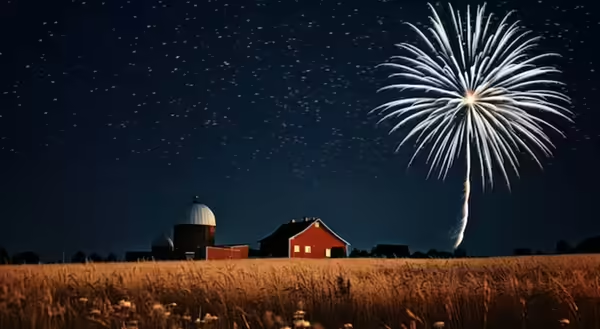
You’re pulling back into your driveway after a night spent watching the fireworks and celebrating independence. Then, you see pairs of eyes staring at you, from outside the fence. The cattle are out. What follows is a night spent gathering the herd, searching for calves, and fixing fence.
Fireworks and Cattle Behavior
No doubt, your cattle getting out is the worst-case scenario. Some cattle will show very little signs of stress during a fireworks display. However, the reality is that fireworks, or sudden, loud noises, can cause immediate panic in cattle. The sympathetic nervous system is activated, triggering the classic fight-or-flight response in your herd. As a prey animal their immediate response to stress is to escape, charging the fence. Furthermore, as herding animals who tend to move together, it only takes one cow to start a stampede capable of getting through the fence. Cattle are especially sensitive to unfamiliar sounds and don’t have the ability to recognize that fireworks aren’t a threat to them. Even “calm” or “broke” cattle could react unpredictably under this stress. This could result in injury, property damage, broken fence, and of course loose cattle.
The Impact of Stress on Your Cattle
In the short term, cattle may show these signs:
- Alertness, raised head, wide eyes
- Repeated vocalizing, restlessness, circling
- Loss of appetite, reluctance to lie down
- Fence running, charging away from the noise, trying to jump or push through barriers
- Lameness or injury
This is accompanied by surges of adrenaline and elevated cortisol levels, heart rate, respiration, and blood pressure. Non-essential systems such as digestion or reproduction might also be suppressed. It’s also possible the impact of these fireworks will extend beyond the Fourth of July. Elevated cortisol can weaken the immune system and increase susceptibility to disease. Behavior such as increased skittishness or aggression may also linger. Reproductive consequences such as the disruption of the estrous cycle, abortions, or reduced conception rates can be linked to high stress events as well.
How to Prepare and Protect Your Herd
Unfortunately, you can’t eliminate the risk of firework-induced stress, especially near a fireworks display. But there are steps you can take to mitigate the risk:
- Secure all fencing, gates, and enclosures well in advance.
- Move cattle away from homesites or areas where fireworks may be part of the celebrations when possible.
- Consider housing cattle in locations with multiple fences between the cattle and the perimeter fence.
- Avoid animal handling in the dark or during fireworks.
- When possible, maintain low and consistent lighting to prevent panic-induced collision.
- Maintain normal routines. Try to feed cattle at the usual time and keep cattle in familiar locations. Wait to move cattle to a new pasture after the Fourth of July.
- Monitor animals closely during the holiday weekend. It’s especially important to monitor cattle for signs of stress in the days following fireworks.
America’s 250th Birthday
This fourth of July we celebrate 250 years since the Declaration of Independence was adopted and commemorate the founding of our nation and the values this country was built on. Although fireworks are a symbol and celebration of our independence, they can also create stress and risk for cattle. It’s important to remember the impact fireworks can have on cattle and take simple steps to protect the livestock that help sustain our country.
Olivia Shike is a student who works in beef production, research, and producer outreach as a University of Illinois Extension intern in the I-BELIEF program through the Department of Animal Sciences in the College of Agricultural, Consumer and Environmental Sciences. This article has been reviewed by Extension Beef Cattle Specialist, Travis Meteer.