What a difference a month can make!
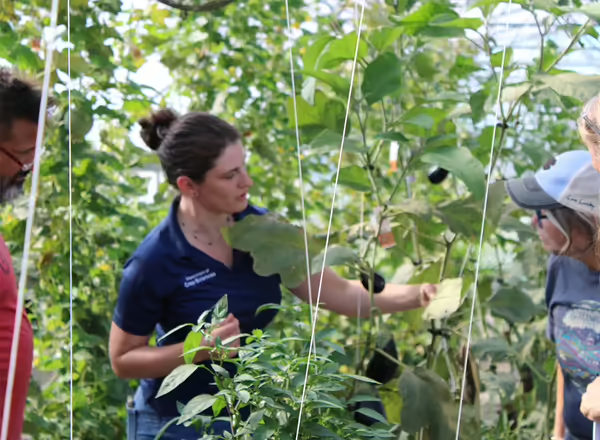
In last month’s DSAC update, it was noted that crops were performing well and not showing any signs of heat stress. That cannot be said this month. Tomato fruit quality issues are quite noticeable, appearing on the outside as yellow shoulder and white core on the inside for both the determinate and indeterminate trials. Not all varieties are displaying yellow shoulder, but white core is present to some degree within all the varieties. Dr. James Santiago was onsite at DSAC on July 14 for our field day and discussed how heat stress plays a part in both yellow shoulder and white core issues, along with varietal susceptibility.
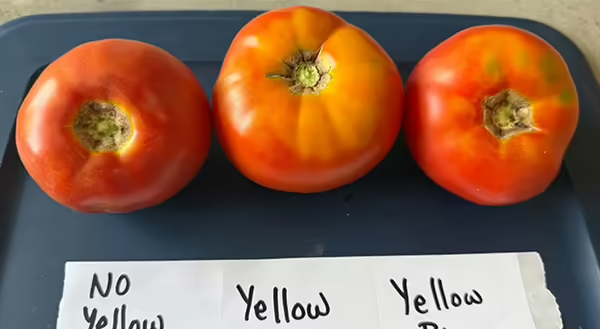
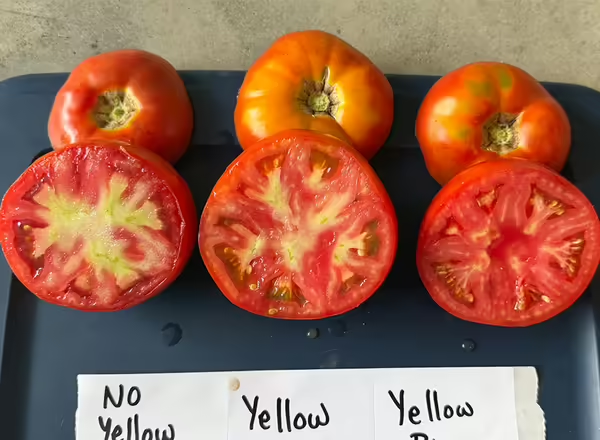
To demonstrate the challenge of knowing how severe white core may be within a fruit and how it can’t be tied directly to the outward appearance of a given tomato fruit, three random tomatoes were selected from our variety trial plots based on their outward appearance. One fruit looked beautiful on the outside, one had severe yellow shoulder discoloration, and the last one had some yellow shoulder but also displayed some areas of green within the yellow of the shoulder. Each of the fruits were then sliced approximately half an inch below the stem scar and revealed a surprising picture of white core. The outwardly beautiful tomato had the most severe white core of the three. While the tomato with the worst yellow shoulder did have some white core, it was less than expected based on the outward appearance. And the fruit with a touch of green to go along with some yellow shoulder had no white core at all. When outward appearance doesn’t match up with inner fruit quality, sorting fruit for market can be very challenging. Yellow shoulder and white core are complex issues that have many factors influencing the degree to which fruit are affected including environmental, varietal, soil moisture, and nutrient availability.
On a positive note, the 30% shade cloth placed on the high tunnel with the tomato and pepper variety trials seems to be helping to prevent sun scald. Typically, by this time of year, some of the harvested fruits will be graded out as culls due to sunburn but so far this season, sunburn has not been a problem.
The Dixon Springs Agricultural Center (DSAC) hosted a center wide field day on the evening of July 14 highlighting the research being conducted onsite within the areas of vegetable high tunnel production, invasive species, forestry management, pollinator plantings, ticks, and beef cattle. Around 140 participants had the opportunity to visit ongoing sessions of their choice throughout the evening and were served a farm to table meal from products grown at DSAC including beef, vegetables, maple syrup and chestnuts. Nearly half of the total participants took part in the sessions focusing on high tunnel vegetable production. As mentioned earlier, Dr. James Santiago discussed how heat stress effects different vegetable crops and strategies to minimize plant stress from heat. Dr. Kacie Athey shared information on biological insect control and some of the findings from her past five years of research at DSAC. I also shared information on our determinate and indeterminate tomato variety trials along with a basic overview of high tunnel vegetable production. Expect this to become an annual event at DSAC.