As the last day of school ends, children begin the transition from school to home-based learning. They trade in their backpacks and schoolbooks for swimsuits, camping gear, games, and more. Family, friends, babysitters, and camp leaders facilitate activities that support literacy, mathematics, and problem-solving. Contrary to what children may feel or assume, learning does not stop when school is out for the summer; it continues every day through experiences at home and in the community. Kathleen Lynch, an education policy researcher who investigates summer-based learning, discovered that home-based activities were more indicative of academic learning than any other activity. Families can collaborate to outline summer educational goals to facilitate activities at home that support valued growth and development. Learning does not need to be confined to the classroom; it can be exciting and inventive at home.
Activities to consider that prioritize growth and development:
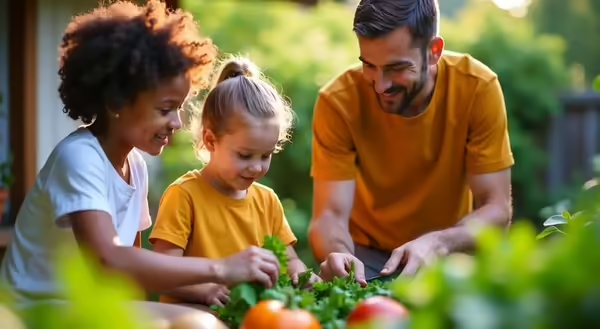
- Start a garden
Children develop gardening skills and learn the value of hard work and consistency. They can reap the benefits of their work when harvesting. And families benefit from eating the fresh fruits and vegetables grown in the garden, with the opportunity to teach about the power of nutrition.
- Go to the gym or create at-home fitness competitions
Depending on the age and independence of your child(s) at home, you can encourage them to attend the local gym or plan a home Olympics or obstacle course. Children can develop an appreciation for the mind and body, or just maintain large- and fine-motor skills for sports.
- Start traditions
Families can share quality time together by creating new family recipes, hosting weekly movie nights, competing in an annual kickball tournament, attending the local farmer’s market, and camping in the backyard. Now is the best time to create long-lasting family memories while parents can encourage curiosity, creativity, fitness, naturalist, and literacy.
- Volunteer
Children can develop social relationships and new perspectives by mowing the neighbor’s yard, collecting food for the pantry, walking dogs at the animal shelter, etc. Promoting community involvement at an early age supports future interest in volunteerism.
- Pick up a new hobby
Cooking. Fishing. Running. Pickle Ball. Photography. And more. Summer brings warm weather and an opportunity to introduce new hobbies. Developing new hobbies can transition into new opportunities and lifelong learning.
So, how can parents support their child’s learning in the home? Set limits on your child’s screen time. Encourage creativity and new projects, even if that means more time or work. Support friends coming over, as children want to stay active when together. Prioritize family time.
Remember, learning does not stop when the final school bell rings, but it continues at home. Take advantage of these summer months and support your child’s learning.
Source:
Erin Curley, McDonough County Extension Extra Help, BS in Human Development and Family Studies, University of Illinois, and BS in Accelerated Nursing at St. Louis University.
Tessa Hobbs-Curley, Tessa is a firm believer that her work in the human development field for the past 25 years makes an impact. She believes lifelong success starts with social and emotional learning, and she centers her work around this philosophy. Tessa is excited to serve as a coach for the Illinois Strong Couples project, which promotes essential skills for maintaining a strong relationship.
She has been instrumental in developing a resource titled Terrific Teachable Moments. When unexpected moments occur, parents and educators can rely on the Terrific Teachable Moments to offer convenient, meaningful ways to help youth develop emotional awareness and make positive character choices.
She earned a master's degree in human development counseling from the University of Illinois Springfield. Tessa also holds a certificate as a Licensed Clinical Professional Counselor. In addition, she is a COLORS matrix instructor, helping individuals assess their personalities and improve their communication skills.